
In This Article
Picture this: it’s a crisp Saturday morning in late May, you’ve finally made it out to your favourite course for the first real round of the Canadian golf season after a brutal winter. You tee up a brand-new Titleist Pro V1 — a ball that costs you about $5.50 CAD a pop — take a confident swing, and watch it arc beautifully… straight into the pond guarding the left side of the fairway. There goes your breakfast money.
Now imagine that same morning, same pond, but the ball you just dunked cost you $1.50 CAD. Still annoying, sure, but not quite the same gut punch, is it?
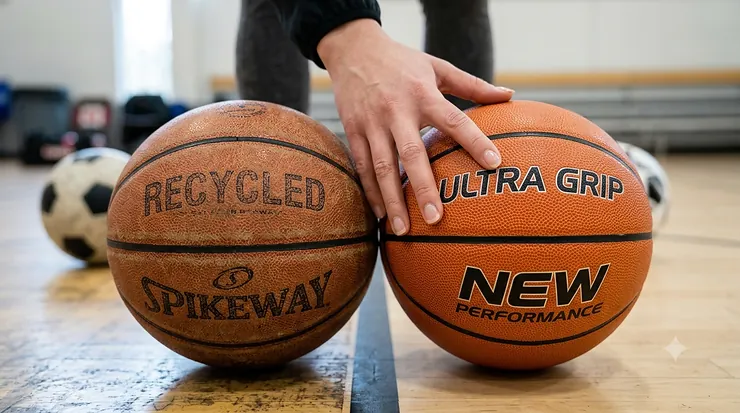
That scenario is exactly why recycled balls vs new performance has become one of the most hotly debated topics among Canadian golfers in 2026. The question isn’t just about saving money — it’s about whether you’re actually giving up anything on the course when you switch to a recycled or refurbished ball. Spoiler: for the vast majority of golfers in this country, the honest answer is no.
Independent testing consistently shows that high-quality recycled golf balls perform nearly identically to their brand-new counterparts. Recycled mint balls and new balls showed an average distance difference of just two yards in controlled testing, with spin characteristics and launch angles that were also extremely similar. For an average golfer playing their usual game, there is virtually no difference in performance between premium recycled golf balls and brand-new balls.
That two-yard gap will never show up in your scorecard. What will show up is the extra $80–$120 CAD you save per season by switching to quality used balls — money that’s better spent on a lesson, a new glove, or an extra round before the frost returns.
In this guide, I’m going to break down the real data behind recycled balls vs new performance, walk you through 7 of the best recycled and refurbished golf ball options available on Amazon.ca right now (in 2026 CAD pricing), and give you a practical framework for knowing exactly when recycled beats new — and when it doesn’t.
Quick Comparison: Recycled vs New Golf Balls at a Glance
| Factor | New Golf Balls | AAAA/5A Recycled Balls | AAA Recycled Balls |
|---|---|---|---|
| Price per ball (CAD) | $4–$6+ | $1.50–$3.00 | $0.75–$1.50 |
| Distance loss vs new | Baseline | ~1–2 yards | ~3–5 yards |
| Spin & feel | Factory-spec | Near-identical | Slight variation |
| Appearance | Perfect | Like-new | Cosmetic wear |
| Best for | Tour play, competitions | All serious play | Practice, water holes |
| Amazon.ca availability | ✅ Wide | ✅ Available | ✅ Available |
| Eco-friendly | ❌ | ✅ | ✅ |
Looking at this table, the AAAA/5A grade recycled option is the clear sweet spot for most Canadian golfers — you’re paying roughly a third to half the cost of a new ball while keeping essentially 100% of the performance. The AAA tier is where you genuinely start to see cosmetic wear that could affect your confidence, though the actual ball flight difference remains minimal for mid-to-high handicappers. Budget buyers should know that AAA-grade balls trade some aesthetic shine for significant savings — a worthwhile trade on a long par-5 with a water carry you’re not confident about.
💬 Just one click — help others make better buying decisions too! 😊
Top 7 Recycled Golf Balls on Amazon.ca — Expert Analysis
1. Golf Ball Planet Pro V1/Pro V1x Used Golf Balls — Best Premium Recycled Ball for Serious Canadian Golfers
The Golf Ball Planet Pro V1 and Pro V1x recycled offering is the one I’d hand to any competitive amateur golfer in Canada who wants tour-level performance without paying tour-level prices at the shop. These are recovered Titleist Pro V1 and Pro V1x balls — arguably the gold standard of golf ball engineering — graded and sorted by Golf Ball Planet through their proprietary inspection process.
The key specs you care about: the Pro V1 delivers a lower, penetrating flight with exceptional greenside spin and a softer feel, while the Pro V1x runs slightly firmer with a higher trajectory and lower iron spin — ideal for players with faster swing speeds who want a boring, wind-fighting ball. What matters practically for Canadian golfers is that both models feature a urethane cover, which means the short game control on tight-pin positions that you’d get from a $65 CAD sleeve of new Pro V1s is fully intact in these recycled versions.
In my view, this is the product that completely resets the recycled ball conversation. These aren’t some mystery bucket of water-logged salvage balls — they’re professionally graded balls with clearly defined AAAA (near-mint) and AAA quality tiers, and the performance difference from a fresh Pro V1 is genuinely imperceptible for anyone shooting over 75. Canadian reviewers consistently note they can’t tell the difference once the ball is in play, and the value versus buying new is extraordinary given that new Pro V1s often run north of $65 CAD per dozen here versus US pricing due to exchange rates and import considerations.
✅ Tour-level urethane cover fully intact for short game control
✅ Available in both Pro V1 and Pro V1x grades to match your swing speed
✅ AAAA (near-mint) grading means cosmetic wear is minimal
❌ Price per ball is higher than budget recycled options
❌ Some batches may include mixed model years
Available on Amazon.ca from around $35 CAD for 12 balls — check current pricing and availability directly. Prime-eligible shipping means most Canadian addresses (excluding remote northern communities) can expect delivery within 2–4 business days.
2. Top Flite Reload Recycled Golf Balls 24-Pack — Best Budget Buy for High-Volume Canadian Players
The Top Flite Reload 24-Pack is consistently one of the top-selling recycled golf ball products on Amazon.ca, and it’s not hard to understand why once you factor in the Canadian golfer’s reality: a golf season that runs from roughly May to October in most provinces means you’re cramming your rounds into a short window, and losing balls on wooded Ontario courses or Alberta parkland layouts is simply part of the game.
The Reload series uses Top Flite’s two-piece ionomer construction — a firmer, distance-focused design that prioritizes carry off the tee over premium short game feel. The compression sits in the mid-range, making these suitable for a wide range of swing speeds, and the 24-ball pack volume means you can afford to be aggressive on those high-risk holes without the psychological baggage of expensive balls. What the spec sheet doesn’t tell you: the ionomer cover on these balls is considerably more durable than softer urethane covers, which means a scuffed-up Reload will still behave predictably on punch shots and bump-and-runs even late in a round.
I’d recommend these specifically for beginner-to-intermediate Canadian golfers who are still on the steep part of their learning curve, or for experienced players who want a dedicated “water hole” ball during spring rounds on courses with high hazard density. The value-for-volume ratio is genuinely exceptional.
✅ #1 Best Seller in recycled golf balls on Amazon.ca
✅ 24-ball pack offers excellent per-ball value under $35 CAD
✅ Durable ionomer cover holds up well through multiple rounds
❌ No urethane cover — greenside spin is limited compared to premium options
❌ Not suitable for competitive play or low handicappers seeking tour-level feel
Pricing sits in the $25–$35 CAD range for the 24-pack, which works out to roughly $1.00–$1.50 per ball — remarkable value for Canadian golfers looking to stretch a budget across a full season.
3. Callaway Assorted Model Mint Condition Golf Balls 36-Pack — Best Mid-Range All-Rounder for Weekend Warriors
Callaway’s lineup spans some of the most popular ball models in golf — from the soft-feeling Supersoft to the tour-level Chrome Soft with its urethane cover — and this Amazon.ca 36-pack assortment bundles a mix of recovered Callaway models in mint condition. The “assorted models” designation means you might get a Warbird, a SuperSoft, an HX Hot, or even Chrome Soft in a single order, which is actually more useful than it sounds for golfers who are still figuring out which ball suits their game.
Here’s the practical insight most buyers miss: getting 36 balls across different Callaway models for one Amazon.ca purchase is effectively a free ball-fitting experiment. You can compare the firmer feel of a Warbird off the tee against the softer response of a SuperSoft on bump-and-run chips, all in the same round, without spending $200 CAD testing new sleeves. All balls are washed and cleaned without altering manufacturer specifications, maintaining their original aerodynamic dimple patterns and core performance characteristics.
For Canadian golfers playing courses with varied terrain — say, the undulating fairways of courses in the BC interior or the tight tree-lined layouts common in Quebec — the variety in this assortment lets you learn quickly what you actually want in a ball before committing to a single model.
✅ 36-ball volume provides excellent per-ball value in CAD
✅ Assorted models double as an inexpensive ball-fitting trial
✅ Mint condition means like-new appearance and performance
❌ No control over which specific Callaway models you receive
❌ Inconsistent feel across models if you prefer a single consistent ball
Expect to pay in the $35–$50 CAD range depending on current Amazon.ca listing — a strong value proposition for a 36-pack from one of golf’s most recognized brands.
4. Golf Ball Planet Supersoft Used Golf Balls for Callaway — Best for Slower Swing Speed Canadian Golfers
The Callaway Supersoft is one of the most popular golf balls in Canada — it’s not unusual to see it dominating the shelves at Golf Town and Sport Chek from coast to coast. The Golf Ball Planet recycled version on Amazon.ca captures that same ultra-low compression magic (the Supersoft runs around 35–38 compression, one of the softest on the market) at a price that makes a lot more sense for recreational Canadian golfers.
Why does compression matter so much for Canadian players specifically? Because a large portion of the Canadian golf market consists of players with moderate to slower swing speeds — seniors who play three times a week at municipal courses from Victoria to Halifax, ladies’ leagues across the prairies, and weekend warriors in their 40s and 50s who haven’t swung a club since September. For swing speeds under 85 mph (which covers the majority of recreational golfers), a low-compression ball like the Supersoft genuinely adds distance by allowing the ball to compress fully at impact and launch with optimal speed. The recycled version delivers exactly that performance. Players who swing slower than 85 mph won’t notice much difference in ball speed regardless of condition, which makes recycled balls a smart choice, especially if you tend to lose balls often.
Canadian reviewers on Amazon.ca rate this product at 4.6 out of 5 stars, with repeated comments praising the soft feel and clean cosmetic presentation. The yellow colour option in some batches is a bonus for visibility on overcast fall days in Atlantic Canada or through the morning mist at early tee times.
✅ 4.6-star rating on Amazon.ca — high Canadian buyer satisfaction
✅ Ultra-low compression ideal for moderate swing speeds
✅ Soft feel on and around the green for better short game feedback
❌ Very soft compression is not ideal for faster-swing players (above 100 mph)
❌ Assorted lots may include mixed Supersoft model years
Available from approximately $35 CAD per 12-pack on Amazon.ca — check current prices at time of purchase.
5. Callaway Reload Recycled Golf Balls 12-Pack — Best Entry-Level Pick for New Canadian Golfers
The Callaway Reload 12-Pack is one of the most accessible recycled ball offerings on Amazon.ca, and it’s deliberately designed with beginner and casual golfers in mind. The “Reload” branding signals Callaway’s official recycled line, which means these are genuine Callaway models — Warbirds, HX Hots, and similar distance-oriented models — that have been cleaned and inspected rather than some generic no-brand refurbishment.
For the golfer who just picked up the game in 2025 or 2026 and is still working through the “double-bogey phase,” this is the smartest possible starting point. Losing three or four balls per round when you’re learning the game is completely normal — and losing a Callaway Reload at $1.50 CAD is a completely different emotional experience than watching a $5 Pro V1 disappear into the rough. The 12-pack format is also ideal for golfers who play infrequently and don’t need the bulk volume of a 36-pack.
The practical insight here: beginner golfers in Canada are often over-equipped in terms of ball quality. Studies consistently show that scoring improvements for new golfers come from swing mechanics and course management, not from playing a $65 CAD sleeve of tour balls. Start here, build your game, and upgrade your ball as your handicap drops — it’s the smartest cost-benefit evaluation you can make at any Canadian pro shop or on Amazon.ca.
✅ Official Callaway recycled line — trusted brand at a budget price point
✅ 12-pack format is ideal for infrequent or beginner Canadian players
✅ Available with Prime shipping on Amazon.ca
❌ Models in the mix may vary — not for golfers who want consistency
❌ Not suitable for competitive play or low handicappers
Expect to pay in the $15–$25 CAD range for a 12-pack, making the cost per ball among the lowest on Amazon.ca for a name-brand recycled option.
6. Mulligan Yellow Callaway Supersoft AAAAA Mint Used Golf Balls 60-Pack — Best High-Volume Yellow Ball for Visibility
There’s a reason yellow golf balls have exploded in popularity across Canada over the last several years: Canadian weather and light conditions are not the same as Phoenix or Orlando. Morning rounds in June when the dew is still sitting on fairways in southern Ontario, late-afternoon rounds in September when the light goes flat on Prairie courses — a yellow ball is simply easier to track in flight and locate in the rough. The Mulligan 60-pack of yellow Callaway Supersoft balls in AAAAA (mint) condition addresses both the visibility need and the volume need in a single Amazon.ca purchase.
The AAAAA designation here is important — this is the top tier of the recycled ball grading scale. Pristine quality represents the best of the best recycled balls available. Only 5% of all recycled balls are Pristine — these balls look like they have never been hit and are free of any marks, logos, or player markings. These balls are mint-condition recoveries that are genuinely difficult to distinguish from a new ball, and the Supersoft’s soft feel is fully preserved.
The 60-ball volume makes this a perfect “stock up for the season” purchase for Canadian golfers who play regularly — say, two rounds a week from May through October. That’s approximately 40–50 rounds of golf, and if you average losing just one ball per round (a very conservative estimate for most recreational players), this 60-pack covers you for a full season of confident play.
✅ AAAAA (pristine) mint condition — best visual presentation in recycled category
✅ Yellow colour dramatically improves ball visibility in Canadian light conditions
✅ 60-ball volume ideal for full-season coverage
❌ Currently showing limited availability on Amazon.ca — check stock before ordering
❌ Higher per-ball cost vs AAA or 3A grade options
Price range varies — check current Amazon.ca listing for the most accurate CAD pricing at time of purchase.
7. Callaway Recycled Golf Balls 36-Pack (HX Hot Bite) — Best Distance-Focused Recycled Option
The Callaway HX Hot Bite is a ball with a specific performance philosophy: distance and accuracy through HEX aerodynamic technology. The hexagonal dimple pattern (rather than the traditional round dimple) was a genuine engineering innovation from Callaway that reduces drag and promotes a more consistent, penetrating trajectory — especially valuable in the windy conditions that Canadian golfers encounter on exposed coastal courses in Nova Scotia or the wind-swept links-style layouts of Prince Edward Island.
The 3-piece construction offers a meaningful step up from basic 2-piece distance balls — a soft, high-resiliency core generates ball speed, an ionomer boundary layer controls spin separation, and the soft cover contributes to stopping power on approach shots. This isn’t a tour ball in the Pro V1 sense, but for a mid-handicapper who wants better-than-basic performance at recycled prices, the HX Hot Bite architecture delivers genuine added value.
What I find particularly compelling about this specific recycled product: Callaway markets it on Amazon.ca with the explicit claim that balls are “recycled to the highest standards possible” without altering original manufacturer specifications. That’s a meaningful quality signal that distinguishes it from generic bulk recycled offerings. Canadian golfers in the 15–25 handicap range will find this ball hits the sweet spot of performance-for-money more accurately than almost anything else in the recycled category.
✅ HEX aerodynamic dimple pattern promotes consistent trajectory in wind
✅ 3-piece construction offers better feel than basic 2-piece options
✅ Verified available on Amazon.ca with genuine Callaway quality assurance
❌ Ionomer cover limits premium short game spin vs urethane alternatives
❌ Older model architecture — newer Callaway releases have surpassed it for feel
Available on Amazon.ca in the $25–$40 CAD range for a 36-pack depending on availability and seller. Strong value for the mid-handicapper building ball-striking consistency.
✨ Don’t Miss These Exclusive Deals!
🔍 Take your recycled ball game to the next level with these carefully selected products. Click on any highlighted product name to check current pricing and availability on Amazon.ca. These balls will help you play your best golf without burning through your budget all season long!
How to Grade Your Way to the Right Recycled Ball: A Practical Guide for Canadian Golfers
The single biggest mistake I see Canadian golfers make when buying recycled balls online is ignoring the grading system entirely. They search “cheap golf balls Amazon.ca,” click the cheapest result, and then complain when a bag of badly scuffed AAA balls don’t feel right on delicate pitch shots. The grading system is your most powerful tool when shopping for used balls — here’s exactly what it means in practice.
Understanding the AAAA / AAA / 5A Grading Scale
The recycled golf ball industry uses a relatively consistent (though not perfectly standardized) letter-grade system to describe ball condition:
5A / AAAAA (Mint / Pristine): Because they may have spent only a millisecond on a clubface before becoming lost, it is difficult to differentiate between a new ball and the AAAAA. Like-new and in mint condition, they preserve their original colour and luster. This is your best option for competitive rounds, tournament play, or any situation where confidence in your equipment matters.
4A / AAAA (Near Mint): AAAA is the gold standard for “Near Mint” condition. Think of it as a ball that has likely been hit for just a few holes, or perhaps even just once, before being lost. For the vast majority of golfers, it’s practically indistinguishable from new in terms of performance. This is the sweet spot for most Canadian players — tour performance, significantly reduced cost.
3A / AAA (Good): Noticeable cosmetic wear but no cuts or structural damage. Ideal for practice rounds, hazard-heavy holes, and early-season rounds on courses still recovering from Canadian winter conditions.
Matching Grade to Your Game
Here’s the practical decision framework: if you routinely break 85, play in club competitions, or genuinely care about your score every round, aim for AAAA or 5A grade recycled balls. The performance is there and the savings are real. If you’re still breaking 100 regularly, playing for fun, or using balls for range practice, go AAA — you’ll never notice the difference in your scorecard, and your wallet will thank you at the end of the season.
Real-World Canadian Golfer Scenarios: Which Recycled Ball for Which Player?
Let me map out three specific Canadian golfer profiles and match each one to the right recycled ball choice. This is where the buying decision gets genuinely useful.
🏌️ Profile 1: The Toronto Condo Commuter Golfer — Daniel, 42, Handicap 18
Daniel lives in a midtown Toronto condo, plays 15–20 rounds per year at public courses in the GTA, and spends roughly $400–$600 CAD per season on golf balls. He loses about 2 balls per round on average, mostly into the wooded rough at courses in the Oak Ridges Moraine area.
Best Match: Golf Ball Planet Supersoft Used Golf Balls for Callaway (AAAA grade) or the Callaway Assorted Mint 36-Pack.
Daniel’s moderate swing speed benefits from the Supersoft’s low compression, and at AAAA grade he gets performance indistinguishable from the $55 CAD new sleeves he used to buy. Switching to recycled saves him $200–$300 CAD annually, which pays for an extra lesson or two — the more impactful investment at his skill level.
🏌️ Profile 2: The Retired Winnipeg Weekend Player — Sandra, 67, Handicap 24
Sandra plays twice a week in summer on courses around the Winnipeg area and prioritizes feel over distance. She’s been playing the Callaway Supersoft new for several years. Winnipeg’s flat, wind-exposed layouts mean a consistent ball flight matters more than raw distance.
Best Match: Mulligan Yellow Callaway Supersoft AAAAA Mint 60-Pack.
The yellow colour helps Sandra track the ball in Manitoba’s harsh afternoon sun glare, the AAAAA grade gives her the exact feel she expects from the Supersoft, and the 60-pack covers a full Canadian season without re-ordering. At 60 balls for less than what she was spending on 2 new dozen, the cost-benefit evaluation is immediate and obvious.
🏌️ Profile 3: The Competitive Calgary Amateur — James, 34, Handicap 7
James plays in his club’s summer league and takes his game seriously. He currently plays Titleist Pro V1x new and spends over $800 CAD on balls per season. He’s skeptical about recycled balls but curious about the savings.
Best Match: Golf Ball Planet Pro V1/Pro V1x Used Balls in AAAA (near-mint) grade.
James’s high swing speed (estimated 95–100 mph based on his handicap) is well-matched to the Pro V1x’s firmer feel and higher trajectory. AAAA recycled Pro V1x balls are genuinely indistinguishable from new in terms of core compression and urethane cover performance. James cuts his annual ball spend by 50–60% without sacrificing the ball control that matters at his level. The one caveat: for provincial or national amateur events, he might opt for new balls in the final round — but for every practice round and league match, recycled is a zero-compromise choice.
Performance Degradation Analysis: What the Science Actually Says
This is the section where I want to challenge some of the mythology that still circulates in Canadian clubhouses. You’ve probably heard someone say “used balls lose their compression” or “water-damaged balls are dead.” Here’s what the evidence actually shows.
Do Recycled Golf Balls Lose Distance?
When golf balls are carefully recovered, checked, and graded with thorough inspection, the actual performance attributes of the balls themselves hardly change, and their core performance characteristics are nearly identical to new balls. The 2-yard distance difference observed in controlled testing is statistically real but practically invisible at the recreational level. A 2-yard variation is well within the natural shot-to-shot dispersion of any amateur golfer.
What About Water Damage?
This is where grade matters enormously. Modern solid-core balls are moisture-resistant and don’t lose compression from a stay in a hazard. Older wound balls were sponges, but today’s urethane and surlyn covers act as a seal. Research confirms it takes months of continuous submersion to see any measurable drop in distance.
A ball that sat at the bottom of a pond for six months is fundamentally different from a ball recovered from light rough after one lost shot. Reputable graders remove the former and sell only the latter — which is exactly why buying from established Amazon.ca sellers with consistent grading standards matters more than the brand on the ball.
The Refurbished Ball Exception
One important distinction: recycled and refurbished are not the same thing. The recycled ball market spans mint condition balls that appear nearly new with no visible wear, near-mint balls with slight cosmetic blemishes but excellent playability, and good-condition balls with noticeable scuffs but no cuts. After extensive testing and analysis, reclaimed golf balls clearly offer exceptional value — distance differences are often just 1–2 yards, essentially undetectable during actual play.
Refurbished balls, by contrast, are stripped and repainted — a process that can alter cover chemistry and affect greenside performance. For competitive play, stick to recycled (not refurbished) options rated AAAA or 5A.
The Environmental Case: A Bonus Benefit for Canadian Golfers
Golf Canada’s commitment to sustainability was showcased at Canada’s biggest golf tournaments in 2024, featuring eco-friendly practices designed to protect the environment and minimize the carbon footprint. Choosing recycled balls fits directly into that broader movement toward more sustainable golf in Canada.
Every year, American golfers lose an estimated 300 million golf balls — a figure that is almost certainly too low — and each ball can take 100 to 1,000 years to decompose, leaching microplastics and chemicals into soil and water. Canada, with its thousands of courses surrounded by ecologically sensitive boreal forest, wetlands, and coastal habitats, faces the same challenge. Using recycled golf balls helps put approximately 30 tons of discarded rubber, surlyn, and urethane back into play, reducing waste and the demand for new ball production.
Playing recycled isn’t just a financial decision in 2026 — it’s a small but meaningful environmental one.
How to Buy Used Golf Balls in Canada: 7 Questions to Ask Before Checkout
A lot of Canadian golfers browse Amazon.ca, pick the cheapest recycled ball listing, and wonder why the results are inconsistent. Here’s the smarter approach.
1. What grade is the ball, and is it clearly specified? Any seller that doesn’t explicitly state their grading system (AAAA, 5A, AAA, etc.) should be approached with caution. The grade is your most important performance indicator — more important than the brand.
2. Who is the seller? On Amazon.ca, you’ll find established recycled ball brands like Golf Ball Planet alongside third-party sellers. Check the seller rating (aim for 4+ stars with substantial reviews) and confirm they have a returns policy for quality issues.
3. Does the listing confirm Canadian shipping? Not all recycled ball listings on Amazon.ca include free shipping, and some sellers ship from US warehouses with variable delivery times to Canadian addresses. Look for Prime-eligible listings to guarantee reliable delivery across most Canadian provinces. Remote northern communities in Yukon, NWT, and Nunavut may face longer delivery windows regardless of seller.
4. Is the price in CAD, and does it reflect true value? Due to the exchange rate and import considerations, Canadian pricing on recycled balls typically runs 15–25% higher than equivalent US pricing. This is still dramatically cheaper than buying new balls in Canada — a dozen new Pro V1s at a Canadian golf shop can run $65–$75 CAD. Even a premium recycled dozen at $35–$45 CAD represents 30–50% savings.
5. Are these recycled or refurbished? Check the product description carefully. Recycled = recovered, cleaned, graded. Refurbished = stripped and repainted. For maximum performance consistency, opt for recycled.
6. What model year are the balls? For performance-first buyers, a 2024 or 2025 model year Pro V1 recycled ball uses the current construction and cover technology. Older model years (pre-2022) use different core and cover formulations. Most Amazon.ca listings are transparent about this — if they’re not, ask via the Q&A feature.
7. Can you buy in bulk? For active Canadian golfers playing 20+ rounds per season, a 36-ball or 48-ball purchase delivers a significantly better per-ball value than 12-packs. Calculate your average seasonal loss rate and buy accordingly.
Common Mistakes Canadian Golfers Make When Buying Recycled Balls
❌ Mistake 1: Ignoring the Grade Entirely
Buying the cheapest listing without checking the grade is the #1 error. AAA (3A) balls are fine for practice — they’re not ideal for a round you care about. Spending $5 more CAD to move from AAA to AAAA can mean the difference between a consistent short game and frustrating inconsistency on pitch shots.
❌ Mistake 2: Confusing Recycled with Refurbished
As outlined above, refurbished balls undergo a repainting process that modifies the outer cover. The spec sheet won’t tell you this, but a refinished ball may have slightly altered spin characteristics compared to the original — particularly relevant for short game players who rely on predictable ball reaction from the urethane cover. Stick to recycled (cleaned and graded only) for consistent performance.
❌ Mistake 3: Buying the Wrong Ball for Their Swing Speed
This isn’t unique to recycled balls, but it’s amplified here because buyers are often less careful about model selection when purchasing used. A 65-year-old Canadian golfer with a 78 mph swing speed buying recycled Pro V1x balls (compression ~100) is actively hurting their distance and feel compared to using recycled Supersoft balls (compression ~35). Match the ball to your swing speed, not your ego.
❌ Mistake 4: Not Accounting for Canadian Winter Storage
Canadian golfers often store their gear in garages or car trunks during the off-season — an environment where temperatures can plunge to -20°C (-4°F) or colder in Manitoba, Alberta, and northern Ontario. Extreme cold doesn’t permanently damage modern solid-core balls, but it does temporarily reduce compression and distance. Let your recycled balls warm to room temperature before a round rather than going straight from the car trunk to the first tee.
❌ Mistake 5: Assuming All Amazon.ca Recycled Ball Sellers Are Equal
The recycled ball market has a wide quality range. Stick to sellers with 4+ star ratings, verified grading systems, clear model identification, and returns policies. Golf Ball Planet, established brands like Callaway’s own recycled line, and sellers with thousands of positive reviews are your safest options on Amazon.ca.
Long-Term Cost & Maintenance Analysis in Canada: The Numbers That Make Recycled a No-Brainer
Let’s do the math that most Canadian golfers haven’t done.
A typical recreational Canadian golfer plays 25 rounds per year and loses an average of 2.5 balls per round. That’s 62 balls per season. At new Pro V1 pricing of approximately $65 CAD per dozen ($5.40/ball), that’s $335 CAD per year just on golf balls.
Switch to AAAA recycled Pro V1s at approximately $3.00 per ball, and the same 62 balls cost $186 CAD — saving you $149 CAD per season. Over five years, that’s $745 CAD in savings. At a 7 handicap, you might close that gap to 10% by choosing AAAA recycled. At a 20 handicap? The performance difference is zero, and you’re pocketing nearly $750 over five seasons.
Switch to a high-volume AAA recycled option at $1.25/ball for practice rounds and range sessions, and the savings compound further. Smart Canadian golfers are already running a two-tier system: AAAA recycled for their serious rounds and AAA recycled for range sessions and water-heavy layouts.
There’s no cross-border duty advantage to note here — most recycled balls sold on Amazon.ca are warehoused domestically or come through standard import channels, so you’re not navigating CBSA thresholds. While Canadian pricing does run slightly higher than US equivalents due to exchange rates and import considerations, you avoid cross-border shipping complexity, customs delays, and warranty concerns that come with ordering from Amazon.com directly.
What to Expect: Real-World Recycled Ball Performance in Canadian Conditions
Canadian course conditions throw a few variables at recycled ball performance that deserve specific attention.
Spring Conditions (May–June): Canadian fairways in early spring are soft, wet, and often frost-damaged from winter. In these conditions, ball rollout is minimal regardless of whether you’re playing new or recycled — the condition of the playing surface matters far more than 2 yards of ball distance. Recycled balls lose nothing in these conditions.
Summer Performance (July–August): Firm, fast Canadian summer fairways are where premium ball design matters most. If you’re playing links-style courses where rollout distance is part of your strategy, AAAA recycled tour balls will perform virtually identically to new equivalents. The urethane cover on a recycled Pro V1 or Chrome Soft is structurally intact at AAAA grade — heat expansion and firm ground conditions present no additional challenges.
Fall Conditions (September–October): Early morning rounds in Canadian fall often mean dew on fairways and cold, dense air. Cold air is denser, which means less carry for all golf balls — new or recycled. A recycled ball loses no additional distance in cold conditions compared to a new one, since both are affected equally by the physics of cold, dense air.
Rain and Wet Weather: Wet conditions test cover durability. A properly graded recycled ball with an intact cover handles rain identically to a new ball. The surlyn or urethane cover serves as a moisture seal, and modern golf balls are designed to perform consistently in wet conditions. Modern solid-core balls are moisture-resistant and don’t lose compression from a stay in a hazard — today’s urethane and surlyn covers act as a seal.
The honest conclusion: Canadian course conditions present no unique challenges to quality recycled golf balls that they don’t also present to new balls.
FAQ: Recycled Balls vs New Performance — Canadian Golfer Questions Answered
❓ Are recycled golf balls legal for tournament play in Canada?
❓ What's the best grade of recycled ball to buy on Amazon.ca for regular play?
❓ How do I know if a recycled golf ball listing on Amazon.ca ships to all Canadian provinces?
❓ Do refurbished ProV1 balls available in Canada perform the same as new Pro V1s?
❓ Is it worth buying recycled golf balls in bulk on Amazon.ca for a Canadian golf season?
Conclusion: Recycled Balls Are the Smartest Purchase in Canadian Golf for 2026
The recycled balls vs new performance debate, when examined honestly in 2026, has a clear winner for most Canadian golfers: quality recycled balls win on value, perform identically on performance for handicaps above 5, and carry a meaningful environmental benefit that aligns with Golf Canada’s growing sustainability focus.
The evidence is conclusive. Players save between 30–70% when choosing reclaimed options, essentially doubling purchasing power without sacrificing meaningful performance. This value proposition becomes particularly attractive for recreational golfers who occasionally lose balls or practice frequently.
The key is understanding the grading system, buying from reputable Amazon.ca sellers with transparent quality criteria, and matching your grade choice to your playing level. A AAAA-grade recycled Pro V1 for your club championship. A AAA Callaway assorted mix for the round on a new course where you know you’ll find the water. A 60-pack of yellow mint Supersofts for Sandra’s whole Manitoba season.
There is no single situation where a first-time Canadian golfer should reflexively reach for a new sleeve when quality recycled options are available on Amazon.ca at a third to half the cost. Play smarter, save your CAD for the experiences that matter — the extra round, the golf trip out to Banff Springs, the celebratory pint in the clubhouse — and let someone else pay full price for the Pro V1 you’re about to beat them with.
✨ Don’t Miss These Exclusive Deals!
🔍 Ready to stock up for the 2026 Canadian golf season? Click on any highlighted product in this guide to check current pricing and availability on Amazon.ca. Whether you’re a beginner saving on your first season or a competitive player cutting costs without cutting performance — there’s a recycled ball for you right now.
Recommended for You
- 7 Best Quality Used Golf Balls in Canada (2026): Tested & Reviewed
- 7 Best Maple Leaf & Team Canada-Style Golf Balls 2026
- Best Wedding Golf Ball Favours in Canada 2026: 7 Top Picks
Disclaimer: This article contains affiliate links. As an Amazon Associate, I earn from qualifying purchases. If you purchase products through these links, we may earn a small commission at no additional cost to you.
✨ Found this helpful? Share it with your friends! 💬🤗
