
In This Article
Quality used golf balls are recovered, washed, and graded golf balls — often Tour-level models like the Titleist Pro V1 — that have been hit only a handful of times before being lost in a hazard. Sold in grades from “Good” (AAA) up to “Mint” (AAAAA), they let golfers play premium balls at a fraction of retail cost, without giving up much in the way of distance or feel.
If you’ve ever stood over a water hazard wondering whether to play it safe with a $5 ball or rip it with your favourite, you already understand the appeal of used golf balls. For Canadian golfers — who get a frustratingly short season squeezed between spring thaw and the first October frost — every round counts, and so does every dollar you don’t spend restocking your bag.
This guide rounds up seven real, currently listed products on Amazon.ca, breaks down what “mint condition” actually means versus “good condition,” and answers the question golfers ask most: are refurbished golf balls actually good, or is it a false economy? We’ll also dig into the environmental side of the recycled ball market, since Canada’s lakes and rivers absorb a surprising number of lost balls every season.
As an Amazon Associate, I earn from qualifying purchases — full disclosure is at the bottom of this article.
Quick Comparison Table
| Product | Grade | Best For | Price Range (CAD) |
|---|---|---|---|
| Clean Green 48-Ball Recycled Mix | Good (3A) | Budget practice rounds | $30–$45 |
| LostGolfBalls Titleist Pro V1 (12-pk) | Good (AAA) | Everyday tour-ball feel | $20–$32 |
| LostGolfBalls Titleist Pro V1x Mint (12-pk) | Mint/Refinished | Low-handicap players | $28–$40 |
| LostGolfBalls Srixon Z-Star XV (12-pk) | Near Mint (AAAA) | Soft-feel alternative | $18–$28 |
| LostGolfBalls TaylorMade TP5x (12-pk) | Mint (AAAAA) | High-spin wedge players | $26–$38 |
| LostGolfBalls Kirkland Signature (24-pk) | Mint (AAAAA) | Best value-per-ball | $25–$38 |
| Bastex 100 Hit-Away Bulk Mix | Range/Shag | Driving range & juniors | $35–$55 |
A quick read of this table tells most of the story: the Kirkland Signature mint 24-pack and the Clean Green bulk mix offer the lowest cost-per-ball for casual play, while the Pro V1x Mint and TP5x options cost more per dozen but get you closest to a brand-new performance ball. If you’re a mid-to-low handicap golfer who actually notices spin around the green, that gap is worth paying for. If you mostly lose balls in the same pond every Saturday, the cheaper bulk mixes make more financial sense.
💬 Just one click — help others make better buying decisions too! 😊
✨ Don’t Miss These Exclusive Deals!
🔍 Take your short game to the next level with these carefully selected used golf balls. Click on any highlighted product to check current pricing and availability on Amazon.ca. These picks help you play better balls without blowing your golf budget! 🇨🇦
Top 7 Quality Used Golf Balls: Expert Analysis
1. Clean Green Golf Balls 48-Pack Recycled Bulk Mix
This 48-ball mix from Clean Green Golf Balls — the Texas-based company that pitched on Shark Tank — pulls balls directly out of water hazards, washes and machine-scrubs them, then hand-sorts them by brand into a “Good” condition (3A) grade. Expect a rotating mix of Titleist, Callaway, and TaylorMade models rather than one specific ball.
What this means in practice: Good-grade balls will show scuffs, faded logos, or the odd player-pen mark, but none of that affects flight in any way you’d notice on a Canadian municipal course. What most buyers overlook is that a 48-ball bulk mix is really a seasonal supply — if you lose 3–4 balls per round like most recreational golfers do, this bag gets you through a month of weekend rounds without reordering.
Customer feedback consistently calls out the included reusable mesh bag as a nice touch for cart storage, and reviewers note the brand mix skews toward recognizable Tour models rather than no-name balls.
✅ Cheapest per-ball cost on this list
✅ Brand variety in every bag
✅ Reusable mesh carrying bag included
❌ You can’t pick which brands you get
❌ Cosmetic wear is more visible than higher grades
Price range: around $30–$45 CAD for 48 balls. At under a dollar a ball, this is the easiest entry point if you’ve never tried recycled balls before.
2. LostGolfBalls Titleist Pro V1, Good Condition (12-Pack)
LostGolfBalls is the largest dedicated recycled-ball retailer selling through Amazon, and this 12-pack of Titleist Pro V1 balls in AAA “Good” grade is their volume seller for a reason — it’s the same three-piece urethane-cover construction that Tour pros play, just with visible scuffing and the occasional sharpie mark.
Here’s the practical interpretation: the Pro V1’s dual-core design and cast urethane cover are what give it soft greenside feel and tour-level spin control, and a Good-grade ball performs identically on those fronts to a brand-new one — the wear is purely cosmetic surface scuffing, not core compression loss. For Canadian golfers playing firmer fall fairways, that consistent spin profile matters more than it does in July when greens are softer.
In my experience, this is the grade serious golfers should buy if they’re comfortable with a ball that “looks used” — you’re paying for performance, not for a shelf-ready appearance.
✅ True Pro V1 construction and spin profile
✅ Lowest-cost way to try a Tour ball
✅ Widely reviewed, consistent grading
❌ Visible scuffs and possible pen markings
❌ Year models can vary between batches
Price range: roughly $20–$32 CAD per dozen, depending on the specific year model in stock.
3. LostGolfBalls Titleist Pro V1x, Mint/Refinished (12-Pack)
For golfers who want the Pro V1x’s firmer compression and flatter trajectory without the cosmetic flaws, this refinished Mint option strips the original cover, sands down imperfections, and recoats the ball — leaving no logos and no player markings, just a clean white finish.
What most buyers overlook about refinished balls is that the refinishing process only touches the outer cover layer; the dual-core construction that drives the Pro V1x’s longer, more penetrating ball flight is untouched. That’s especially relevant on Canadian courses with tree-lined fairways where a flatter flight cuts through wind better than a high, ballooning shot.
Reviewers frequently mention that refinished Mint balls are difficult to distinguish from new ones at address, which matters if you’re self-conscious about ball appearance in a foursome.
✅ No logos or pen marks — looks brand new
✅ Pro V1x’s signature firm, penetrating flight
✅ Great gift-look option for golf buddies
❌ Refinishing means a thin layer is altered, not just cleaned
❌ Costs noticeably more than Good-grade alternatives
Price range: approximately $28–$40 CAD per dozen.
4. LostGolfBalls Srixon Z-Star XV, Near Mint (12-Pack)
The Srixon Z-Star XV is one of the most underrated Tour balls on the market, and at Near Mint (AAAA) grade it’s a smart alternative for golfers who find the Pro V1 line a touch firm off the driver.
Its four-piece construction with a Spin Skin urethane cover is built to boost wedge spin specifically, which in practice means more stopping power on approach shots into greens — useful on Canadian courses where greens firm up quickly during dry late-summer stretches. Near Mint grade balls will show light shading or a faint scuff, roughly equivalent to a new ball after 12–18 holes, but no performance compromise.
What stands out here is the price-to-performance ratio: Z-Star XV new retails noticeably higher than Pro V1, so even at Near Mint pricing it remains a comparatively accessible way to try a genuine alternative tour ball.
✅ Excellent wedge and approach spin
✅ Softer feel than Pro V1 for some swing speeds
✅ Near Mint grade barely shows wear
❌ Less brand recognition than Titleist among casual players
❌ Stock and year models rotate often
Price range: around $18–$28 CAD per dozen — often the best-value Tour ball on this list.
5. LostGolfBalls TaylorMade TP5x, Mint (12-Pack)
The TaylorMade TP5x uses a five-layer construction designed to maximize ball speed off the driver while still spinning predictably around the green, and this Mint (AAAAA) listing is about as close to new-in-box as a recycled ball gets.
The practical takeaway: five-layer balls are more sensitive to compression loss from repeated mishits than two- or three-piece balls, which is exactly why buying Mint grade matters more here than with a Pro V1 — you’re paying to guarantee the core hasn’t taken excessive abuse before being recovered. For higher swing-speed players in particular, that distinction is worth the premium.
Canadian golfers who play into October should note that ball compression naturally firms up in cold air, so a TP5x that already runs firm can feel noticeably “clicky” off the tee on a cool morning round — something to test before a tournament round.
✅ Five-layer Tour construction at Mint grade
✅ Strong driver ball speed for faster swingers
✅ Reads true on full mint-grade inspection
❌ Pricier than three-piece alternatives
❌ Firmer feel may not suit slower swing speeds
Price range: roughly $26–$38 CAD per dozen.
6. LostGolfBalls Kirkland Signature, Mint (24-Pack)
Costco’s house-brand Kirkland Signature golf ball became a cult favourite for its near-Pro V1 performance at a fraction of new retail price, and this 24-pack at Mint (AAAAA) grade stretches that value proposition even further.
What the spec sheet won’t tell you: Kirkland Signature balls are manufactured by an established OEM under contract (not Costco itself), using a urethane-cover, multi-layer construction that performs comparably to mainstream Tour balls in independent distance and spin testing. At Mint grade and a 24-ball count, this is arguably the single best cost-per-round option for golfers who want Tour-level performance without committing to a premium brand name.
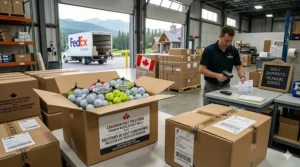
Canadian buyers should note this is a third-party Amazon listing reselling recovered Kirkland balls — not a Costco.ca product — so availability can fluctuate more than with major-brand listings.
✅ Best overall value-per-ball on this list
✅ Performance comparable to premium Tour balls
✅ 24-ball count means fewer reorders
❌ Listing availability can be inconsistent
❌ Less playable for golfers loyal to a specific major brand
Price range: about $25–$38 CAD for 24 balls — roughly $1.10–$1.60 per ball at Mint grade.
7. Bastex 100 Hit-Away Used Golf Balls Bulk Mix
Not every round needs Tour-ball performance, and that’s exactly the gap Bastex’s 100-ball “Hit-Away” bulk mix fills — a budget assortment of mixed-brand, range-grade balls meant for driving range sessions, backyard nets, and teaching juniors without worrying about cosmetic condition.
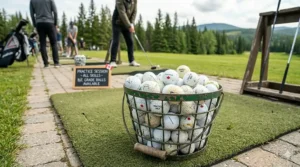
In practice, “Hit-Away” or shag-grade balls have visible cuts, deep scuffing, or heavy discoloration, but they’re never structurally cracked — they’re simply balls that have been hit enough times that cosmetic appearance no longer matters. For Canadian families introducing kids to golf over a short summer, or anyone setting up a net in the garage through a long winter, that’s a feature, not a flaw.
Reviewers consistently use this exact mix for home practice nets and short-game chipping drills where ball appearance is irrelevant and ball count matters more than grade.
✅ Lowest cost per ball of any option here
✅ Ideal for range sessions and junior golfers
✅ Large 100-ball count means rarely running out
❌ Not suitable for on-course play or scoring rounds
❌ Mixed condition — expect visible wear throughout
Price range: approximately $35–$55 CAD for 100 balls.
🛠️ Practical Usage Guide: Getting the Most from Used Golf Balls in Canada
Before you tee off with a freshly delivered bag of recycled balls, a quick inspection routine pays off. Spin each ball between your fingers under good light and check for hairline cracks near the dimple pattern — a genuine defect, not just discoloration, is the only thing that should send a ball to the reject pile.
Store your recycled balls indoors once temperatures drop below freezing. Cold golf balls lose compression temporarily, which shortens distance noticeably on Canadian fall and early-spring rounds — keep your bag in the house or car trunk (not an unheated garage) the night before an early tee time. After wet rounds on dewy Canadian mornings, towel-dry balls before storing them in your bag to prevent the slight surface haze that develops on softer urethane covers.
If you’re buying Good-grade or bulk-mix balls specifically for practice, rotate them out of your on-course rotation entirely — keeping a dedicated “range bag” prevents you from accidentally playing a heavily worn ball during a round that matters.
🏌️ Real-World Scenarios: Matching Used Golf Balls to Canadian Golfers
The Toronto weekend warrior: Plays 18 holes most Saturdays at a public course, loses 2–3 balls per round into tree-lined rough. The Clean Green 48-pack or LostGolfBalls Pro V1 Good-grade dozen makes the most financial sense — low cost-per-ball with genuine Tour performance for casual scoring rounds.
The Calgary low-handicapper: Plays competitive club events and notices spin differences around the green. The Pro V1x Mint or TP5x Mint options are worth the extra cost — the performance consistency matters when shots are being scored and compared against a handicap index.
The Halifax family with kids learning golf: Budget matters more than grade, and balls will get lost constantly during practice swings. The Bastex 100-ball Hit-Away mix or Kirkland Signature 24-pack covers a whole summer of lessons without repeated reordering.
How to Choose Quality Used Golf Balls in Canada
- Decide your grade priority first. If cosmetic appearance bothers you, budget for Mint or Near Mint; if you just want playable performance, Good grade saves real money.
- Match construction to your swing speed. Softer three-piece balls (Pro V1, Kirkland) suit moderate swing speeds; firmer multi-layer balls (TP5x, Pro V1x) reward faster swingers with more distance.
- Buy in a quantity that matches your loss rate. A dozen disappears fast if you’re hitting into Canadian Shield rock and water — bulk packs of 24–48 reduce reorder frequency.
- Check the seller’s grading consistency through reviews. LostGolfBalls and Clean Green both have large enough review volumes on Amazon.ca to spot-check grading accuracy before buying.
- Factor in shipping timelines. Most recycled-ball sellers ship from US warehouses to Canada, so order a week or two ahead of a tournament rather than the night before.
- Separate range balls from course balls. Keep bulk practice mixes entirely out of your on-course rotation to avoid accidentally playing a damaged ball.
- Reassess each spring. Cold-weather storage and a full off-season are good prompts to re-sort your bag and retire anything genuinely cracked.
Mint Condition Used Golf Balls vs. Good Condition: What’s the Real Difference?
The grading scale that recyclers use — typically AAA (Good) up through AAAA (Near Mint) to AAAAA (Mint) — is almost entirely about cosmetic wear, not structural integrity. A Good-grade ball has visible scuffs, possible discoloration, and player pen marks, but none of that changes how the ball compresses or spins off the clubface. Mint-grade balls simply look closer to new, with little to no visible wear, and often a slightly higher resale confidence because they were recovered shortly after being lost.
Where the difference does matter is consistency: heavily worn covers can occasionally affect how a ball releases water spray off a wet clubface, which marginally reduces spin predictability in damp conditions — relevant on a dewy Canadian morning round. For most recreational golfers, though, the grade you choose is really a budget-versus-appearance decision rather than a performance one.
Are Refurbished Golf Balls Good? The Honest Answer
Refurbished (or “refinished”) balls have had their original cover sanded and recoated to remove logos and pen marks entirely — different from simply graded “used” balls, which keep their original surface. The honest answer is that refinishing is a cosmetic process layered on top of the same core construction, so the ball’s compression and spin characteristics carry over from the original model.
The trade-off golfers should know about: refinishing adds a manufacturing step that some players believe can marginally affect cover feel compared to an unaltered Good-grade original-surface ball, though most recreational players won’t notice the difference in a round. If you want a ball that looks genuinely new for gifting or for tournament appearance reasons, refinished Mint is worth the premium. If performance-per-dollar is your only goal, an unaltered Good-grade original ball typically costs less for the same underlying construction.
🌱 Eco-Friendly Golf Options: Why Used Balls Matter for Canada’s Lakes
Golf balls that end up in water hazards don’t disappear — they break down slowly over years, and as they degrade, the Government of Canada’s plastics research notes that plastic pollution of this kind is now found across essentially every major environmental compartment, contributing to the broader microplastic load entering Canadian waterways. Fisheries and Oceans Canada is actively studying how these particles affect aquatic ecosystems, including the lakes and rivers many Canadian courses are built around.
Buying recovered, recycled golf balls instead of new ones does two things at once: it pulls existing balls out of circulation in water hazards (since recyclers send divers and collectors to retrieve them), and it reduces demand for newly manufactured balls, which require energy, raw plastics, and rubber compounds to produce. For golfers who care about the back-nine pond on their home course as much as their score, that’s a genuinely meaningful reason to choose recycled over new — separate from the cost savings.
It’s worth noting that fully biodegradable golf balls (made from corn-starch-based materials that dissolve in water) exist as a niche category for driving ranges built directly over water, but they’re single-use and not suitable for normal on-course play — recycled conventional balls remain the more practical eco-conscious choice for everyday golf.
Budget-Conscious Choices & Sustainable Equipment for Every Skill Level
Golf is an expensive habit to maintain across a full Canadian season, and golf balls are one of the few pieces of equipment you can meaningfully cut costs on without touching swing-critical gear like your driver or irons. A beginner losing several balls a round has no reason to play new $5-a-ball Tour models — a bulk Good-grade mix delivers playable performance for a quarter of the cost, letting the savings go toward lessons or range time instead.
For golfers further along, the calculation shifts slightly: Near Mint and Mint grades on premium models like the Pro V1x or TP5x cost more per ball but still undercut new retail pricing significantly, while preserving the spin and compression characteristics that actually affect scoring. Choosing recycled balls at any budget tier is also, by definition, a more sustainable equipment choice — every recovered ball in play is one less newly manufactured ball entering the supply chain.
Common Mistakes When Buying Used Golf Balls in Canada
- Buying Mint grade for range practice. You’re paying a premium for cosmetic quality you’ll scuff up within a session — save Mint balls for actual rounds.
- Ignoring the year model. Ball technology changes between releases; a 2019 Pro V1 and a 2023 Pro V1 aren’t identical, even at the same grade.
- Ordering too close to a tournament date. Most recycled-ball sellers ship from US warehouses, and cross-border delivery to Canada can take longer than domestic orders, especially to rural addresses.
- Skipping the seller’s review history. Grading consistency varies between sellers — a quick scan of recent reviews catches sellers whose “Mint” doesn’t match the description.
- Forgetting cold-weather storage. Balls left in a freezing trunk overnight lose compression temporarily, which shows up as shorter distance on early Canadian morning rounds.
❓ Frequently Asked Questions
❓ Are used golf balls as good as new ones?
❓ Do recycled golf balls ship to all Canadian provinces?
❓ What's the difference between AAA, AAAA, and AAAAA grades?
❓ Can I use refurbished golf balls in a sanctioned tournament?
❓ Is buying used golf balls actually better for the environment?
Conclusion
Quality used golf balls let Canadian golfers play the same Tour-level construction the pros use — Pro V1, Pro V1x, TP5x, Z-Star XV — at a fraction of new retail pricing, with the only real trade-off being cosmetic wear rather than lost performance. Whether you go with the budget-friendly Clean Green or Bastex bulk mixes for range sessions, or step up to a Mint-grade dozen for tournament rounds, matching the grade to how you actually use the ball is the real decision that matters.
Given how many balls disappear into Canadian water hazards every season, choosing recycled over new is also a small, practical way to keep plastic out of local lakes a little longer — a detail that costs you nothing and, if anything, saves you money. Pick the grade that matches your game, order early enough to beat any cross-border shipping delays, and get back out on the course.
Recommended for You
- 7 Best Maple Leaf & Team Canada-Style Golf Balls 2026
- Best Wedding Golf Ball Favours in Canada 2026: 7 Top Picks
- Best 7 Custom Logo Golf Balls in Canada 2026
Disclaimer: This article contains affiliate links. As an Amazon Associate, I earn from qualifying purchases. If you purchase products through these links, we may earn a small commission at no additional cost to you. Prices listed are CAD ranges observed at the time of research and may vary — please check Amazon.ca for current pricing.
✨ Found this helpful? Share it with your friends! 💬🤗
