
In This Article
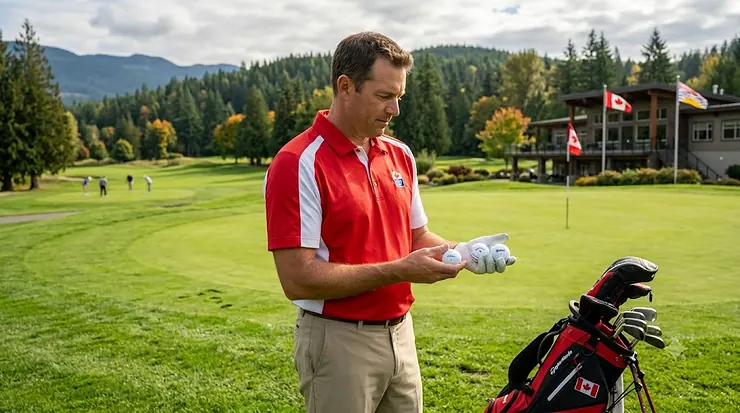
If you’ve ever stood in the golf ball aisle staring at a wall of dozens — Pro V1, Chrome Soft, TP5, Supersoft — and just grabbed whatever was on sale, you’re not alone. Most Canadian golfers buy balls the way they buy milk: by habit, not by fit. But the ball you play affects your distance, your spin around the green, and your scores more than almost any other piece of equipment in your bag, and it’s the one piece of gear nobody gets properly fitted for.
This guide breaks down how to choose golf balls based on the thing that actually matters most: your swing speed and what compression golf ball should I use, given that swing speed and the conditions you’ll be playing in. We’ll also dig into a buyer’s decision framework you can use before you ever click “add to cart,” plus real selection criteria for golfers playing in Canadian conditions — cooler spring and fall rounds, shoulder-season courses on Vancouver Island, and everything in between.
You don’t need the most expensive dozen in the shop. You need the one that matches your game, your budget in CAD, and the way you actually play. With Golf Canada — the country’s national governing body for the sport — reporting hundreds of thousands of member golfers nationwide, ball selection is a question a lot of Canadians are quietly getting wrong. Let’s get into it. 🇨🇦⛳
Quick Comparison Table
| Golf Ball | Compression | Best For | Price Range (CAD/dozen) |
|---|---|---|---|
| Titleist Pro V1 | ~87 | All-around low-handicap performance | $60–$70 |
| Callaway Chrome Soft | ~75 | Soft feel, moderate swing speeds | $55–$65 |
| TaylorMade TP5 | Mid-high (5-piece) | Tour-level spin and control | $65–$80 |
| Bridgestone Tour B X | High | Fast swingers wanting low spin off the tee | $70–$80 |
| Srixon Soft Feel | ~60 | Budget-friendly all-rounder | $30–$40 |
| Titleist TruFeel | ~60 | Beginners, slower swings | $35–$40 |
| Callaway Supersoft | ~38 | Seniors, beginners, slowest swing speeds | $35–$45 |
A glance at this table tells most of the story: compression climbs as you move toward the tour-level balls, and price tracks pretty closely with it. If your driver swing speed is under 85 mph (137 km/h), the bottom three rows of this table will almost always out-perform the top three for you — distance-wise, the math favours the softer ball, even though the premium balls get all the marketing attention. We’ll unpack exactly why below.
💬 Just one click — help others make better buying decisions too! 😊
✨ Don’t Miss These Exclusive Deals!
🔍 Take your golf ball selection to the next level with these carefully picked options. Click on any highlighted ball to check current pricing and availability on Amazon.ca — these picks will help you find a ball your game will actually love.
Top 7 Golf Balls: Expert Analysis
1. Titleist Pro V1
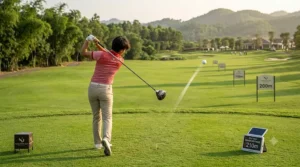
The Pro V1 is the most-played ball on professional tours worldwide, and for good reason: it’s a three-piece, urethane-covered ball with a compression around 87 that’s built for golfers swinging the driver in the 90–115 mph range (roughly 145–185 km/h). What that means in practice is consistency — shot after shot, the Pro V1 behaves the same way, which matters more than raw distance once you’re already a mid-to-low handicapper.
In my experience watching Canadian club players choose balls, the Pro V1 is often picked by golfers who aren’t quite fast enough to benefit from it. If your swing speed is closer to 80 mph (129 km/h), you’ll likely get more carry distance from a softer ball lower on this list — the Pro V1’s firmness needs real clubhead speed to pay off.
Feedback on this ball is overwhelmingly about its short-game control and trustworthy flight in windy conditions, which matters on exposed prairie and coastal courses alike.
✅ Exceptional consistency shot to shot
✅ Strong wedge and iron spin control
✅ Performs well in wind
❌ Premium price point
❌ Not the best distance option for slower swings
Around $60–$70 CAD per dozen — a fair value verdict for low-handicap players, less so for higher-handicap golfers who’ll lose a few balls a round.
2. Callaway Chrome Soft
The Chrome Soft sits at roughly 75 compression, noticeably softer than the Pro V1, and its dual-core construction is designed to keep ball speed up even at moderate swing speeds. The practical effect: golfers in the 80–95 mph (129–153 km/h) range tend to get a touch more carry from this ball than from firmer tour balls, without giving up much short-game spin.
What stands out for Canadian golfers specifically is how this ball performs early and late in the season, when air is denser and cold. Softer-compression balls generally hold their launch characteristics better than very firm ones when the mercury drops, which is relevant if you’re squeezing in April or October rounds in Ontario or the Prairies.
✅ Soft, responsive feel
✅ Good distance for moderate swing speeds
✅ Strong greenside control for a soft ball
❌ High-speed swingers may prefer a firmer ball
❌ Slightly less durable cover over many rounds
Typically $55–$65 CAD per dozen, making it a strong middle-ground pick for golfers who find the Pro V1 a bit firm.
3. TaylorMade TP5
The TP5 uses a five-layer, Tri-Fast Core construction, and golfers who switch to it from a three-piece ball usually notice the difference most around the green — it tends to generate more spin on wedge shots, which can mean more roll-out on long irons if you’re not used to managing that spin.
The practical takeaway for Canadian buyers: this is a ball that rewards practice time on chipping and pitching greens before you trust it on the course, because that extra spin can surprise golfers used to a lower-spin ball. It’s a five-layer ball Rory McIlroy has played on tour, which signals just how serious its short-game intentions are.
✅ Excellent wedge and short-iron spin
✅ Soft, premium feel
✅ Long off the tee for a high-spin ball
❌ Can be temporarily out of stock on Amazon.ca during peak season
❌ Premium price for a ball that needs some adjustment time
Generally $65–$80 CAD per dozen depending on the specific edition.
4. Bridgestone Tour B X
The Tour B X is built for faster swing speeds and lower spin off the tee — it’s the ball of choice for golfers who already hit it long and want to stop ballooning their drives in the wind. Its firmer compression means slower swingers won’t compress it properly, so this one is squarely for golfers swinging 100 mph (161 km/h) or faster.
What most buyers overlook about this model is how well it holds its line in crosswinds, which is a real asset on open prairie courses in Alberta and Saskatchewan or coastal layouts on Vancouver Island where wind, not cold, is the bigger variable most of the season.
✅ Low, penetrating ball flight in wind
✅ Strong off the tee for fast swingers
✅ Durable cover
❌ Too firm for swing speeds under 95 mph
❌ Less greenside “stop” than the Pro V1 or TP5
Around $70–$80 CAD per dozen on Amazon.ca.
5. Srixon Soft Feel
The Soft Feel comes in at roughly 60 compression with a two-piece construction — a genuinely beginner- and mid-handicap-friendly ball that doesn’t pretend to be a tour ball. Its dimple pattern is engineered to hold up in wind, which is a nice bonus at this price point.
For Canadian golfers just getting into the game or playing twice a month, this is the kind of ball you don’t need to feel precious about — you can lose a few in the pond without wincing, and it still performs noticeably better than the cheapest range balls.
✅ Excellent value for the performance
✅ Easy to launch for slower swings
✅ Good wind stability for a budget ball
❌ Less spin control around the green than premium balls
❌ Cover scuffs a bit faster with cart-path mishits
Usually $30–$40 CAD per dozen, making it one of the easiest recommendations on this list for new golfers.
6. Titleist TruFeel
The TruFeel is Titleist’s entry point — around 60 compression, designed specifically for swing speeds between roughly 70–85 mph (113–137 km/h). The core is engineered to compress fully even at those slower speeds, which is the whole point: a firmer “premium” ball at this swing speed simply won’t compress enough to get full distance.
What I’d tell a high-handicapper buying their first dozen: don’t assume the Titleist name means you need the Pro V1. The TruFeel gives you Titleist’s quality control and dimple engineering at a fraction of the price, and for most recreational Canadian golfers it will genuinely add yards.
✅ Real Titleist quality at a lower price
✅ Easy distance for moderate-to-slow swings
✅ Soft, forgiving feel on off-centre hits
❌ Limited short-game spin compared to urethane tour balls
❌ Not ideal for swing speeds above 95 mph
Roughly $35–$40 CAD per dozen.
7. Callaway Supersoft
The Supersoft has one of the lowest compression ratings on the market at around 38, purpose-built for slower swing speeds, seniors, and beginners. The ultra-low compression core means even a smooth 65–75 mph (105–121 km/h) swing fully activates the ball, translating swing energy into distance rather than losing it to an under-compressed core.
This is the ball I’d point a senior golfer or a complete beginner toward first, full stop. The spec sheet won’t tell you this, but the forgiveness on off-centre hits is what really sells this ball for new golfers — mishits don’t punish you nearly as much as they do with a firmer ball.
✅ Maximizes distance for slow swing speeds
✅ Very forgiving on off-centre strikes
✅ Widely available, including recycled/refinished options for even better value
❌ Limited workability for skilled players
❌ Less greenside control than urethane-covered balls
Around $35–$45 CAD per dozen new, with recycled/refinished dozens often available for considerably less.
Buyer’s Decision Framework
Before you scroll back up to the products, run through this quick framework:
- If your driver swing speed is under 85 mph, choose a low-compression ball (35–65) like the Supersoft, TruFeel, or Soft Feel — because a firmer ball simply won’t compress enough to give you full distance.
- If you’re a mid-handicapper swinging 85–100 mph, you have real flexibility — the Chrome Soft or Soft Feel will serve you well, and this is the range where personal feel preference matters as much as the numbers.
- If you’re a low-handicapper swinging over 100 mph, the Pro V1, TP5, or Tour B X will let you access the spin and control your swing can actually use.
- If you play mostly in shoulder-season Canadian conditions (April, October, or year-round on Vancouver Island), lean slightly softer than the chart suggests — cold air is denser and balls fly shorter regardless of ball choice, so a ball that compresses easily helps offset some of that loss.
- If budget is the deciding factor, remember that losing balls costs more than buying the “wrong” compression. A $35 dozen you don’t mind losing in the rough beats a $70 dozen you’re afraid to hit over water.
Real-World Scenarios: Which Ball Fits Which Canadian Golfer
The Toronto beginner. Picking up golf for the first time at 35, playing public courses around the GTA twice a month with a swing speed around 75 mph. The Callaway Supersoft or Srixon Soft Feel is the obvious call — low cost per ball lost, and the forgiveness will make those early rounds far less frustrating.
The Calgary senior golfer. Mid-70s, plays three times a week at a club through the short Alberta season, swing speed has dropped to around 80 mph over the years. The Titleist TruFeel strikes the right balance — Titleist-level dimple and quality control with a compression that actually matches a slower, smoother swing.
The Vancouver Island low-handicapper. Plays year-round thanks to BC’s only true 12-month golf climate, swing speed around 105 mph, single-digit handicap. The Titleist Pro V1 or Bridgestone Tour B X makes sense here — enough swing speed to extract real performance from a tour-level ball, and enough rounds played annually to justify the investment.
How to Choose Golf Balls in Canada: 5 Steps
- Know your swing speed before your brand preference. A launch monitor session at a local pro shop or driving range takes ten minutes and tells you more than any review article can.
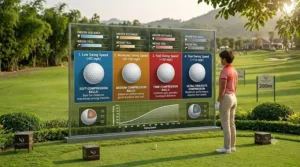
- Match compression to that speed, not to what the pros play. Under 85 mph → 35–65 compression. 85–100 mph → 60–90. Over 100 mph → 85+.
- Decide how many balls you realistically lose per round. If it’s more than two or three, a $35 dozen makes more financial sense than a $70 one, regardless of compression fit.
- Buy a sleeve before a dozen. Most retailers and pro shops sell 3-ball sleeves specifically so you can test before committing to a full box.
- Re-test every couple of seasons. Swing speed changes with age, fitness, and even how often you’re playing — a ball that fit you three years ago may not fit you now.
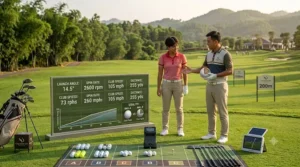
What Compression Golf Ball Should I Use?
Compression measures how much a golf ball deforms on impact, scored against a standardized 90.7 kg (200 lb) force test. Lower numbers mean a softer ball that deforms more easily; higher numbers mean a firmer ball that needs more clubhead speed to compress fully and release that stored energy as ball speed.
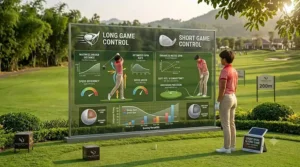
The practical rule: under 85 mph driver swing speed, play 35–65 compression. Between 85–100 mph, play 60–90. Over 100 mph, you can play 85 and up without losing distance. Playing a ball that’s too firm for your swing speed is one of the most common — and most invisible — mistakes recreational golfers make, because the ball still flies and still feels fine off the putter. The loss only shows up as a handful of missing yards off the tee, which most golfers blame on themselves rather than their equipment.
One Canada-specific wrinkle worth knowing: cold air is denser, and golf balls of all compressions fly shorter in cold weather — typically 5–10 yards (4.5–9 m) less with irons and wedges, and 10–20 yards (9–18 m) less with the driver, according to course-specific cold-weather guidance from BC golf travel resources. If you’re playing early spring or late fall rounds, a slightly softer ball than your swing speed would otherwise suggest can help offset some of that seasonal distance loss. It’s also worth noting that academic modelling of Greater Toronto Area golf participation has projected that a warming climate could meaningfully lengthen the playable season and shoulder months in parts of Canada, which only makes year-round ball selection more relevant over time.
Common Mistakes When Buying Golf Balls
- Buying based on what your favourite pro plays, rather than your own swing speed — Tour pros average well over 110 mph and need compression most amateurs can’t activate.
- Switching balls every round. Consistency in ball choice helps you learn how a specific ball behaves around the greens — something you lose if you’re playing whatever was on sale each week.
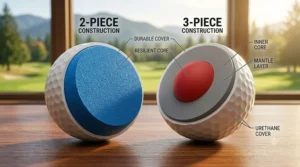
- Ignoring the cover material. A urethane-covered ball (Pro V1, TP5, Chrome Soft) will out-spin an ionomer-covered ball (Supersoft, TruFeel) of similar compression around the greens — that’s a cover difference, not just a core one.
- Not accounting for Canadian shipping realities. If you’re ordering in bulk from Amazon.ca and live somewhere remote or northern, build in extra time versus the delivery estimate shown at checkout.
- Assuming “soft” on the box means low compression. As independent testing from equipment reviewers has shown, some balls marketed with “soft” in the name are actually among the firmer options on the market — read the compression number, not the marketing copy.
Long-Term Cost: What Golf Balls Actually Cost in Canada
A golfer who loses three balls a round and plays once a week for a six-month season will go through roughly 75 balls — about six dozen. At budget pricing ($35 CAD/dozen) that’s around $210 CAD a season; at premium pricing ($70 CAD/dozen) that’s closer to $420 CAD. For most recreational golfers, the math strongly favours a mid-tier or budget ball unless you’re consistently keeping the same ball for an entire round, in which case the performance gains from a premium ball are more likely to be worth the extra cost.
FAQ
❓ How do I know what compression golf ball I should use?
❓ Do golf balls perform differently in cold Canadian weather?
❓ Is the most expensive golf ball always the best choice?
❓ Are all golf balls sold on Amazon.ca legal for casual play?
❓ How many golf balls should a beginner buy at once?
Conclusion
Choosing a golf ball doesn’t need to be complicated, even though the marketing around it often is. Start with your actual swing speed, match it to a compression range, decide how many balls you can afford to lose per round, and only then start worrying about brand names. A $35 CAD dozen that fits your swing will outperform a $70 CAD dozen that doesn’t — every time.
Whether you land on the all-around consistency of the Pro V1, the forgiving distance of the Supersoft, or something in between, the right ball is the one that quietly disappears from your thinking on the course because it’s doing its job. That’s really the whole goal.
Recommended for You
- Golf Ball Comparison Chart 2026: Best & Worst Picks for Canadian Golfers
- 7 Best Golf Balls in Canada (2026)
- Recycled Balls vs New Performance: 7 Best Used Golf Balls Canada 2026
Disclaimer: This article contains affiliate links. As an Amazon Associate, I earn from qualifying purchases. If you purchase products through these links, we may earn a small commission at no additional cost to you.
✨ Found this helpful? Share it with your friends! 💬🤗
