
In This Article
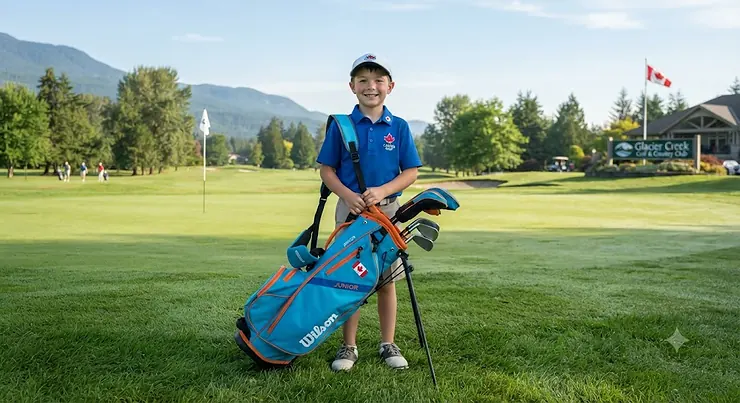
Watch any nine-and-under group tee off at a Canadian club on a Saturday morning and you’ll spot the problem before the first shot even lands: a kid dragging a bag nearly as tall as they are, shoulders hiked up around their ears, clubs sliding sideways with every step. It’s not a swing problem. It’s an equipment problem. Junior golf bags for beginners exist specifically to fix that mismatch — smaller frames, shorter straps, lighter shells, all scaled to a body that’s still growing into the game. A junior golf bag is a scaled-down stand or carry bag, typically 27 to 32 inches tall, built with lighter materials and shorter strap geometry so a child can carry their own clubs comfortably rather than hauling adult gear that fights them at every hole. Golf Canada notes that its national Future Links junior programming has engaged more than 1.7 million young Canadians in the sport, and gear that actually fits is a quiet but real part of whether a kid sticks with those programs past their first summer. Get the wrong bag and you’re not just wasting a purchase — you’re adding friction to something that’s supposed to feel like play. This guide breaks down seven real junior golf bags for beginners currently sold through Canadian retailers, compares them head-to-head on the things that actually matter (weight, strap design, base durability), and walks through the buying decisions parents and coaches wrestle with every spring.
Quick Comparison Table
| Bag | Best Age/Height Fit | Bag Weight | Standout Feature | Best For |
|---|---|---|---|---|
| KVV Junior Golf Stand Bag | Ages 10-12 | ~3 lbs | 4-way top divider | Simple, no-fuss starters |
| PGM Junior Stand Bag | Ages 4-8 | ~2.5 lbs | Single strap carry | Youngest beginners |
| Orlimar ATS Junior Stand Bag | Ages 5-12 (size-specific) | ~3.2 lbs | Padded dividers | Rough handling, budget durability |
| US Kids Golf UL7 Stand Bag | Height 42″-57″ | ~3-4 lbs | Height-matched sizing | Precise club-length fit |
| TaylorMade FlexTech Junior Stand Bag | Ages 9-13 | ~4 lbs | Cart strap pass-through | Kids who’ll use a push cart later |
| Sunday Golf Recess Kids Bag | Ages 5-8 or 9-12 (two sizes) | ~3.5 lbs | Premium materials | Style-conscious families |
| Vessel Junior Stand Bag | Under 5′ tall | ~4.15 lbs body | Self-adjusting double strap | Long-term, multi-year investment |
Looking at the spread above, the price and weight gap between the budget and premium tiers is smaller than most parents expect — a couple of pounds and roughly C$200, not a canyon. Where the real difference shows up is in strap engineering and base construction, which is exactly what separates a bag that survives three seasons from one that’s held together with duct tape by August. If your junior golfer is still shorter than 4’6″, weight matters more than storage; once they cross that line, durability and cart compatibility start to matter more.
💬 Just one click — help others make better buying decisions too!😊
Top 7 Junior Golf Bags for Beginners: Expert Analysis
1. KVV Junior Golf Stand Bag — best simple design for first-time beginners
The KVV Junior Golf Stand Bag is built around a single idea: strip away everything a beginner doesn’t need yet. Weighing in at roughly 3 lbs, it’s designed for kids aged 10 to 12 and centres on a 4-way top divider that keeps a starter set of woods, irons, and a putter from clanging around loose. The top divider doubles as a lift handle, which sounds minor until you’ve watched a nine-year-old try to hoist a bag by its strap alone. Two large side pockets handle balls, gloves, and tees, and the padded adjustable straps are cut for a smaller torso rather than a shrunken adult harness. Based on the spec sheet, this is a bag built for a kid who already has clubs and just needs somewhere sensible to put them — not a bag chasing extra features. On Amazon.ca, the listing for this bag currently holds a 4.8-out-of-5 rating, though the review count is still small (7 reviews at time of research), so treat that figure as an early positive signal rather than a settled verdict. What most buyers overlook about a bag this simple is that fewer moving parts also means fewer failure points — no complicated stand mechanism to jam, no oversized frame to outgrow awkwardly.
Pros:
- ✅ Lightweight ~3 lb frame suits smaller shoulders
- ✅ 4-way divider keeps a starter set organized
- ✅ Padded straps sized for kids, not shrunk adult straps
Cons:
- ❌ Verified review sample is still quite small
- ❌ Sized specifically for ages 10-12, not younger kids
Expect this bag in the under-C$150 range on Amazon.ca — check current price, as junior gear fluctuates seasonally. For a family buying a first bag to match an existing junior club set, it’s a reasonable, low-risk starting point.
2. PGM Junior Stand Bag — single strap simplicity for the smallest golfers
PGM has built a reputation in the budget golf category by making gear that does one job cleanly rather than several jobs adequately, and its junior stand bag follows that formula. Aimed at the youngest beginners — roughly ages 4 to 8 — it uses a lighter shell and a simplified single-strap carry system rather than the dual-strap backpack harness found on bigger junior bags. Here’s what to weigh: a single strap is genuinely easier for a five- or six-year-old to sling on and off by themselves, since there’s no crossing straps or buckle to fumble, but it also concentrates weight on one shoulder, which matters less when the bag itself weighs next to nothing. Reviewers consistently note that budget Amazon-marketplace bags like this vary in fit-and-finish between production runs, so it’s worth reading the current listing’s Q&A section before buying rather than relying purely on the product photos. Detailed published lab specs for this generation aren’t independently available, so what follows is grounded in the category norms for this size and price point rather than brand-specific lab testing. For a toddler or kindergarten-age beginner who’s mostly hitting balls in the backyard or at a Future Links clinic, the low weight matters far more than pocket count.
Pros:
- ✅ Genuinely lightweight for the youngest age bracket
- ✅ Single strap is easy for small kids to self-manage
- ✅ Priced to survive a phase kids may outgrow quickly
Cons:
- ❌ Build consistency reportedly varies by production batch
- ❌ Single strap concentrates weight on one shoulder
At under C$100, this is squarely an entry-level buy — the right call for a family who isn’t sure yet whether golf will stick.
3. Orlimar ATS Junior Stand Bag — sturdiest padding on a starter budget
The Orlimar ATS Junior Stand Bag shows up again and again in junior golf retail catalogues for one reason: it punches above its price point on build quality. Available in age-specific sizing (5-8 and 9-12, with the larger version fitting kids roughly 52 to 60 inches tall), it uses a 4-way padded top divider — padding that thinner budget bags typically skip — plus a dedicated glove holder for quick access. On paper this means less club rattle over a bumpy cart path and a bit more structural rigidity when the bag gets tossed into a trunk. Aggregated reviewer sentiment gathered across retail listings for the ATS line points to solid stand-leg stability on grass and firm ground, though several reviewers flag that the bag doesn’t hold up as well on soft, sloped terrain — the legs can sink or slip. The lack of an included rain hood is a recurring complaint in review threads, which is a fair ding for a Canadian buyer given how often a June round gets interrupted by a shower. Still, when it’s compared against the very cheapest tube-style bags, the ATS offers meaningfully better organization and padding for kids who are progressing past their very first summer.
Pros:
- ✅ Padded 4-way divider reduces club noise and wear
- ✅ Stable stand legs on grass and firm fairways
- ✅ Age-specific sizing improves overall fit accuracy
Cons:
- ❌ No rain hood included in the base package
- ❌ Stand legs less stable on soft or sloped ground
Priced in the C$110-C$160 range depending on size and colourway, the ATS is a strong pick for a kid who’s committing to a second season.
4. US Kids Golf UL7 Stand Bag — most precise height-to-club fit system
Where most brands size junior bags loosely by age, US Kids Golf ties its UL7 stand bag lineup directly to a child’s height, running from the UL7-42 for the very youngest beginners through the UL7-54 for kids standing roughly 54 to 57 inches tall. What draws attention here is how seriously the brand treats fit as a system rather than an afterthought — the bag size is matched to the same height brackets used for its club sets, so a family buying both isn’t guessing whether the bag and the clubs will actually pair up correctly. Reviewers and longtime junior coaches frequently point to this precision as the reason US Kids Golf remains a go-to recommendation in junior development programs across North America. The trade-off is retail footprint: this is a specialist junior brand, not a big-box staple, so trying one on in person before buying may mean a trip to a dedicated junior golf retailer or golf academy rather than a quick stop at a general sporting goods store. Based on the sizing structure alone, this bag earns its spot for parents who’ve already bought into the US Kids Golf club ecosystem and want the bag to match precisely rather than approximately.
Pros:
- ✅ Height-based sizing matches bag to actual club length
- ✅ Broad size range from 20″ to 32″ tall bags
- ✅ Backed by a brand built specifically around junior fit
Cons:
- ❌ Fewer in-person retail locations across Canada
- ❌ Requires knowing your child’s height accurately to order
Expect a C$130-C$180 range depending on the specific height bracket — reasonable for a fit-first specialist brand.
5. TaylorMade FlexTech Junior Stand Bag — best all-around mid-range pick
The TaylorMade FlexTech Junior Stand Bag is what happens when a major adult-golf brand scales its flagship carry-bag design down rather than building a stripped-down afterthought. It keeps the 4-way top divider and adds six pockets — more storage than most junior-specific bags offer — plus a cart strap pass-through that lets it convert from a shoulder-carried stand bag to a push-cart bag without buying separate gear. That pass-through detail matters more than it sounds: a lot of families start a junior golfer walking with a strap and shift to a push cart within a year or two as rounds get longer, and a bag that handles both saves a second purchase down the line. The comfortable, ergonomically shaped straps borrow directly from TaylorMade’s adult FlexTech line, which reviewers frequently praise for reducing shoulder fatigue on longer walks — a detail that becomes more relevant as kids age into 9-hole and eventually 18-hole rounds. What most buyers overlook is that this bag runs a size larger than some junior-specific brands, so it suits a child already comfortable carrying moderate weight more than a true first-timer.
Pros:
- ✅ Cart strap pass-through works for carrying and pushing
- ✅ Six pockets, more storage than most junior bags
- ✅ Recognizable big-brand build quality and stitching
Cons:
- ❌ Priced above most junior-specific competitors
- ❌ Runs larger, less ideal for the smallest beginners
At roughly C$270-C$310, this sits at the top of the mid-range tier — worth it for a family planning multiple seasons of use.
6. Sunday Golf Recess Kids Golf Bag — best style-meets-substance design
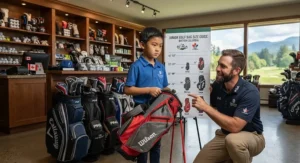
Sunday Golf built its reputation on minimalist, design-forward adult carry bags, and the Recess Kids Golf Bag brings that same sensibility down to junior sizing without cutting corners on materials. It’s available in two genuinely distinct sizes — a 27-inch version for ages 5 to 8 and a 31-inch version for ages 9 to 12 — rather than a single bag stretched loosely across a wide age range, which is a meaningfully better approach to fit than most competitors in this price tier attempt. The colourways (Blue/White and Pink/White Check among them) lean noticeably more polished than the typical primary-colour junior bag, which matters to plenty of kids who care as much about looking the part as playing it. Here’s what to weigh: boutique brands like Sunday Golf typically charge a premium for that design attention, and buyers considering the Recess should go in expecting a materials-and-aesthetics upgrade over mass-market bags rather than a dramatically different functional feature set. The tighter retail footprint also means less opportunity to inspect one in person before ordering, so pay close attention to the sizing chart based on your child’s actual height rather than age alone.
Pros:
- ✅ Two dedicated sizes fit growth stages precisely
- ✅ Premium materials and genuinely distinctive design
- ✅ Well-regarded boutique brand with consistent quality control
Cons:
- ❌ Priced above most mainstream junior bags
- ❌ Limited in-person retail availability for sizing checks
Budget C$300-C$360 for the Recess — a fair ask if design and materials quality are priorities alongside function.
7. Vessel Junior Stand Bag — best premium build that lasts through growth spurts
At the top of this lineup sits the Vessel Junior Stand Bag, and the reasoning is straightforward: it’s built from the same materials and stand technology as Vessel’s full-sized adult bags, just scaled down. The patented self-adjusting Equilibrium Double Strap is the standout feature — it distributes weight across both shoulders automatically and can be lengthened as a child grows, which directly addresses one of the biggest complaints about junior gear in general: kids outgrow it fast. The body weighs about 4.15 lbs with the strap adding roughly 0.6 lbs and an included rain hood another 0.45 lbs, and it’s sized for golfers under 5 feet tall. Four exterior pockets, an interior valuables pocket, and an insulated, magnetically-sealed beverage sleeve round out the storage — genuinely more thoughtful organization than anything else on this list. What the spec sheet won’t tell you, but the brand’s own adult-bag review history suggests, is that Vessel’s reputation for durability comes from using the same-grade zippers and stitching across its whole lineup rather than downgrading components for the junior version. That consistency is exactly why this bag carries the highest price tag here.
Pros:
- ✅ Tour-grade materials shared with Vessel’s adult bags
- ✅ Self-adjusting double strap grows with your child
- ✅ Insulated beverage pocket is a genuinely useful extra
Cons:
- ❌ Priced well above every other bag on this list
- ❌ Arguably more bag than a casual, once-a-summer golfer needs
Expect a C$340-C$400 range — a real investment, but one aimed at families committed to multiple seasons of junior golf rather than a single tryout summer.
Simple Junior Golf Bag Design: A Practical Setup & Fit Guide
Getting a new bag home is only step one. Before the first round, adjust both straps while your child is wearing a light jacket similar to what they’ll golf in — strap length that feels right over a t-shirt in the garage often feels tight on a cool April morning at the course. A properly fitted bag sits with its top roughly at shoulder height when worn, not riding up near the ear or sagging below the hip. During the first 30 days, the most common mistake is overpacking: parents stuff a full-size rain suit, three dozen balls, and a jacket into a bag built for six clubs and a sleeve of tees, which defeats the entire point of buying something lightweight. A simple junior golf bag design works best when it’s used simply — pack only what fits in one pass through the pockets without forcing zippers. For maintenance, wipe down the base after wet rounds so grass and mud don’t harden into the stand-leg hinges, and check strap stitching every few weeks, since that’s the first failure point on budget bags. One optimization trick coaches use: colour-code tees or grip tape to match pocket zippers, so young golfers learn bag organization as a habit rather than a chore imposed on them.
Real-World Scenarios: Matching Bags to Young Golfers
Consider three common situations. A six-year-old just finishing their first First Tee session, hitting a half-set of clubs at the driving range twice a month — here, weight beats everything else, making the PGM Junior Stand Bag or the smaller Orlimar ATS size the sensible call, since a heavier bag at this age can genuinely discourage a kid from wanting to carry their own gear. Next, an eleven-year-old playing 9-hole junior league rounds weekly and starting to care about how their setup looks next to teammates — the Sunday Golf Recess Kids Golf Bag or TaylorMade FlexTech Junior Stand Bag fit that profile, balancing durability with a look that doesn’t feel like leftover gear. Finally, a competitive 12-year-old already logging 18-hole rounds in regional junior tournaments, whose parents expect two or three more seasons of heavy use before an adult bag makes sense — that’s exactly the buyer the Vessel Junior Stand Bag and its self-adjusting strap were designed around. Budget, frequency of play, and how many seasons the bag needs to survive should drive the decision far more than colour preference alone, even though colour preference is, understandably, often what actually closes the sale with the kid holding the clubs.
Common Junior Golf Bag Problems (And How to Solve Them)
Straps digging into shoulders: usually a sizing mismatch rather than a bad bag — recheck the height chart, since most junior bags run in fixed size brackets rather than fully adjustable ranges. Clubs sliding down into the bag body: common on bags with shallow dividers when a child’s clubs are shorter than the divider depth expects; packing foam or a rolled towel at the bottom prevents clubs from disappearing into the shaft well. Stand legs not deploying on soft ground: a known limitation on lighter, lower-cost bags like the Orlimar ATS — teaching kids to plant the bag on firmer turf near the tee box solves most of this without needing a different bag. Zippers snagging: typically caused by overpacking pockets designed for light items; distributing gear more evenly across all pockets rather than cramming one solves it in most cases. Bag smells musty after a wet season: a base ventilation issue more than a bag-quality issue — storing the bag upright in a dry space rather than lying flat in a trunk resolves it for nearly every model on this list.
How to Choose a Junior Golf Bag for Beginners
- Match height, not just age. Age brackets on packaging are a starting point, not a rule — a tall seven-year-old may need a bag sized for nine- and ten-year-olds. Canada’s own paediatric growth-chart standards illustrate just how much height varies within a single age year, which is exactly why brands like US Kids Golf size by height rather than birthdate.
- Weigh the empty bag, then imagine it full. A 3 lb empty bag with a full set of clubs, balls, and a rain jacket can add up quickly; aim for a bag that stays comfortable once loaded, not just off the shelf.
- Check strap type against your child’s independence level. Younger beginners often do better with single-strap simplicity; kids carrying for full rounds benefit more from a balanced double-strap system.
- Prioritize base durability over pocket count. A bag that survives being dropped on cart paths matters more long-term than an extra zippered pouch.
- Confirm stand-leg stability if you’ll be walking, not carting. Cheaper stand mechanisms can struggle on slopes or soft turf.
- Decide if cart compatibility matters yet. If a push cart is likely within a year, a bag with a cart strap pass-through avoids a second purchase.
- Set a real budget band before browsing. Deciding upfront whether you’re in the budget, mid-range, or premium tier prevents both overspending on a bag a fast-growing kid will outgrow and underspending on one that won’t survive a season.

Beginner Junior Bag Durability: What Actually Holds Up
Durability in a junior bag comes down to three components most parents never think to check: the base material, the divider stitching, and the strap hardware. The base — where stand legs pivot and where the bag absorbs every drop, drag, and cart-path scrape — is typically a reinforced polyester or a denser rubberized composite on premium bags like Vessel’s, versus a thinner single-layer fabric on entry bags like PGM’s or the base KVV model. A durable base material resists abrasion tears at the bottom seam, which is consistently the first place budget bags fail after a season of being tossed in and out of a trunk. Divider stitching matters next: reinforced double-stitched dividers, as seen on the Orlimar ATS, hold their shape after repeated club insertion and removal, while single-stitched dividers on the cheapest bags can start separating within a summer. Strap hardware — the D-rings and buckle plastic connecting strap to frame — is the least visible durability factor and the most commonly overlooked; reviewers across multiple budget junior bag listings note buckle cracking as the most frequent failure point, well ahead of fabric tearing. If you’re buying for a child who’s rough on gear, prioritize the Orlimar ATS or Vessel over ultra-light options, since lighter materials and durability are often a direct trade-off.
Easy-Carry Kids Golf Bags: Straps & Features That Actually Matter
Not every feature printed on a junior bag’s tag earns its keep. An easy-carry kids golf bag really comes down to two things: total weight and strap geometry — everything else is secondary. Single strap simplicity works well for the youngest beginners because there’s nothing to adjust or cross incorrectly, but it does put all the load on one shoulder, which becomes a real drawback once a child is walking more than a couple of holes at a time. Double-strap systems, like the Equilibrium strap on the Vessel bag or the dual carry straps on the KVV model, distribute weight across both shoulders the way a backpack does, which matters more as round length increases. Beyond straps, a genuinely useful feature list is short: a lift handle on the top divider, a mesh or zippered ball pocket that’s actually reachable while the bag is worn, and stand legs that deploy with one motion rather than two. Features that sound appealing but rarely get used by a beginner include umbrella sleeves, glove holders shaped for adult-size gloves, and elaborate 14-way top dividers meant for a full 14-club adult set a junior golfer won’t carry for years.
What to Expect: Real-World Performance on the Course
On paper, the difference between a 3 lb bag and a 4 lb bag looks trivial. On the course, over nine holes on a warm afternoon, that pound compounds — shoulders tire, posture slips, and a kid who started the round standing tall is hunching by hole six. Expect a properly fitted junior bag to feel almost unnoticeable for the first few holes and only start to register as a real strap on the shoulder by the back nine, which is normal and not a sign of a bad bag. Stand legs on budget models will occasionally sink slightly into wet fairways rather than locking rigid the way premium legs do — annoying, but rarely a dealbreaker if a parent or coach is nearby to help reset the bag. Pocket organization becomes genuinely useful around the second or third round, once a child has settled into a habit of where tees, balls, and gloves live; the first round or two, expect some fumbling regardless of how well-designed the bag is. None of this is unique to any one bag on this list — it’s simply what adjusting to carrying your own equipment looks like at eight or nine years old.
Junior Golf Bags for Different Ages and Skill Levels
For ages 4 to 6, prioritize the lightest possible option — the PGM Junior Stand Bag or a small-sized Orlimar ATS — since at this stage the goal is simply removing friction between the kid and the clubs. For ages 7 to 9, a bag like the KVV Junior Golf Stand Bag or the smaller Sunday Golf Recess size balances organization with continued light weight, matching a stage where kids are starting structured lessons and short-course play. For ages 10 to 12, look toward the TaylorMade FlexTech Junior Stand Bag or the larger US Kids Golf UL7, since rounds are getting longer and storage needs increase. Beyond age 12, many kids transition toward standard adult bags entirely, though a Vessel Junior Stand Bag can still comfortably serve a competitive junior under 5 feet tall. It’s worth noting that physical activity engagement drops off sharply through adolescence in Canada — reporting from CBC on ParticipACTION’s national report card has repeatedly flagged low activity levels among Canadian kids and teens — so gear that keeps a preteen enthusiastic about walking nine holes rather than dreading it carries real value beyond the golf course itself.
Long-Term Cost & Maintenance
Total cost of ownership on a junior bag rarely ends at the price tag. Budget bags in the C$70-C$150 range typically need replacing every one to two seasons as kids grow or straps and dividers wear out, meaning a family might spend C$150-C$300 total across a child’s early beginner years through two bag purchases. Mid-range and premium bags, priced C$270-C$400 upfront, are built with height-adjustable straps or broader size tolerances that can stretch that single purchase across two to three seasons instead, which narrows the total cost gap more than the sticker price suggests. Maintenance costs stay low across the board — replacement rain hoods run modestly, and strap repairs are rarely worth the cost compared to the bag’s remaining lifespan. The real long-term cost-per-use calculation favours mid-range and premium bags for families committed to multiple seasons, and favours the cheapest bags for a genuinely uncertain first summer where golf might not stick at all.
Common Mistakes When Buying a Junior Golf Bag for Beginners
The most frequent mistake is buying by age printed on the box rather than actual height, which routinely results in a bag that’s technically “correct” but functionally too big or too small. A close second is prioritizing pocket count and colour over strap type and base durability, which are the two factors that actually determine whether the bag survives a season. Parents also commonly buy a bag sized for where their child will be in two years rather than where they are now, reasoning that it’ll “grow into it” — in practice, an oversized bag is simply harder to carry today and doesn’t solve tomorrow’s problem either. Skipping the rain-hood question is another overlooked detail in a Canadian climate where a dry morning round can turn wet by the back nine. Finally, some buyers assume all “junior” labelled bags on Amazon marketplaces are built to the same standard; aggregated review sentiment makes clear that quality varies meaningfully even within the same price bracket, which is exactly why checking current reviews on the specific listing — not just the brand name — remains worth the extra two minutes before buying.
Frequently Asked Questions
❓ What size golf bag does a beginner junior golfer need?
❓ How much should a junior golf bag cost?
❓ Can a junior golf bag be used with a push cart?
❓ What age should a kid switch to an adult golf bag?
❓ Are single strap or double strap junior bags better for beginners?
Conclusion
Choosing between these seven bags really comes down to answering two questions honestly: how tall is your child right now, and how many seasons do you realistically expect to get out of this purchase? A beginner just trying the game deserves a light, forgiving bag like the PGM Junior Stand Bag or KVV Junior Golf Stand Bag — nothing fancy, nothing expensive, just something that gets clubs from car to course without a fight. A kid who’s clearly hooked and playing weekly justifies stepping up to the Orlimar ATS, US Kids Golf UL7, or TaylorMade FlexTech, where durability and cart compatibility start paying for themselves. And for a competitive junior logging real rounds across multiple seasons, the Sunday Golf Recess or Vessel Junior Stand Bag represent a genuine long-term investment rather than an impulse buy. Whatever tier fits your family’s situation, remember that programs like Golf Canada’s Youth on Course exist specifically to keep the on-course side of this affordable — the bag is one part of the equation, but getting a kid out playing regularly is really the whole point.
Recommended for You
- 7 Best Junior Golf Bags for Teenagers (Canada, 2026)
- Junior Golf Bag for Toddlers: 7 Best Picks (2026)
- 7 Best Lightweight Junior Golf Bags for Kids in 2026
Disclaimer: This article contains affiliate links. As an Amazon Associate, I earn from qualifying purchases. If you purchase products through these links, we may earn a small commission at no additional cost to you.
✨ Found this helpful? Share it with your friends! 💬🤗
