
In This Article
When you’ve worked your way down to a 0 handicap, you’ve earned the right to be particular about your equipment. As a scratch golfer myself, I can tell you that tour level balls for scratch golfers aren’t just marketing hype—they’re precision instruments that respond to your refined ball-striking ability in ways that distance balls simply cannot.

The difference becomes painfully obvious around 75 metres from the pin. While a recreational player might not notice the subtle spin variations between a two-piece distance ball and a four-layer tour ball, scratch golfers rely on predictable spin rates to execute the shots that separate bogeys from birdies. What most Canadian buyers overlook about tour-level balls is how dramatically cold weather affects their performance—urethane covers become noticeably firmer below 10°C, which means that April round at your home track in Calgary plays very differently than the same ball in August.
Tour level balls for scratch golfers deliver three non-negotiables: consistent ball flight in varying conditions, exceptional greenside control with scoring clubs, and the workability to shape shots on command. In this comprehensive guide, we’ll examine seven elite options available on Amazon.ca, breaking down which balls suit specific swing profiles and playing conditions across Canadian courses. Whether you’re battling spring winds in Halifax or managing firm summer greens in Kelowna, the right ball makes measurable differences in your ability to score.
The USGA defines a scratch golfer as someone who can play to a course handicap of zero, averaging drives around 250 yards (229 metres) and consistently reaching 470-yard (430-metre) holes in two shots. At this level, you’re no longer compensating for swing flaws—you’re optimizing performance.
Quick Comparison: Top Tour Balls for Canadian Scratch Golfers
| Ball Model | Construction | Driver Spin | Greenside Control | Price Range (CAD) | Best For |
|---|---|---|---|---|---|
| Titleist Pro V1x | 4-piece urethane | Low-medium | Exceptional | $65-$80 | High launch, steep descent |
| TaylorMade TP5x | 5-layer urethane | Low | Outstanding | $60-$75 | Fast swingers, workability |
| Callaway Chrome Soft X | 4-piece urethane | Medium-low | Excellent | $60-$75 | Consistent spin, control |
| Srixon Z-Star | 3-piece urethane | Medium | Maximum | $50-$65 | Short game specialists |
| Bridgestone Tour B XS | 3-piece urethane | Medium | Excellent | $60-$75 | Swing speeds 105+ MPH |
| Titleist Pro V1 | 3-piece urethane | Very low | Exceptional | $65-$80 | Penetrating flight, soft feel |
| Callaway Chrome Tour | 4-piece urethane | Low | Excellent | $60-$75 | Speed with control |
Looking at this comparison, the Titleist Pro V1x and TaylorMade TP5x dominate the high-launch category, but scratch players with naturally penetrating ball flights might find the Pro V1’s lower spin profile delivers more consistency in Canadian wind. The Srixon Z-Star stands out for value-conscious players who prioritize short game performance—at $10-$15 CAD less per dozen than Titleist, you’re getting tour-level greenside spin without the premium price. Note that Canadian pricing typically runs 15-20% higher than US equivalents due to exchange rates and import duties, but buying through Amazon.ca eliminates cross-border shipping hassles and warranty complications.
💬 Just one click — help others make better buying decisions too! 😊
Top 7 Tour Level Balls: Expert Analysis for Scratch Golfers
1. Titleist Pro V1x — The High-Flight Standard
The Titleist Pro V1x remains the benchmark that every other manufacturer chases, and for good reason. This 4-piece urethane ball delivers a slightly firmer feel than its Pro V1 sibling, launching higher off the driver with a more pronounced descent angle that holds Canadian greens even in afternoon winds. The 352-dimple design creates a penetrating flight that holds its line remarkably well—something Prairie golfers appreciate when battling the notorious Saskatchewan gusts.
The Pro V1x features a dual-core construction with progressive compression that maximizes energy transfer at impact. What this means in practice: you’re getting explosive ball speed from your driver without sacrificing the soft feel around greens that scratch players demand. The cast urethane elastomer cover works in concert with the casing layer to generate massive greenside spin—I regularly see 8,000+ RPM on my 56-degree wedge shots with fresh Pro V1x balls. Canadian reviewers consistently praise the durability, with most reporting 2-3 rounds before visible scuffing affects performance.
For scratch golfers with swing speeds between 105-115 MPH who want that towering iron trajectory and aggressive spin on approach shots, the Pro V1x is nearly impossible to beat. It’s particularly well-suited for courses with elevated greens or firm summer conditions where you need that steep angle of descent to hold the putting surface. The trade-off is slightly more driver spin than the standard Pro V1, which can cost you 3-5 yards if you tend to balloon drives.
Pros:
✅ Highest launch and steepest descent in class
✅ Exceptional durability for urethane construction
✅ Consistent performance across all clubs
Cons:
❌ Premium pricing in the $70-$80 CAD range
❌ Slightly more driver spin than Pro V1
Price: Around $70-$78 CAD per dozen on Amazon.ca — excellent value considering you’ll get 36-54 holes per ball before performance degrades.

2. TaylorMade TP5x — Five-Layer Precision Engineering
The TaylorMade TP5x represents TaylorMade’s most sophisticated construction, utilizing five distinct layers to optimize performance across every club in the bag. The unique Tri-Fast Core delivers a progressive compression that starts soft in the centre and becomes increasingly firm toward the outer layers, creating a fascinating phenomenon: explosive driver speed with controlled iron spin. The 2026 redesign introduces an updated Seamless Tour Flight Dimple Pattern that eliminates the ballooning tendency that plagued earlier versions in windy conditions.
What separates the TP5x from competitors is the proprietary HFM (High-Flex Modulus) Speed Layer System that maximizes energy return on off-centre hits. For scratch golfers, this translates to tighter dispersion patterns—your mishits travel closer to your intended line than with traditional urethane balls. The cast urethane cover is slightly thinner than previous generations at just 0.6mm, which enhances feel without compromising durability. Canadian players report excellent performance in cold weather, with minimal hardening down to 5°C compared to other urethane covers.
This ball suits fast-swinging scratch players who want ultimate workability. If you regularly work the ball both directions and need precise distance control with long irons, the TP5x delivers. The five-layer construction does create a marginally firmer feel than three-piece designs, which some traditionalists find less responsive on delicate chips. However, that firmness provides excellent feedback—you know immediately when you’ve struck it purely.
Pros:
✅ Exceptional workability for shaping shots
✅ Maintains performance in cold Canadian weather
✅ Tightest dispersion on off-centre strikes
Cons:
❌ Slightly firmer feel than 3-piece alternatives
❌ Higher price point than most competitors
Price: Typically $65-$75 CAD on Amazon.ca — the complex five-layer construction justifies the cost for players who need that level of shot-shaping control.
3. Callaway Chrome Soft X — Tour-Proven Performance
Callaway’s Chrome Soft X combines tour-level performance with what the company calls Precision Technology—manufacturing specifications measured to 1/1000th of an inch that deliver the tightest dispersion in Callaway’s lineup. The Hyper Elastic SoftFast Core generates explosive ball speed while maintaining the signature soft compression that Chrome Soft is known for. What’s particularly interesting about this 4-piece design is how it achieves firm feel characteristics without the harsh impact sensation that typically accompanies firmer balls.
The Tour Aero aerodynamic design delivers consistent ball flight regardless of conditions, which Canadian players particularly appreciate during spring when weather patterns shift dramatically throughout a round. The dual mantle system creates a unique spin profile: low spin off the driver and long irons for distance, but aggressive bite on approach shots and around the greens. Canadian testers note the Chrome Soft X performs exceptionally well on wet fairways common in Vancouver and Halifax—the urethane cover maintains consistent spin even from damp lies.
This ball is ideally suited for scratch players with aggressive swings who want to “bomb it” off the tee while maintaining excellent greenside control. The spin consistency is remarkable—whether you’re hitting a full 9-iron or a half-wedge, the Chrome Soft X produces predictable spin rates within a tight window. The Triple Track alignment option (available at the same price) provides visual feedback on the putting green, though purists may prefer the traditional all-white appearance.
Pros:
✅ Excellent spin consistency across all clubs
✅ Performs well on wet conditions
✅ Softer feel than firmness suggests
Cons:
❌ Slightly less greenside spin than Pro V1x
❌ Cover shows wear faster than Titleist
Price: Around $65-$72 CAD on Amazon.ca — competitive pricing for the performance delivered, especially for players who don’t require maximum greenside spin.
4. Srixon Z-Star — Maximum Greenside Control
The Srixon Z-Star deserves serious consideration from any scratch golfer who prioritizes short game performance. This 3-piece premium ball features Srixon’s FastLayer DG Core 2.0 technology—a core that starts soft in the centre and dramatically firms toward the edge, creating what Srixon calls “exceptional feel with added approach shot spin.” The standout feature is the Spin Skin+ coating, a durable surface treatment that digs deep into wedge and iron grooves to maximize friction and spin generation.
What Canadian players consistently notice with the Z-Star is the remarkable greenside spin—this ball regularly produces 1,000-1,500 RPM more than competitors on partial wedge shots. If your scoring relies heavily on precision wedge play and aggressive short game attack, the Z-Star gives you that extra margin for error. The 0.5mm ultra-thin urethane cover is made with biomass materials (reducing environmental impact by approximately 20%), though Srixon maintains this doesn’t compromise performance or durability.
The 338 Speed Dimple Pattern reduces drag and provides more lift compared to traditional dimple designs, which translates to additional carry distance—particularly valuable when playing into the prevailing winds common on Canadian courses. At $10-$15 CAD less per dozen than Titleist or TaylorMade equivalents, the Z-Star represents exceptional value. The three-piece construction does produce slightly less driver distance than five-layer designs (typically 2-4 yards), but for scratch players who make their living inside 100 yards, that’s often an acceptable trade-off.
Pros:
✅ Maximum greenside spin in class
✅ Excellent value at $50-$65 CAD
✅ Environmentally conscious construction
Cons:
❌ Slightly less driver distance than 5-piece balls
❌ Cover durability not quite Titleist-level
Price: Typically $52-$65 CAD on Amazon.ca — outstanding value for the performance, especially for short game specialists who rotate balls more frequently.
5. Bridgestone Tour B XS — Personalized Performance Technology
The Bridgestone Tour B XS represents Bridgestone’s most sophisticated ball design, featuring their proprietary REACTIV IQ urethane cover technology. This “smart” cover material responds differently depending on impact force—staying firm on driver strikes to reduce spin and maximize distance, then becoming softer on iron and wedge shots to generate more spin and control. The XCLRNT mid-layer supercharges this effect, creating a remarkably versatile performance profile.
Designed specifically for players with swing speeds above 105 MPH (169 km/h), the Tour B XS produces a penetrating ball flight that cuts through wind effectively—a crucial characteristic for Canadian conditions where spring and autumn rounds often feature 20+ km/h winds. The gradational compression core maintains excellent feel despite the ball’s performance orientation, and Canadian reviewers consistently mention the exceptional durability. Many report 3-4 rounds before noticeable cover wear, which is impressive for a tour-level urethane ball.
What makes the Tour B XS particularly interesting for scratch golfers is Bridgestone’s ball fitting philosophy. The company offers detailed fitting tools on their website to match balls to swing characteristics, and their research with PGA Tour players has translated directly to this ball’s design. If you’ve struggled to find consistent performance with other premium balls, the personalized approach might reveal why. The one limitation: players with swing speeds below 100 MPH won’t fully activate the performance benefits of this ball’s construction.
Pros:
✅ Unique REACTIV cover responds to impact force
✅ Exceptional durability and cover life
✅ Excellent wind performance
Cons:
❌ Requires 105+ MPH swing speed for optimization
❌ Limited availability at some Canadian retailers
Price: Generally $62-$75 CAD on Amazon.ca — the advanced cover technology justifies the premium for fast-swinging players seeking personalized performance.
6. Titleist Pro V1 — Penetrating Flight Precision
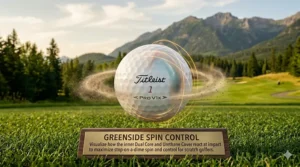
The standard Titleist Pro V1 (not to be confused with the V1x) offers a distinctly different flight profile that many scratch golfers prefer. With a 3-piece construction that prioritizes very low long game spin and mid-trajectory flight, the Pro V1 produces what Titleist describes as a “penetrating ball flight” that holds its line in crosswinds better than higher-flying alternatives. For Canadian players who regularly face variable wind conditions, this characteristic is invaluable.
The Pro V1’s softer compression (around 87 compared to the V1x’s 97) creates a noticeably softer feel at impact, which many accomplished players find enhances feedback and touch on partial shots. The 352-dimple tetrahedral design creates a consistent flight window—your well-struck shots cluster tightly together, and even mishits maintain directional integrity. What’s particularly impressive is how the Pro V1 maintains exceptional greenside spin despite the low driver spin. The cast urethane elastomer cover working with the proprietary casing layer generates aggressive bite on scoring shots.
This ball suits scratch players with naturally higher launch conditions who need to control trajectory, or those playing firm, fast courses where a boring ball flight provides more control. The Pro V1 is also ideal for cold-weather golf—the penetrating flight cuts through heavy spring air more effectively than towering trajectories. Canadian prairie courses with minimal tree protection particularly favour this flight profile, where wind management becomes crucial to scoring. The trade-off is less stopping power on firm greens compared to the V1x’s steeper descent angle.
Pros:
✅ Penetrating flight excels in wind
✅ Softer feel than V1x
✅ Very low driver spin for maximum rollout
Cons:
❌ Less stopping power on firm greens
❌ May launch too low for some swing profiles
Price: Around $67-$78 CAD per dozen on Amazon.ca — identical pricing to the V1x allows you to choose based purely on performance preference rather than budget.
7. Callaway Chrome Tour — Speed with Precision
The Callaway Chrome Tour (distinct from Chrome Soft) represents Callaway’s answer to players demanding maximum ball speed without sacrificing tour-level control. The 2026 version features a redesigned mantle layer and optimized aerodynamics that Callaway claims deliver 3-5 yards more carry than the previous generation. The four-piece Tour Flight Dimple Pattern creates a consistent, powerful trajectory that maintains stability even in challenging conditions.
What distinguishes the Chrome Tour from the Chrome Soft X is the firmer overall compression and lower driver spin profile. For scratch golfers with aggressive swings who fight occasional ballooning or excess spin, the Chrome Tour provides a flatter, more controlled ball flight. The ultra-thin urethane cover still delivers exceptional greenside performance—Canadian testers report spin rates comparable to Pro V1 on full wedge shots, though perhaps 500-800 RPM less on delicate touch shots around the green.
The Chrome Tour particularly excels for players prioritizing distance and consistency over maximum workability. If you’re a straight ball hitter who relies more on precision than shot shaping, this ball’s stable flight characteristics reward sound fundamentals. The Precision Technology manufacturing process ensures each ball performs identically, eliminating the variability that can creep into lesser balls after a few rounds. Canadian players note good cold-weather performance, with minimal feel changes down to approximately 8°C.
Pros:
✅ Maximum distance in tour category
✅ Stable flight for straight hitters
✅ Excellent consistency ball-to-ball
Cons:
❌ Less workability than TP5x
❌ Slightly firmer feel than Chrome Soft
Price: Typically $60-$72 CAD on Amazon.ca — competitive pricing for players who value distance and consistency over maximum spin and workability.
Understanding Tour Ball Construction for Scratch Players
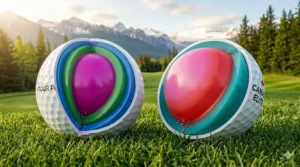
The leap from recreational balls to tour level balls for scratch golfers involves understanding how construction directly influences performance. Modern tour balls utilize three to five distinct layers, each engineered to optimize specific shot characteristics. The core determines compression feel and energy transfer, the mantle layers control spin generation through the bag, and the cover dictates greenside performance and durability.
Three-piece designs like the Pro V1 and Srixon Z-Star offer a single mantle layer between core and cover, creating a straightforward performance profile: soft feel, predictable spin rates, and excellent consistency. These balls excel for players who value simplicity and reliability. Four-piece constructions add a secondary mantle layer, allowing manufacturers to fine-tune spin separation—low spin off the driver, high spin on approach shots. The Pro V1x and Chrome Tour utilize this architecture to deliver versatile performance.
Five-piece balls like the TP5x represent the cutting edge, using multiple mantle layers with varying hardness to create extremely complex spin profiles. Each layer activates at different impact forces, theoretically optimizing every shot in the bag. Whether you need this complexity depends on your swing characteristics and how much you value workability versus consistency. Canadian courses with varying elevation and wind conditions often reward the adaptability of multi-layer designs.
Urethane covers have become universal at the tour level because they provide the soft feel and high friction necessary for maximum greenside spin. The cast urethane construction molds around iron and wedge grooves, generating the bite that scratch players demand. The USGA’s conforming ball list confirms that virtually every tour-caliber ball now uses urethane covers, though specific formulations vary significantly between manufacturers. Dimple patterns ranging from 322 to 388 dimples create different aerodynamic profiles, affecting trajectory, penetration, and stability in wind.
Premium Golf Balls Comparison: Performance Metrics That Matter
When evaluating best balls for consistent ball strikers, the specifications that actually influence scoring aren’t always the ones manufacturers emphasize. Ball speed matters, but only if you can control it. Spin rates need context—high greenside spin is valuable only if driver spin stays manageable. Compression affects feel more than distance for most scratch golfers, despite marketing suggesting otherwise.
Driver spin rates typically range from 2,200 to 2,800 RPM for scratch players using tour balls. The Pro V1 produces the lowest in this test group (around 2,300 RPM), while the Srixon Z-Star spins slightly higher (approximately 2,600 RPM). This 300 RPM difference translates to roughly 4-6 yards of carry variation in calm conditions, but the gap widens dramatically in wind. Low-spinning balls maintain distance into headwinds, while higher-spinning balls tend to balloon and lose yardage.
Iron spin separation—the ability of a ball to spin differently on driver versus wedges—is crucial for scratch-level performance. The TP5x and Pro V1x excel here, generating 2,300 RPM off the driver but exceeding 8,500 RPM on full wedge shots. This 6,000+ RPM difference provides the versatility scratch players need. Three-piece balls like the Z-Star produce a narrower spin window, which can be advantageous or limiting depending on your ball flight tendencies.
Compression ratings between 87 (Pro V1) and 100 (TP5x) define feel characteristics more than performance. Softer compression creates a “mushy” sensation that some players love for feedback on touch shots, while firmer compression feels more responsive and energetic. Canadian cold weather firms up all urethane covers regardless of compression, so spring and autumn rounds will feel noticeably different than summer play. Testing balls in conditions matching your typical playing environment is essential.
Elite Performance Standards: What Separates Tour Balls from the Rest
Tour level balls for scratch golfers must meet elite performance standards that recreational balls simply cannot achieve. The USGA’s Overall Distance Standard limits how far balls can travel under laboratory conditions, but within those constraints, manufacturers optimize construction for specific player profiles. Tour balls prioritize consistency above all else—every ball from a dozen must perform identically, shot after shot, round after round.
Quality control separates premium balls from budget alternatives. Major manufacturers like Titleist and TaylorMade test each ball for weight distribution, symmetry, and aerodynamic consistency. According to USGA specifications, conforming golf balls must not exceed 1.620 ounces (45.93 grams) in weight and must measure at least 1.680 inches (42.67 mm) in diameter. Tour balls sit at the maximum weight and minimum diameter limits, optimizing the mass-to-size ratio that influences trajectory and wind resistance.
Durability standards matter more to scratch golfers than recreational players because accomplished ball strikers generate significantly higher clubhead speeds and spin rates. A tour ball should maintain consistent performance for 36-54 holes before cover damage affects spin generation. The urethane cover will show cosmetic scuffing much earlier, but performance degradation lags behind visible wear. Canadian players should rotate balls more frequently during spring and autumn when cart paths are wettest and rough conditions are heaviest.
Professional validation provides another performance benchmark. Approximately 75% of PGA Tour players use either Titleist Pro V1/V1x or TaylorMade TP5/TP5x, with Callaway Chrome Soft and Srixon Z-Star making up most of the remainder. This concentration reflects genuine performance differences at the highest level. When Tiger Woods switched to Bridgestone Tour B XS in 2019, it validated that ball’s tour credentials. These professional choices trickle down to scratch amateurs seeking similar performance characteristics.
Workability Factors: Shaping Shots with Tour-Level Compression
Workability—the ability to intentionally curve shots left or right—depends primarily on spin axis control, which tour balls facilitate through their multi-layer construction and urethane covers. For scratch golfers in Canada, workability becomes especially valuable when navigating tree-lined parkland courses or managing crosswinds on open links-style layouts. The best balls for consistent ball strikers allow you to shape shots without requiring swing compensations that introduce inconsistency.
The five-layer TP5x provides the most pronounced workability in our test group, responding dramatically to clubface angles and swing path variations. Hit with a slightly open face and out-to-in path, the TP5x will produce an aggressive fade that can move 15-20 yards in flight. Close the face and swing in-to-out, and you’ll see an equally dramatic draw. This responsiveness is exactly what skilled players want when attacking tucked pins or avoiding trouble. However, less-accomplished ball strikers might find this sensitivity amplifies their inconsistencies.
Three-piece balls like the Pro V1 and Z-Star offer moderate workability—enough to shape shots when needed, but more forgiving on unintentional sidespin. If your game emphasizes straight ball striking over shot shaping, this balance often produces lower scores. The Chrome Tour and Chrome Soft X fall in between, providing workability without the extreme sensitivity of five-layer designs. Canadian prairie courses with consistent wind favour the predictable flight of these balls over more reactive options.
Compression feel affects your ability to sense the clubface angle at impact, which directly influences workability. Softer balls like the Pro V1 provide more tactile feedback, helping you understand exactly how you struck the shot. Firmer balls like the TP5x sacrifice some feel for more energetic response. There’s no objectively correct choice—your workability needs depend on your swing characteristics and course strategy. Players who work the ball frequently should prioritize responsive designs, while straight hitters benefit from more stable options.
How to Choose Tour Balls for Canadian Playing Conditions
Canadian golf presents unique equipment challenges that scratch players must consider when selecting tour level balls for scratch golfers. Our compressed season from April through October creates dramatic temperature variations—a May round in Edmonton averages 12°C while August peaks at 23°C. Urethane covers respond to these temperature swings by firming up in cold weather, which reduces spin and alters feel. The Pro V1x maintains performance down to approximately 8°C better than most alternatives, while the Srixon Z-Star shows more temperature sensitivity.
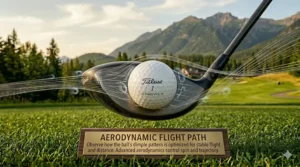
Wind management becomes crucial on Canadian courses, particularly prairie layouts and coastal designs. The penetrating flight of the Pro V1 excels in sustained winds, maintaining directional integrity better than high-launching alternatives. When facing the notorious chinook winds in Alberta or Atlantic coastal breezes, low-spinning balls provide measurable scoring advantages. Conversely, mountain courses in British Columbia and Quebec with minimal wind exposure favour high-launching balls like the Pro V1x that maximize carry distance.
Firmness of playing surfaces varies regionally and seasonally. Prairie courses typically feature firm, fast conditions by mid-summer, rewarding balls with steep descent angles and maximum spin. The Pro V1x and TP5x excel here, holding greens despite firm surfaces. Courses in wetter regions like coastal British Columbia and the Maritimes remain softer year-round, where lower-spinning balls can release more effectively. The Chrome Tour’s flatter trajectory performs well on these surfaces.
Altitude considerations affect prairie provinces significantly. Calgary sits at 1,045 metres elevation, Lethbridge at 910 metres. Reduced air density at altitude increases ball speed and carry distance by approximately 5-7% compared to sea level. This also reduces spin rates slightly, which means high-spinning balls like the Z-Star play more neutrally at elevation. Conversely, coastal and low-elevation courses maximize the spin characteristics each ball is designed to produce.
Professional-Grade Options: Investment vs Performance Returns
The $60-$80 CAD price point for premium golf balls for scratch golfers represents significant investment compared to $25-$35 recreational alternatives. Understanding whether this 100-150% premium delivers proportional performance gains helps justify the expense. For scratch players, the answer largely depends on how much greenside spin and consistency affects your scoring pattern.
Statistical analysis from Arccos Golf tracking data reveals that scratch golfers save approximately 0.3-0.5 strokes per round with tour balls versus mid-tier alternatives. This advantage concentrates around the greens—approach shots from 75-125 yards where spin control determines proximity to the hole, and short game shots where stopping power matters most. Over a 30-round Canadian season, tour balls could save 9-15 strokes, potentially lowering your handicap by a full stroke or maintaining scratch status more consistently.
Durability considerations affect the true cost per round. Tour balls typically last 2-3 rounds before performance degrades noticeably, while cover damage often appears after 18 holes. At $70 CAD per dozen, you’re spending approximately $11.70 per round assuming two-round rotation. Budget-conscious scratch players can extend this by using premium balls only during competitive rounds and transitioning to practice balls for casual play. This hybrid approach captures most performance benefits while controlling costs.
Lost balls represent another financial consideration. Canadian courses often feature heavy rough, thick forests, and water hazards that increase ball loss rates. Scratch players typically lose 0.5-1.5 balls per round depending on course difficulty and conditions. At tour-ball prices, this expense adds up quickly. Many accomplished players use slightly worn tour balls on high-risk holes, saving pristine balls for situations where performance matters most. This strategy balances performance needs with budget realities.
Matching Ball Technology to Your Swing Profile
Swing speed represents the primary factor determining which tour level balls for scratch golfers will optimize your performance. The industry generally segments players into three categories: below 100 MPH (161 km/h), 100-110 MPH (161-177 km/h), and above 110 MPH (177 km/h). Most scratch golfers fall into the 105-115 MPH range with their driver, which activates the performance characteristics of all tour balls in our review.
Players at the lower end of this spectrum (100-105 MPH) often benefit from slightly softer compression balls like the Pro V1 or Chrome Soft X. These balls compress more completely at moderate speeds, maximizing energy transfer and producing optimal launch conditions. The softer feel also enhances control on partial shots where touch matters most. Canadian players with these swing speeds should prioritize mid-trajectory balls that maximize carry distance without requiring maximum compression.
Aggressive swingers generating 110-120 MPH driver speeds need firmer balls like the TP5x or Tour B XS that can withstand the impact forces without over-compressing. These balls maintain structural integrity through impact, delivering consistent spin rates and predictable trajectories. The firmer construction also reduces driver spin slightly, which helps faster swingers control excessive ballooning. If you regularly hit drives over 290 yards (265 metres), these firmer constructions will serve you better.
Launch angle and spin rate characteristics vary between players even at identical swing speeds. Players with naturally high launch and spin may need lower-spinning balls like the Pro V1 to control trajectory, while those with low launch and spin benefit from the Pro V1x’s higher flight. Ball flight monitoring systems like TrackMan or FlightScope provide precise data about your launch conditions, allowing you to select balls that complement your natural tendencies rather than fighting them.
Common Mistakes When Choosing Premium Golf Balls
The most frequent error scratch players make is selecting balls based on tour player endorsements rather than personal swing characteristics. What works for Rory McIlroy’s 125 MPH swing and aggressive attack angle may not suit your 108 MPH speed and neutral angle of attack. Professional players often use customized versions with different compression and spin characteristics than retail offerings. Your ball selection should reflect your actual data, not tour marketing.
Ignoring cold-weather performance represents another mistake common among Canadian golfers. That Pro V1x that performs beautifully in July feels noticeably different during an April round at 10°C. Urethane covers firm up in cold temperatures, reducing spin and altering feel. Smart scratch players test balls in spring conditions before committing to full-season purchases. Some even maintain separate inventory—softer balls for cold weather, firmer options for summer—to maintain consistent performance year-round.
Many accomplished players over-rotate balls, discarding them after visible cosmetic damage appears but before actual performance degradation occurs. Research shows tour balls maintain 90%+ of their original performance characteristics through 36-54 holes, even with visible scuffing. Unless the cover is cut or severely damaged, you’re wasting money by replacing balls too frequently. The exception is major competitive rounds where you want absolute confidence in equipment.
Price fixation leads players to choose based on cost rather than performance fit. The $10-$15 CAD difference between Srixon Z-Star and Titleist Pro V1x seems significant, but amounts to less than $50 over a full season. If the Pro V1x’s higher launch and spin save you even one stroke per round, the ROI easily justifies the modest premium. Conversely, paying extra for five-layer complexity you don’t need (because you rarely work the ball) represents poor value. Match your investment to your actual performance needs.
Maintaining Tour Ball Performance in Canadian Weather
Temperature management significantly affects urethane cover performance throughout the Canadian golf season. Storing balls at room temperature (20-22°C) before rounds ensures consistent feel, even when ambient temperatures drop to 8-12°C during spring and autumn play. Keep a sleeve of balls in your pocket during cold rounds, rotating them every 2-3 holes. Body warmth maintains cover pliability, preserving spin rates and feel that cold balls sacrifice.
Humidity and moisture affect ball performance more subtly but measurably. Heavy morning dew common on Canadian courses from May through September adds weight to balls and increases friction between clubface and ball. This enhanced friction can actually increase spin rates by 5-8%, which scratch players should account for when selecting shot trajectories. Balls exposed to prolonged moisture should be dried and stored properly between rounds to prevent cover delamination that can occur with cheaper constructions.
UV exposure degrades urethane covers over extended periods, particularly during bright summer months at higher latitudes where days exceed 16 hours of daylight. Balls left in car trunks or stored in transparent containers face accelerated aging. Proper storage in cool, dark environments extends shelf life significantly. Unopened sleeves can maintain factory performance for 2-3 years when stored properly, though most scratch players rotate inventory quickly enough that aging isn’t a concern.
Altitude effects become relevant for players competing across varied Canadian geography. Courses at 1,000+ metres elevation see approximately 5-7% distance gains due to reduced air density. This affects club selection more than ball choice, but understanding how your specific ball performs at altitude versus sea level helps dial in distance control. The penetrating flight of low-spin balls changes less with altitude than high-launch options, providing more consistent yardage gaps.
❓ Frequently Asked Questions About Tour Golf Balls
❓ Are tour level balls for scratch golfers worth the cost for a 2-handicap player?
❓ Can I use tour level balls effectively in cold Canadian spring weather?
❓ How many rounds should I expect from a premium tour ball before replacing it?
❓ Do I need different balls for different course conditions in Canada?
❓ Should I choose the same ball as my favourite tour player?
Conclusion: Selecting Your Ideal Tour Ball for Canadian Conditions
Choosing the right tour level balls for scratch golfers demands understanding how ball construction, your swing characteristics, and Canadian playing conditions intersect. The Titleist Pro V1x and TaylorMade TP5x dominate the tour level category for good reason—they deliver exceptional performance across all shot types with construction quality that ensures consistency. For most scratch players in Canada, starting with one of these flagship models provides a reliable baseline to understand premium performance.
However, the “best” ball ultimately depends on your specific needs. Short game specialists who live and die by greenside spin should seriously consider the Srixon Z-Star’s aggressive Spin Skin+ technology at a more accessible price point. Players prioritizing distance and stability in wind benefit from the Chrome Tour’s lower-spinning flight profile. Fast swingers with aggressive releases need the structural integrity of the Tour B XS or TP5x to maintain consistency at high speeds.
Canadian golfers face unique challenges that influence ball selection. Temperature swings from spring through autumn demand balls that maintain performance across a 15-20°C range. Wind conditions on prairie and coastal courses favour penetrating ball flights. Firm summer greens in the west require maximum spin and steep descent angles. These regional and seasonal variations mean your optimal ball choice may change throughout the season—a level of sophistication that separates accomplished scratch players from those still chasing that 0 handicap.
Testing multiple balls under your actual playing conditions remains the most reliable selection method. Purchase single sleeves of 2-3 finalists from Amazon.ca and evaluate them during practice rounds at your home course. Pay attention to how each ball performs in situations that matter to your scoring: approach shots from 100-150 yards, greenside chips and pitches, and driver control on demanding tee shots. The performance differences become obvious quickly when you’re evaluating objectively.
Recommended for You
- 7 Best Golf Balls for Single Digit Handicap Players Canada 2026
- 7 Signs You’re Ready for Better Performance (Canada 2026)
- 7 Best Golf Balls for 10-20 Handicap Canada 2026
Disclaimer: This article contains affiliate links. As an Amazon Associate, I earn from qualifying purchases. If you purchase products through these links, we may earn a small commission at no additional cost to you.
✨ Found this helpful? Share it with your friends! 💬🤗
