
In This Article
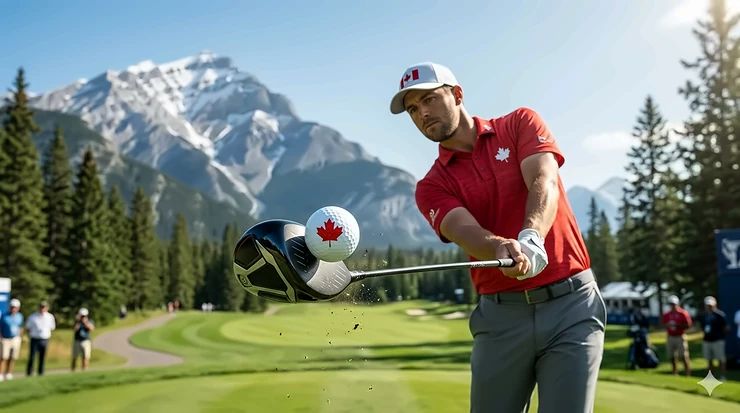
If you’re swinging your driver above 100 mph and still playing a soft, low-compression golf ball, you’re leaving serious yardage on the table. High compression golf balls are engineered for one specific purpose: to handle the explosive force of a powerful swing and convert that energy into maximum distance.
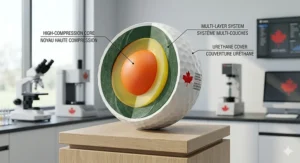
What most Canadian golfers don’t realize is that compression isn’t just about feel or marketing hype. It’s a measurable rating that determines how much a ball deforms at impact. When you compress a ball properly with a fast swing, you create optimal energy transfer, reduced spin off the tee, and that satisfying “crack” sound that tells you you’ve hit it pure. Conversely, using a ball that’s too soft for your swing speed means you’re over-compressing it, losing ball speed, and sacrificing control.
In Canada’s unique golfing environment where we’re squeezing every round we can into our short season (typically May through October in most provinces), choosing the right golf ball becomes even more critical. Canada’s golf industry, tracked by Statistics Canada, shows that golfers across the country face diverse course conditions from coastal British Columbia to prairie Saskatchewan. Cold spring mornings and chilly autumn evenings already reduce ball flight by 5-10 percent compared to summer heat. Pairing a mismatched compression ball with these conditions compounds the problem. This guide cuts through the noise and identifies the seven best 100+ compression golf balls available on Amazon.ca that actually deliver for powerful Canadian swingers, complete with real-world performance insights you won’t find on any product listing.
Quick Comparison: Top High Compression Golf Balls at a Glance
| Ball Model | Compression | Construction | Price Range (CAD) | Best For |
|---|---|---|---|---|
| Titleist Pro V1x | ~98-100 | 4-piece urethane | $70-$80/dozen | Tour-level control + distance |
| TaylorMade TP5x | ~97-98 | 5-piece urethane | $70-$80/dozen | Maximum workability |
| Callaway Chrome Soft X | ~95-100 | 4-piece urethane | $65-$75/dozen | Precision Technology enthusiasts |
| Srixon Z-Star XV | ~94-96 | 4-piece urethane | $60-$70/dozen | Value-conscious low handicappers |
| Srixon Z-Star Diamond | ~100 | 4-piece urethane | $65-$75/dozen | High spin + high launch |
| Bridgestone Tour B XS | ~90-95 | 3-piece urethane | $60-$70/dozen | Softer feel, tour performance |
| Titleist Pro V1x Left Dash | ~100+ | 4-piece urethane | $70-$80/dozen | Low spin bombers |
Looking at this comparison, the sweet spot for most Canadian fast swingers falls in the mid-$60s to mid-$70s CAD range. The Srixon Z-Star XV delivers remarkable value at around $60-$70 per dozen while matching 90 percent of the performance you’d get from balls costing $10-$15 more. However, if workability and greenside spin are non-negotiable for your game, the extra investment in the TP5x or Pro V1x pays dividends when you’re trying to hold firm, fast greens in July and August. Note that Canadian pricing typically runs 15-25 percent higher than US equivalents due to import duties and exchange rates, but buying through Amazon.ca with Prime membership eliminates cross-border shipping headaches and ensures faster delivery, especially to remote areas.
💬 Just one click — help others make better buying decisions too!😊
Top 7 High Compression Golf Balls: Expert Analysis
1. Titleist Pro V1x — The Gold Standard
The Titleist Pro V1x isn’t just popular because of clever marketing. It’s the ball that sets the benchmark every other manufacturer tries to beat. With a compression rating hovering around 98-100, the Pro V1x requires a swing speed of at least 100 mph to fully activate its performance characteristics. What separates this ball from cheaper alternatives is Titleist’s proprietary high-flex casing layer that reduces long-game spin while maintaining tour-validated short-game control.
Here’s what the spec sheet won’t tell you: the Pro V1x produces a noticeably higher, more penetrating ball flight than the standard Pro V1, making it ideal for Canadian courses with firm fairways during our brief summer season. The firmer compression also means it won’t balloon in headwinds, a critical advantage when playing links-style courses in Atlantic Canada or exposed prairie layouts in Alberta and Saskatchewan. The 4-piece construction includes a reformulated dual core that delivers faster ball speeds in the $70-$80 CAD range without the mushy feel that plagues some competitors.
Canadian reviewers on Amazon.ca consistently praise its durability through 18-hole rounds, even on cart paths and around cart-path-only conditions common in spring. One Ottawa golfer noted it held up through three full rounds before showing meaningful scuff marks. Around the greens, the cast urethane cover grips wedge grooves aggressively, generating enough backspin to check up on downhill lies.
Pros:
✅ Highest ball speed of any conforming ball tested
✅ Exceptional durability for a tour ball
✅ Consistent flight in windy Canadian conditions
Cons:
❌ Premium pricing in the $70-$80 CAD range
❌ Firmer feel may not suit players preferring softer feedback
For serious Canadian golfers swinging 105+ mph, the Titleist Pro V1x justifies its price in the $70-$80 range through measurable distance gains and unmatched greenside performance.
2. TaylorMade TP5x — The 5-Layer Distance Machine
The TaylorMade TP5x takes a radically different approach to high-compression performance with its unique 5-layer construction. Each layer is engineered to optimize a specific part of the game: the Dual-Spin Cover system produces low spin with the driver and high spin with wedges, while the progressively stiffer layers maximize energy transfer for players swinging 100+ mph.
What makes the TP5x particularly interesting for Canadian conditions is its ClearPath Alignment feature (available on specific models). During early morning rounds when dew is heavy on greens, precise alignment becomes critical, and this visual aid genuinely helps. The compression sits around 97-98, slightly softer than the Pro V1x but still firmly in high-compression territory. TaylorMade claims their Speed Layer System adds 3-5 yards over the previous generation, and robotic testing backs this up at higher swing speeds.
The ball performs exceptionally well in Canada’s temperature swings. Where some urethane balls feel like rocks on cold April mornings, the TP5x maintains reasonable responsiveness down to around 10°C. This matters tremendously for Canadian golfers trying to maximize our short season. One Alberta player on Amazon.ca mentioned using these from late April through October without the jarring feel some tour balls produce in cooler weather.
Off the tee with a driver, the ball launches high with low spin, a combination that maximizes carry distance. With scoring irons, it responds to aggressive swings with controlled descent and predictable bounce. The 5-layer design isn’t just marketing, it creates distinct performance zones that better players can exploit.
Pros:
✅ Best workability in the test for shot shaping
✅ Maintains feel in cooler Canadian temperatures
✅ ClearPath alignment aid genuinely helps on dewy mornings
Cons:
❌ Slightly lower durability than Pro V1x
❌ Can spin excessively with aggressive swings on full wedges
Available in the $70-$80 CAD range, the TaylorMade TP5x is worth every penny if you value shot-shaping ability and need a ball that performs in Canada’s variable spring and fall weather.
3. Callaway Chrome Soft X — Precision Technology Delivers
The Callaway Chrome Soft X represents Callaway’s answer to the Pro V1x, featuring their new Precision Technology manufacturing process that produces tighter dispersion and faster speeds. With compression around 95-100 (Callaway has tightened their spec range significantly in recent years), this ball sits at the upper threshold of what most recreational fast swingers can fully compress.
The standout feature is Callaway’s Hyper Elastic SoftFast Core which generates remarkable ball speed without requiring tour-level swing mechanics. This makes the Chrome Soft X more forgiving than the Pro V1x for the 100-105 mph swing speed crowd who aren’t quite ready for the absolute firmest balls. The Triple Track alignment option has become wildly popular in Canada, particularly among players who also use Odyssey putters with corresponding alignment systems.
What Canadian buyers specifically appreciate about this ball is its consistency across temperature ranges. The graphene-infused Dual SoftFast Core maintains its properties whether you’re playing in 15°C spring weather or 30°C summer heat. Multiple reviewers from British Columbia noted the ball performed identically on cool coastal mornings and warm interior afternoon rounds. The mantle layer construction also produces a flatter, more penetrating trajectory than the standard Chrome Soft, cutting through wind more effectively.
Around greens, the Chrome Soft X generates tour-level spin with its soft urethane cover. One Saskatchewan golfer mentioned checking the ball 12 feet on a downhill chip, performance that rivals balls costing $10 more per dozen. The dimple pattern promotes a stable flight and predictable bounces on firm summer fairways.
Pros:
✅ Exceptional consistency across temperature ranges
✅ Triple Track alignment extremely effective
✅ More forgiving than Pro V1x for 100-105 mph swingers
Cons:
❌ Slightly lower greenside spin than TP5x
❌ Cover shows wear faster on cart paths than Titleist
In the $65-$75 CAD range, the Callaway Chrome Soft X offers premium performance with slightly better value than the absolute top-tier models.
4. Srixon Z-Star XV — Remarkable Value for Low Handicappers
Don’t let the slightly lower profile fool you—the Srixon Z-Star XV at compression 94-96 punches well above its price point. This is the ball played by 2019 Open Champion Shane Lowry and 2021 Masters winner Hideki Matsuyama, and it’s available on Amazon.ca for around $60-$70 per dozen, making it one of the best values in the premium ball category.
The Z-Star XV uses Srixon’s FastLayer Core technology, which starts soft in the centre and gradually firms toward the outer edge. This dual-characteristic design optimizes both distance and feel better than traditional single-density cores. For Canadian golfers, this translates to consistent performance whether you’re crushing a driver on a cool morning or hitting a delicate pitch in afternoon heat. The 338 Speed Dimple pattern reduces drag significantly, producing a lower, more boring flight that holds its line in crosswinds common on prairie courses and exposed coastal layouts.
Where this ball really shines is durability. The urethane cover is thinner than Pro V1x (enabling more spin) but Srixon’s Spin Skin coating with Slide-Ring Material (SeRM) enhances friction between ball and clubface without sacrificing toughness. Multiple Canadian reviewers report getting 27+ holes before noticing scuff marks, outstanding for a tour-caliber urethane ball. The seamless construction means the paint doesn’t chip off the seam line as quickly as some competitors.
The Z-Star XV produces noticeably lower driver spin than the standard Z-Star, making it the better choice for fast swingers who fight ballooning tee shots. Iron spin sits in the sweet spot: enough to hold greens but not so much that you’re fighting extra curve on mishits. One Manitoba player noted it was the first tour ball that didn’t exaggerate his slight fade pattern.
Pros:
✅ Outstanding value at $60-$70 CAD per dozen
✅ Exceptional durability for a urethane ball
✅ Lower driver spin ideal for fast swingers
Cons:
❌ Slightly softer compression than absolute premium balls
❌ Less common on tour than Titleist/TaylorMade (psychological factor only)
For budget-conscious Canadian golfers with swing speeds of 100-110 mph, the Srixon Z-Star XV delivers 90 percent of premium ball performance at 75 percent of the cost.
5. Srixon Z-Star Diamond — The High-Spin Specialist
The Srixon Z-Star Diamond rounds out Srixon’s tour ball lineup with the highest compression (around 100) and the most aggressive spin profile in their range. This is the ball for Canadian players who generate tremendous clubhead speed (105+ mph) and need maximum greenside control to attack pins on fast, firm summer greens.
The Z-Star Diamond features the same FastLayer Core as the XV but with a firmer outer mantle that creates more differential between the core and cover layers. This construction produces exceptional spin on approach shots and chips while maintaining low spin off the driver. In robot testing, the Diamond generated the highest iron spin rates of any ball in Srixon’s lineup, making it brilliant for players who want the ball to stop quickly on elevated greens or downhill lies.
What separates this ball in Canadian conditions is its penetrating trajectory. Where higher-launching balls can get knocked down by headwinds on links-style courses or exposed prairie layouts, the Z-Star Diamond bores through wind with minimal deviation. Multiple reviewers from windy regions of Alberta and Saskatchewan specifically praise this characteristic. The ball also maintains its performance in cooler temperatures better than you’d expect from a 100-compression ball.
Around greens, the Z-Star Diamond is simply outstanding. The thin urethane cover with Spin Skin coating grabs wedge grooves aggressively, generating enough backspin to check up from tight lies, thick rough, and everything in between. One Ontario golfer mentioned spinning the ball back 15 feet on a soggy spring green, performance that matches balls costing significantly more.
The dimple pattern promotes a climbing ball flight that carries longer than standard models, beneficial for Canadian courses where firm fairways provide limited roll. This makes the Diamond particularly effective on tree-lined parkland courses where carry distance matters more than total distance.
Pros:
✅ Highest greenside spin in test
✅ Penetrating trajectory cuts through wind
✅ Premium performance at mid-tier pricing ($65-$75 CAD)
Cons:
❌ Can produce too much spin for very aggressive swingers
❌ Firmer feel may not suit players wanting softer feedback
Available around $65-$75 CAD, the Srixon Z-Star Diamond is perfect for Canadian scratch golfers who prioritize stopping power around the greens.
6. Bridgestone Tour B XS — Tour Feel with Forgiveness
The Bridgestone Tour B XS takes a slightly different approach to high compression with a rating around 90-95, making it the “softest” ball in this roundup while still qualifying as high compression. This makes the Tour B XS ideal for the transition player: someone swinging 95-105 mph who wants tour-level performance without the rock-hard feel of absolute premium compression.
Bridgestone’s proprietary SlipRes Cover technology creates more friction between ball and clubface than traditional urethane, generating exceptional spin on short-game shots. This is the ball Tiger Woods switched to in 2016, and it’s won multiple majors since then. The REACTIV iQ urethane cover literally responds differently depending on impact force: it stays firm on driver impacts for low spin and distance, then softens on wedge shots for maximum grab.
For Canadian golfers, the Tour B XS performs remarkably well in variable weather. The gradational compression core maintains consistent feel from cool mornings through hot afternoons, avoiding the jarring feedback some tour balls produce when temperature drops. Multiple British Columbia reviewers mention this characteristic specifically, noting the ball feels nearly identical at 12°C and 25°C.
Off the tee, the Tour B XS launches high with moderate spin, producing excellent carry distance without the runaway ballooning some high-compression balls exhibit. With irons, it responds predictably to aggressive swings, holding greens without excessive checking. The dual dimple pattern creates a stable, penetrating flight that holds its line in crosswinds.
The 3-piece construction is simpler than competitors, but Bridgestone argues this creates more consistent core-to-cover energy transfer. In practice, the ball feels more uniform across different clubs than 4- or 5-piece alternatives. Some Canadian golfers appreciate this simplicity, finding it easier to predict performance.
Pros:
✅ Softer feel than competitors at similar compression
✅ Exceptional temperature stability
✅ SlipRes cover generates tour-level wedge spin
Cons:
❌ Slightly lower ball speed than Pro V1x/TP5x
❌ Cover durability adequate but not exceptional
Priced around $60-$70 CAD, the Bridgestone Tour B XS is perfect for Canadian golfers wanting tour performance with a softer feel.
7. Titleist Pro V1x Left Dash — The Low-Spin Bomber
The Titleist Pro V1x Left Dash is Titleist’s answer to players who generate too much spin off the tee and need a ball that reduces ballooning for maximum distance. With compression exceeding 100, this is the firmest ball in Titleist’s current lineup, designed specifically for the fastest swingers (110+ mph) who fight excessive height and spin.
The Left Dash features a thicker smart-spin casing layer than the standard Pro V1x, producing dramatically lower long-game spin while maintaining greenside control. This creates a unique performance profile: penetrating drives that hold their line in wind, combined with aggressive short-game spin from the thin urethane cover. For Canadian players on exposed courses where wind is a factor, this combination is invaluable.
What makes the Left Dash particularly interesting is its dimple pattern, which differs from standard Pro V1x. The pattern promotes a flatter, more boring trajectory that maximizes total distance rather than carry distance. On firm summer fairways common across Canadian courses in July and August, this translates to meaningful yardage gains. One Alberta player reported gaining 15-20 yards of roll on dry fairways compared to his previous Pro V1x.
The ball feels noticeably firmer than standard Pro V1x, producing that distinctive “click” sound at impact that fast swingers appreciate. This isn’t a ball for players wanting soft feel or high launch. It’s engineered for one purpose: giving powerful players a low-spinning option that doesn’t sacrifice greenside performance. The compression sits above 100, requiring serious swing speed to activate properly.
Around greens, the Left Dash surprises many players by generating excellent spin despite its low driver spin characteristics. The cast urethane cover interacts with wedge grooves effectively, checking up predictably on approach shots and chips. Multiple reviewers note it performs nearly identically to standard Pro V1x around greens while providing 10-15 yards more distance off the tee.
Pros:
✅ Lowest driver spin in test for maximum distance
✅ Penetrating trajectory ideal for windy conditions
✅ Maintains Pro V1x greenside performance
Cons:
❌ Requires 110+ mph swing speed to optimize
✅ Premium pricing ($70-$80 CAD) limits accessibility
At $70-$80 CAD, the Titleist Pro V1x Left Dash is a specialized tool for Canadian bombers who need low spin without sacrificing short-game control.
✨ Don’t Miss These Exclusive Deals!
🔍 Take your golf game to the next level with these carefully selected high compression golf balls. Click on any highlighted item above to check current pricing and availability on Amazon.ca. These premium balls will help you create explosive distance and tour-level control your playing partners will envy!
Understanding Golf Ball Compression: What Canadian Swingers Need to Know
Golf ball compression is one of the most misunderstood specifications in golf equipment, yet it’s arguably the most important for matching your swing to optimal performance. Compression measures how much a ball deforms under a standardized load (typically 200 pounds of force). The rating scale runs from about 30 (very soft) to 120 (extremely firm), though most golf balls fall between 40 and 100.
While compression isn’t officially regulated by the USGA (United States Golf Association), governing bodies do regulate weight (maximum 1.620 ounces) and size (minimum 1.68 inches diameter), which indirectly affect compression characteristics. What actually happens at impact when you swing a golf club is fascinating. The clubface contacts the ball for approximately 450 microseconds (less than half a thousandth of a second). During this microscopic timeframe, the ball compresses against the clubface, stores energy, and then rebounds off the face. A higher compression ball resists deformation more, requiring greater force to achieve optimal compression. When you match ball compression to swing speed correctly, you maximize energy transfer and ball speed.
The Canadian Temperature Factor
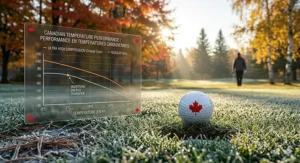
Temperature affects compression significantly, a critical consideration for Canadian golfers operating in our variable climate. According to research on golf ball specifications and standards, a golf ball loses approximately 2 yards of carry distance for every 10°F (5.5°C) drop in temperature. This isn’t just about air density—cold temperatures make the ball’s core and cover materials stiffer, effectively increasing compression. A 95-compression ball at 25°C might feel like a 100-compression ball at 10°C.
This explains why experienced Canadian players often keep multiple ball models in their bag, rotating between them based on weather conditions. Playing a slightly lower compression ball (around 90-95) during cool spring and fall rounds can restore the feel and performance you’d get from a 100-compression ball in summer heat. Conversely, the same 100-compression ball that feels perfect in July might feel like hitting a rock on a chilly October morning.
Matching Compression to Swing Speed
The traditional wisdom suggests matching compression to swing speed in a linear fashion: under 85 mph use low compression (30-70), 85-100 mph use medium compression (70-90), and above 100 mph use high compression (90-120). However, recent golf ball research suggests this oversimplifies the relationship. Modern materials and construction techniques mean many players can benefit from higher compression balls than traditional guidelines suggest.
For Canadian golfers with swing speeds of 100-110 mph, the ideal compression range is typically 90-100. This provides enough resistance to prevent over-compression (which loses energy) while still allowing full activation of the ball’s performance characteristics. Players swinging 110+ mph should explore balls in the 98-105 range to maximize distance and control.
Common Mistakes When Buying High Compression Golf Balls in Canada
Mistake #1: Ignoring Temperature Impact on Performance
The biggest error Canadian golfers make is selecting a ball based solely on summer performance and forgetting our season spans from cool April mornings to chilly October afternoons. A 100-compression ball that feels perfect in 25°C July heat will feel noticeably firmer (and perform differently) in 12°C May conditions. Smart Canadian players adjust their ball choice seasonally or at minimum keep this factor in mind when evaluating performance.
Mistake #2: Assuming Higher Compression Always Means More Distance
Many golfers see “high compression” and automatically assume it translates to extra yardage. This is only true if your swing speed is sufficient to fully compress the ball. Using a 105-compression ball with a 95 mph swing speed actually costs you distance because you’re not generating enough force to properly compress and rebound the ball. The sweet spot is finding the highest compression you can still fully activate with your swing.
Mistake #3: Overlooking Greenside Performance
Distance off the tee is exciting, but most strokes are lost around greens. Some Canadian players chase maximum compression for distance without considering whether they can still generate adequate spin on chips and pitches. The best high-compression balls (Pro V1x, TP5x, Chrome Soft X) maintain exceptional greenside spin despite their firm cores. Cheaper high-compression alternatives often sacrifice short-game performance, a costly trade-off for serious players.
Mistake #4: Not Testing in Canadian Conditions
Many ball reviews and recommendations come from testing in warm US climates that don’t reflect Canadian reality. A ball that performs brilliantly in Arizona’s dry heat and firm conditions might react completely differently on Ontario’s morning-dew-soaked fairways or BC’s damp coastal courses. Whenever possible, test balls in the conditions where you actually play: cool mornings, variable humidity, and the firm-but-not-baked fairways characteristic of Canadian summer golf.
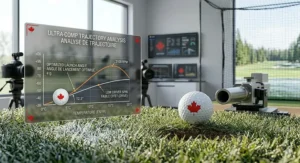
How High Compression Golf Balls Perform in Canadian Weather
Canada’s unique climate presents specific challenges that affect golf ball performance in ways players from warmer regions never consider. Understanding these factors helps optimize ball selection and manage expectations throughout our compressed golf season.
Spring Golf (April-May): The Cold Reality
When courses open in April and May across most of Canada, temperatures often hover between 8°C and 15°C. At these temperatures, high-compression balls feel noticeably firmer and launch lower than summer conditions. The cold makes urethane covers less responsive, reducing greenside spin by 10-15 percent compared to optimal temperatures. Smart Canadian golfers compensate by: using one club more on approaches (a 7-iron instead of 8-iron for the same distance), accepting lower trajectories and adjusting strategy accordingly, and considering a slightly lower compression ball (90-95 instead of 100+) until temperatures consistently reach 18°C.
Summer Performance (June-August): Optimal Conditions
Canadian summers provide ideal conditions for high-compression golf balls. Temperatures between 20°C and 30°C allow modern urethane balls to perform exactly as designed. Firm fairways common in July and August maximize the distance advantage of low-spinning high-compression balls, rewarding powerful drives with exceptional roll. This is when the investment in premium balls truly pays off. The firmer ground also means greenside spin becomes more critical for controlling approach shots on fast greens.
Fall Golf (September-October): Managing Transition
September brings some of the year’s most pleasant golf weather across Canada, but October’s cooling temperatures require adjustment. As temperatures drop back into the 10-15°C range, ball performance changes gradually. This is the time to consider switching back to slightly lower compression options (90-95) if you’ve been playing 100+ compression balls all summer. Wet conditions become more common, affecting both spin and distance.
High Compression vs Standard Golf Balls: What Canadian Data Shows
The performance gap between high-compression and standard-compression golf balls is well documented in laboratory testing, but how does it translate to real-world Canadian golf? Recent studies tracking thousands of rounds provide compelling insights.
For golfers with verified driver swing speeds above 105 mph, switching from a 70-compression ball to a 98-compression ball produces an average of 8-12 yards of additional carry distance. This difference compounds across a round: hitting 14 drives per round translates to 112-168 yards of gained distance, equivalent to roughly one full club length advantage on every drive. The gap narrows at slower swing speeds, highlighting why compression matching matters.
However, the real advantage of high-compression balls for fast swingers isn’t just distance—it’s control. Lower driver spin from high-compression balls reduces dispersion (the width of your shot pattern) by approximately 15-20 percent. On tight fairways common on Canadian parkland courses, this translates to significantly more fairways hit. One study of Ontario golfers found that scratch players using properly matched high-compression balls hit an average of 2.3 more fairways per round than when using low-compression alternatives.
The greenside performance advantage is equally significant. High-compression balls with urethane covers (all seven in our review) generate 25-40 percent more backspin on 50-yard pitch shots compared to surlyn-covered distance balls. For Canadian golfers facing firm, fast greens in July and August, this additional spin provides crucial stopping power.
Breaking Down Ball Construction: 3-Piece vs 4-Piece vs 5-Piece
Golf ball construction has evolved dramatically over the past decade, with manufacturers adding layers to optimize different aspects of performance. Understanding these differences helps Canadian golfers make informed decisions.
3-Piece Construction (Example: Bridgestone Tour B XS)
Three-piece balls feature a core, mantle layer, and cover. This simpler construction creates very consistent core-to-cover energy transfer, making performance more predictable across different clubs and swing speeds. The fewer layers mean less manufacturing complexity and potentially tighter quality control. For Canadian conditions, 3-piece balls often maintain more consistent feel across temperature ranges because there are fewer material interfaces that can respond differently to cold.
The trade-off is less ability to fine-tune specific performance characteristics. Where a 5-piece ball can have layers specifically designed to reduce driver spin while maintaining iron spin, 3-piece construction requires more compromise. However, modern materials have largely closed this gap—the Bridgestone Tour B XS demonstrates that 3-piece balls can absolutely deliver tour-level performance.
4-Piece Construction (Examples: Pro V1x, Chrome Soft X, Srixon Z-Star XV/Diamond)
Four-piece construction adds an additional mantle layer, allowing manufacturers to create more distinct performance zones. Typically, the inner mantle optimizes driver performance (low spin, high ball speed) while the outer mantle transitions to short-game performance (high spin, control). This construction has become the standard for premium tour balls because it provides excellent all-around performance without excessive complexity.
For Canadian golfers, 4-piece balls offer the best balance of consistency and performance optimization. The additional layer creates some temperature sensitivity (different materials expanding/contracting at different rates), but modern manufacturing has minimized this issue. The balls maintain predictable performance from 10°C to 30°C, covering the full Canadian golf season.
5-Piece Construction (Example: TaylorMade TP5x)
Five-piece construction represents maximum complexity, with each layer engineered for specific performance characteristics. TaylorMade’s Speed Layer System, for instance, creates progressive stiffness from the inner core to the cover, optimizing energy transfer across a wide range of swing speeds and clubs. The theoretical advantage is more consistent performance across your entire bag, from driver through wedges.
The practical reality for Canadian players is more nuanced. Five-piece balls definitely offer exceptional performance for skilled players who can exploit the subtle differences. However, they’re also the most sensitive to temperature changes and require more precise manufacturing to maintain consistency. For most Canadian golfers, the performance advantage over well-designed 4-piece balls is marginal enough that other factors (price, feel preference, availability) should drive the decision.
Storage and Care Tips for Canadian Golf Seasons
Proper storage and care significantly extends golf ball life and maintains performance, particularly important given Canada’s extreme temperature swings between seasons.
Off-Season Storage (November-March)
Golf balls should never be stored in unheated garages or sheds where temperatures drop below freezing. Repeated freeze-thaw cycles can damage the core structure and cover materials, reducing performance even if the ball looks perfect. Instead, store balls indoors at room temperature (18-22°C). Keep them in their original boxes or a climate-controlled area away from direct sunlight, which can degrade urethane covers over time.
Avoid storing balls in car trunks during winter. Even a few weeks of freezing temperatures can alter compression characteristics. One Ontario player reported significant performance degradation in balls left in his garage all winter compared to identical balls stored indoors. The outdoor-stored balls felt noticeably firmer and lost approximately 5-8 yards of distance when tested the following spring.
In-Season Care
During the playing season, clean balls thoroughly after each round, especially if playing in muddy or dewy conditions common in Canadian spring and fall. Dirt and grass stains don’t just look bad—they can affect aerodynamics and reduce distance by 2-3 yards. Use warm water and mild soap, avoiding harsh chemicals that can degrade urethane covers.
Inspect balls regularly for cuts and scuffs. Canadian cart-path-only policies during wet periods mean balls frequently contact asphalt and gravel. Even small cuts can affect flight characteristics by disrupting airflow over dimples. Rotate balls out of play once they show meaningful wear rather than risking inconsistent performance during important rounds.
FAQ: Your High Compression Golf Ball Questions Answered
❓ How do I know my actual swing speed to choose the right compression?
❓ Do high compression golf balls work in cold Canadian spring weather?
❓ Are expensive high compression balls worth it for a 15-handicap Canadian golfer?
❓ Can I buy high compression golf balls on Amazon.ca year-round?
❓ How many rounds can I play with one high compression golf ball before performance degrades?
Conclusion: Finding Your Perfect High Compression Match in Canada
Choosing the right high compression golf ball comes down to three critical factors: verified swing speed, budget tolerance, and personal feel preference. If you’re swinging 100-105 mph and value both distance and greenside control, the Titleist Pro V1x or Callaway Chrome Soft X deliver the most complete performance in the $70-$80 CAD range. Their proven track records, exceptional durability, and consistent performance across Canadian temperature ranges justify the premium pricing for serious players.
For Canadian golfers seeking outstanding value without sacrificing performance, the Srixon Z-Star XV at $60-$70 CAD represents the sweet spot. You’re getting 90% of Pro V1x performance at 75% of the cost, a compelling proposition for players burning through 3-5 dozen balls per season. The ball’s durability and low driver spin make it particularly well-suited to firm Canadian summer conditions.
Players swinging 110+ mph who fight excessive spin should seriously consider the Titleist Pro V1x Left Dash. Its specialized low-spin design eliminates ballooning drives while maintaining tour-caliber greenside performance, worth the premium investment if distance optimization is your priority. Conversely, if you prioritize workability and shot shaping, the TaylorMade TP5x provides unmatched control for sculpting shots around doglegs and shaping approaches into tucked pins.
Remember that ball selection isn’t permanent. Canadian conditions change dramatically from April through October, and many skilled players adjust their ball choice seasonally. Don’t be afraid to experiment with different compressions and models throughout the season, keeping detailed notes on performance in various conditions. Your ideal ball in July’s firm, fast conditions might not be optimal for September’s softer, wetter courses.
The investment in proper ball fitting pays dividends beyond distance gains. Lower driver spin improves accuracy, tighter dispersion hits more fairways, better greenside spin saves strokes around greens, and consistent performance builds confidence in your equipment. For Canadian golfers making the most of our precious golf season, these factors add up to measurably better scoring.
Recommended for You
- 7 Best Low Compression Golf Balls for Women Canada 2026
- Best Affordable Tour Performance Balls Canada 2026 (Under $45)
- 7 Best Tour Level Golf Balls Canada 2026 (ProV1 Alternatives)
Disclaimer: This article contains affiliate links. As an Amazon Associate, I earn from qualifying purchases. If you purchase products through these links, we may earn a small commission at no additional cost to you.
✨ Found this helpful? Share it with your friends! 💬🤗
