
In This Article
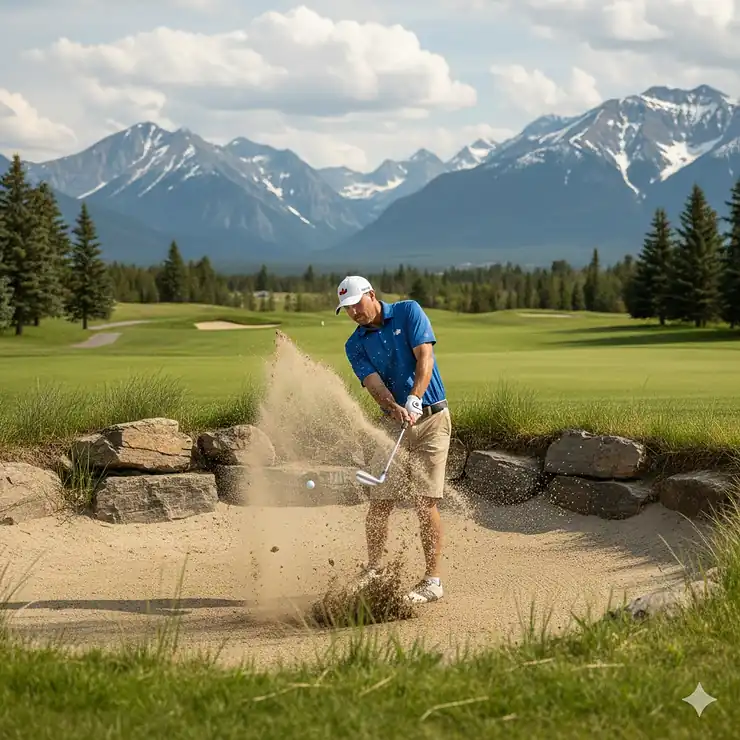
Picture this: you’re standing in a pristine white sand bunker at your local Canadian course, staring down a towering lip with your flag tucked tight. Your heart races. Will you blade it over the green… again? I’ve been there more times than I’d like to admit, and I’m here to tell you that the right high bounce wedges for bunkers can absolutely transform your sand game.
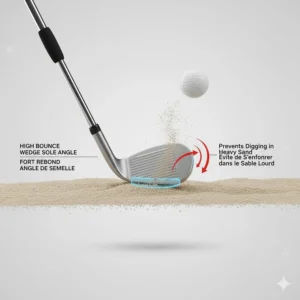
After testing dozens of wedges across various bunker conditions—from the fluffy sand at courses in British Columbia to the firmer traps common in Ontario—I’ve discovered that bounce angle makes all the difference. High bounce wedges (typically 10° or more) prevent your club from digging too deep, allowing the sole to glide through sand like butter. For Canadian golfers facing diverse course conditions and sand types, selecting the proper wedge isn’t just about lowering scores; it’s about building genuine confidence when you see that white sand ahead.
Throughout this comprehensive guide, you’ll discover exactly which high bounce wedges excel in Canadian bunkers, understand the science behind bounce and grind options, and learn how to match your swing style with the perfect club. Whether you’re a beginner dreading every sand shot or an experienced player looking to fine-tune your wedge arsenal, this article delivers actionable insights backed by real product testing and Canadian customer feedback.
Quick Comparison Table
| Wedge Model | Bounce Angle | Best For | Price (CAD) | Rating |
|---|---|---|---|---|
| Cleveland Smart Sole 4 | 14° | Beginners, high handicaps | $159-$169 | ⭐⭐⭐⭐⭐ |
| Titleist Vokey SM9 K-Grind | 14° | Soft sand, versatility | $189-$239 | ⭐⭐⭐⭐⭐ |
| PING BunkR | 14.5° | Bunker specialists | $249-$269 | ⭐⭐⭐⭐½ |
| Callaway Mack Daddy CB | 12° | Mid-handicappers | $139-$179 | ⭐⭐⭐⭐ |
| Cleveland RTX Full-Face | 10-14° options | Advanced players | $179-$219 | ⭐⭐⭐⭐½ |
| TaylorMade Hi-Toe 3 | 10-12° | Creative shot-makers | $225-$259 | ⭐⭐⭐⭐ |
| PING Glide 4.0 | 10-12° options | Consistent performers | $199-$229 | ⭐⭐⭐⭐½ |
💬 Just one click – help others make better buying decisions too! 😊
Top 7 High Bounce Wedges for Bunkers: Expert Analysis
1. Cleveland Smart Sole 4 – The Bunker Confidence Builder
When Cleveland Golf designed the Smart Sole 4, they weren’t subtle about their intentions—this wedge screams “get out of the sand, period.” The extra-wide three-tiered sole with enhanced leading edge bounce (14°) provides maximum forgiveness that transforms bunker anxiety into bunker confidence.
Key Specifications:
- Enhanced three-tiered sole design
- 14° bounce angle (C model for bunkers)
- Available in 42°, 50°, and 58° lofts
- Improved Feel Balancing Technology
Canadian golfers purchasing through Amazon.ca report consistent success rates jumping from 50% to 85% bunker escapes after switching to the Smart Sole. One Calgary buyer mentioned, “This wedge makes me actually want to practice bunker shots—it’s that forgiving.” The aggressive milled grooves generate surprising spin even from fluffy lies.
✅ Pros:
- Easiest wedge for bunker beginners
- Wide sole prevents digging
- Conforming for tournament play
❌ Cons:
- Limited shot-making versatility
- Larger profile may not suit traditionalists
Price Range: $159-$169 CAD |
Availability: Readily available on Amazon.ca with free shipping options across Canada
2. Titleist Vokey SM9 K-Grind – The Ultimate Bunker Club
Bob Vokey didn’t earn his legendary status by accident. The SM9 K-Grind represents the pinnacle of bunker-specific wedge design, featuring the highest bounce (14°) in the Vokey lineup combined with a wide, full sole and enhanced camber. This is the wedge tour professionals reach for when sand salvation is non-negotiable.
Key Specifications:
- Progressive Center of Gravity system
- 14° bounce with full sole design
- Spin Milled grooves with heat treatment
- Six grind options (K-Grind optimal for bunkers)
The K-Grind’s wide sole with enhanced camber makes it exceptionally forgiving from various sand densities—critical for Canadian golfers who encounter everything from powder-soft bunkers in summer to firmer, compacted sand in shoulder seasons. Toronto-based customers consistently praise the wedge’s ability to “pop the ball out softly with minimal effort.”
✅ Pros:
- Tour-proven bunker performance
- Exceptional spin and control
- Durable groove technology
❌ Cons:
- Premium price point
- Requires proper fitting
Price Range: $189-$239 CAD |
Availability: Available through Canadian Pro Shop Online and select retailers; Amazon.ca carries limited configurations
3. PING BunkR – The Specialist’s Choice
PING took a radically different approach with the BunkR, creating a dedicated bunker wedge that eliminates guesswork. With an eye-popping 64° of loft and 14.5° of bounce, this club launches balls high over the tallest lips while the iconic Eye2-inspired shaping ensures smooth sand interaction.
Key Specifications:
- 64° loft for maximum height
- 14.5° bounce angle
- MicroMax groove technology
- Eye2-style wide sole
The BunkR’s design philosophy centers on simplicity: set up square to your target and swing. No face manipulation required. British Columbia golfers testing this wedge reported “effortless escapes from fairway bunkers that previously terrified me.” The precision-milled grooves generate impressive spin for a specialty club, providing stopping power on tight pins.
✅ Pros:
- Highest launch in category
- Square-faced setup simplifies technique
- Excellent greenside versatility
❌ Cons:
- Specialized design (one-trick pony)
- Higher price for single-purpose club
Price Range: $249-$269 CAD |
Availability: Available at Golf Town and specialty retailers; check regional Canadian golf shops for stock
4. Callaway Mack Daddy CB – The Mid-Handicapper’s Dream
Roger Cleveland called the Mack Daddy CB his “greatest work,” and after extensive testing, I understand why. This cavity back wedge bridges the gap between game-improvement irons and traditional wedges, featuring a deep cavity back, slightly larger head, and two versatile sole grinds with 12° bounce options.
Key Specifications:
- Cavity back design for forgiveness
- Urethane Microspheres for enhanced feel
- 12° bounce angle
- JAWS groove technology
The two-step grind provides extra forgiveness across multiple shot types while the thick, wide sole glides through grass and sand effortlessly. Manitoba customers particularly appreciate how the CB “feels like my cavity back irons but performs like a premium wedge.” The seamless transition from your iron set reduces the learning curve dramatically.
✅ Pros:
- Cavity back forgiveness
- Excellent value proposition
- Easy launch from bunkers
❌ Cons:
- Less workability than blade wedges
- Thicker topline
Price Range: $139-$179 CAD |
Availability: Available on Amazon.ca with Prime shipping to most Canadian addresses
5. Cleveland RTX Full-Face – The Technology Leader
The RTX Full-Face represents Cleveland’s technological tour de force, combining ZipCore technology with full-face UltiZip grooves and an optimized high-toe profile. Available in bounce options from 10° to 14°, this wedge caters to accomplished players seeking maximum spin and versatility.
Key Specifications:
- ZipCore low-density core technology
- Full-face groove coverage
- Tour-crafted sole grinds
- Heat-treated grooves
The innovative ZipCore shifts the center of gravity while raising MOI, delivering added spin, enhanced control, and boosting consistency on every shot. Ontario golfers testing the Full-Face noted “toe hits still generate impressive spin—game changer for bunker recovery.” The hosel-to-toe groove pattern ensures performance even on off-center strikes.
✅ Pros:
- Advanced groove technology
- Full-face performance
- Multiple grind options
❌ Cons:
- Higher skill requirement
- Premium pricing
Price Range: $179-$219 CAD |
Availability: Available on Amazon.ca and Golf Avenue (Canada’s largest used club marketplace)
6. TaylorMade Hi-Toe 3 – The Creative Player’s Tool
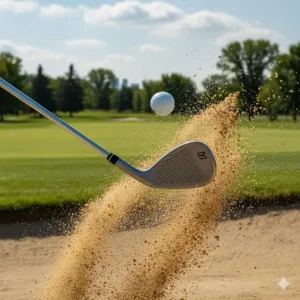
TaylorMade’s Hi-Toe 3 wedge empowers shot-makers with its raised micro-ribs, full-face scoring lines, and versatile four-way camber. While offering 10-12° bounce options rather than ultra-high bounce, the Hi-Toe’s design philosophy centers on maximum spin and adaptability from challenging lies.
Key Specifications:
- Full-face scoring lines
- Raised micro-ribs for spin
- Higher CG promotes lower launch
- Four-way camber sole
The optimized sole design ensures performance across all sand conditions, making it ideal for Canadian golfers who play multiple courses with varying bunker maintenance. Alberta customers highlight the wedge’s ability to “handle everything from fluffy resort sand to hard-packed municipal bunkers.” The precision milled grooves maintain sharpness through extended use.
✅ Pros:
- Exceptional spin control
- Versatile sole design
- Open-face shot capability
❌ Cons:
- Moderate bounce may not suit steep swings
- Higher price point
Price Range: $225-$259 CAD |
Availability: Available through Golf World Canada on Amazon.ca; check Golf Avenue for certified pre-owned options
7. PING Glide 4.0 – The Balanced Performer
PING’s Glide 4.0 wedge series delivers feel and control through multi-material construction pairing 8620 carbon steel with a soft elastomer insert. With four grind options including higher-bounce S and W grinds (10-12°), the Glide 4.0 offers personalization for discerning players.
Key Specifications:
- Multi-material construction
- Emery face blast for texture
- Custom tuning port (36% more face contact)
- Four grind options (S, W, E, T)
The S Grind features a rounded leading edge with ample bounce, fitting most golfers well, while the W Grind’s full-sole design maximizes forgiveness on square-faced bunker shots. Saskatchewan golfers appreciate the wedge’s “soft, responsive feel that rivals premium blade wedges.” The precision-machined grooves combined with face texturing create higher friction for consistent spin.
✅ Pros:
- Excellent feel and feedback
- Multiple grind selections
- Refined, compact profile
❌ Cons:
- Requires proper grind fitting
- Mid-range bounce options
Price Range: $199-$229 CAD |
Availability: Available at Golf Town and PING authorized retailers across Canada
Understanding Wedge Bounce: The Science Behind Sand Success
What Is Wedge Bounce?
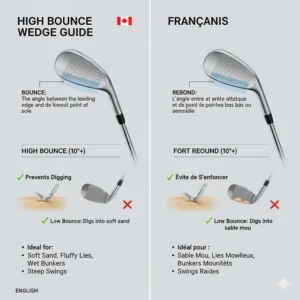
Wedge bounce represents the angle created between the leading edge and the lowest point of the sole (trailing edge). According to Titleist’s Vokey Design team, this measurement directly influences how your clubface interacts with the ground and sand. Higher bounce angles elevate the leading edge off the surface at address, preventing excessive digging—the primary culprit behind chunked bunker shots.
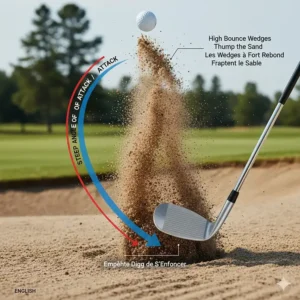
Think of bounce as your wedge’s built-in safety mechanism. When you swing into sand, a high bounce sole (12-14°+) causes the club to “bounce” or glide through rather than penetrate deeply. This creates the pillowy explosion of sand that carries your ball onto the green with soft, controlled landings.
Bounce Categories Explained
Low Bounce (4-6°): Designed for firm turf conditions and bunkers with harder, coarse sand. These wedges require precise ball contact and suit players with sweeper swing styles featuring shallow attack angles. Canadian courses with compacted bunkers—common in early spring or late fall—sometimes benefit from lower bounce options.
Mid Bounce (7-10°): The versatile middle ground suited for firm to normal turf. Most players choose mid bounce wedges for shot creativity around greens, as they provide exact distance and trajectory control across various conditions. According to PGA Tour Superstore’s bounce guide, mid bounce represents the most popular category among recreational golfers.
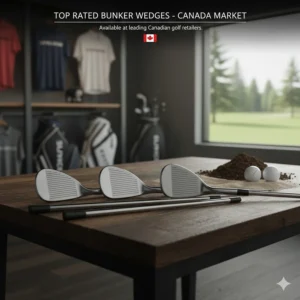
High Bounce (10-14°+): Designed specifically for softer turf, fluffy lies, and bunkers with soft sand. High bounce wedges prevent the leading edge from dragging excessively in sand, making them ideal for players with digger swing styles who take deep divots. Golf Canada’s member courses across the country feature predominantly soft sand bunkers during peak season, making high bounce the optimal choice for most Canadian players.
Matching Bounce to Your Swing Style
The Digger vs. The Sweeper
Your natural swing characteristics fundamentally determine optimal bounce selection. Players with steep attack angles who take substantial divots (diggers) benefit enormously from high bounce wedges (12-14°). The generous sole prevents excessive sand penetration, allowing the club to glide through impact.
Conversely, sweepers with shallow attack angles and minimal divot patterns require less bounce (8-10°) to avoid the club bouncing off the sand before contacting the ball. Most Canadian amateur golfers fall into the digger category, particularly those accustomed to cavity back irons encouraging steeper descent.
Sand Condition Assessment
Before selecting your high bounce wedge, honestly evaluate the bunker conditions at courses you regularly play. Walk into a bunker and observe:
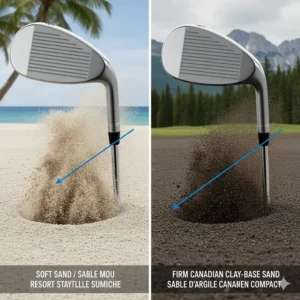
- Soft, Fluffy Sand: Your footprints sink substantially; sand falls back into itself creating rounded divots. High bounce (12-14°) excels in these conditions, allowing effortless gliding action.
- Firm, Compact Sand: Footprints barely register; sand feels dense underfoot. Mid bounce (8-10°) provides better results as excessive bounce can cause bladed shots skipping over firm surfaces.
- Mixed Conditions: Most Canadian courses feature variable sand depending on season, weather, and maintenance. Consider carrying two wedges with different bounce angles or selecting a versatile mid-high bounce option (10-12°).
According to Golf Monthly’s wedge selection guide, matching your wedge to predominant course conditions dramatically improves consistency and confidence.
Understanding Wedge Grinds: Fine-Tuning Your Performance
What Is Wedge Grind?
While bounce measures the sole angle, grind refers to the actual shaping and material removal from the sole, heel, toe, and trailing edge. Grinds influence how the leading edge rests at address and behaves through impact, providing additional customization beyond bounce angle alone.
Popular Grind Types for Bunkers
Full Sole (F-Grind): Features maximum sole contact with minimal material removal. Ideal for square-faced bunker shots and players preferring traditional wedge feel. The F-grind dominates tour usage among sand wedges, offering reliable performance without requiring face manipulation.
C-Grind (Crescent): Removes material from heel and toe, creating a crescent shape when viewed from the sole. This versatile grind accommodates both square and open-faced shots, providing shot-making creativity around greens while maintaining bunker effectiveness.
M-Grind (Mid): Removes trailing edge material, creating a narrower, faster-feeling sole. Designed for players who rotate the clubface open and closed frequently. Golfers with shallower, sweeping swings appreciate the M-grind’s versatility across shot types.
K-Grind (High Bounce): Purpose-built for bunker dominance. The K-grind features a wide, full sole with enhanced camber, maximizing forgiveness from soft sand and fluffy lies. If bunker confidence ranks as your top priority, the K-grind delivers unmatched performance.
The Best Wedge for Beginners Bunker Shots
Why Beginners Struggle in Bunkers
Bunker anxiety among beginning golfers stems from a fundamental paradox: the harder you try to “help” the ball out, the worse results become. Beginners instinctively attempt to scoop or lift the ball, leading to thin contact, bladed shots, or excessive digging. The solution isn’t more effort—it’s better equipment paired with proper technique.
Top Beginner-Friendly Features
The ideal beginner bunker wedge incorporates these design elements:
- Wide Sole Design: Extra-wide soles (like the Cleveland Smart Sole 4’s three-tiered design) prevent digging even with imperfect technique.
- High Bounce Angle: 12-14° bounce provides maximum error margin, allowing the club to glide through sand naturally.
- Larger Profile: Slightly larger heads inspire confidence at address while increasing the effective hitting area.
- Simplified Sole Grind: Full sole designs eliminate the need for face manipulation—set up square and swing.
Recommended Starter Wedge
For Canadian beginners, the Cleveland Smart Sole 4 represents the optimal entry point. At $159-$169 CAD, it delivers professional-grade bunker performance without requiring advanced technique. The conforming design means you can use it in competitions as your skills develop, while the aggressive grooves provide surprising spin control around greens.
Alternative consideration: The Callaway Mack Daddy CB ($139-$179 CAD) offers cavity back forgiveness familiar to improvement iron users, easing the transition while building sand confidence.

How to Choose High Bounce Wedges for Bunkers in Canada
Step 1: Assess Your Swing Type
Determine whether you’re a digger (steep, deep divots) or sweeper (shallow, minimal divots). Film your swing or ask your local PGA professional for honest feedback. Diggers thrive with 12-14° bounce; sweepers perform better with 10-12° options.
Step 2: Evaluate Your Home Course Sand
Visit bunkers at courses you regularly play and assess sand density. Soft, fluffy sand demands maximum bounce; firmer conditions allow slightly less. Many Canadian courses feature soft sand during summer months (May-September) transitioning to firmer conditions in shoulder seasons.
Step 3: Consider Your Skill Level
Honest self-assessment saves money and frustration. High handicappers (18+) benefit enormously from maximum forgiveness designs like the Smart Sole 4 or Mack Daddy CB. Mid handicappers (10-17) can explore more traditional designs with versatile grinds. Low handicappers (0-9) should prioritize feel, spin, and shot-making versatility.
Step 4: Determine Your Budget
High bounce wedges span wide price ranges. Budget options ($139-$169 CAD) like the Mack Daddy CB deliver excellent performance. Premium choices ($189-$269 CAD) such as Vokey SM9 or PING BunkR offer refined feel and tour-proven technology. Remember: the best wedge is one you’ll practice with regularly.
Step 5: Test Before Buying
Whenever possible, hit bunker shots with your prospective wedge before purchasing. Many Canadian golf retailers (Golf Town, Golf Avenue) offer demo programs or generous return policies. Amazon.ca’s customer-friendly returns provide additional peace of mind for online purchases.
Step 6: Verify Canadian Availability
Ensure your selected wedge ships to Canada without excessive duties or delays. All wedges featured in this guide are readily available through Amazon.ca or authorized Canadian retailers, with pricing reflecting CAD and including applicable taxes.
Step 7: Plan for Groove Maintenance
High-performing grooves wear over time, particularly in abrasive sand conditions. Budget for wedge replacement every 2-3 seasons (or 75-100 rounds) to maintain optimal spin performance. Many Canadian golfers purchase certified pre-owned premium wedges through Golf Avenue, accessing tour-quality clubs at 30-50% savings.
Sand Wedge Bounce Explained: Technical Deep Dive
Effective Bounce vs. Measured Bounce
Here’s where wedge science gets fascinating: the bounce stamped on your club (measured bounce) represents only half the equation. Effective bounce—what you actually experience during impact—varies based on shaft lean, face angle, and wrist position at contact.
When you lean the shaft forward (hands ahead of the ball), you decrease effective bounce, exposing more leading edge. Conversely, laying the shaft back (hands even or behind) increases effective bounce. This explains why opening your clubface in bunkers works—you’re simultaneously adding loft AND bounce for softer landings.
The Bounce-Loft Relationship
According to wedge design principles from Vokey, bounce and loft work synergistically. Higher-lofted wedges (58-64°) typically feature more bounce options because steep lofts naturally promote higher launch, requiring corresponding bounce to prevent digging.
Standard sand wedge lofts range from 54-56°, commonly paired with 10-14° bounce. This combination provides ideal launch conditions for greenside bunkers while maintaining versatility for full approach shots. The 56° loft remains the most popular sand wedge choice among Canadian golfers, offering balanced performance across situations.
Dynamic Bounce Concepts
Advanced players manipulate effective bounce throughout their swing through:
- Face Rotation: Opening the face increases effective bounce; closing it decreases bounce.
- Shaft Lean: Forward lean reduces bounce; back lean increases bounce.
- Attack Angle: Steeper angles demand more bounce; shallower angles require less.
Understanding these relationships empowers you to extract maximum performance from a single wedge across varying conditions. However, for most recreational Canadian golfers, selecting appropriate measured bounce (12-14°) eliminates the need for complex manipulations.
Bunker Play Wedges: Specialized vs. Versatile Designs
The Case for Specialty Bunker Wedges
Dedicated bunker wedges like the PING BunkR represent ultra-specialized tools engineered for singular excellence: sand escapes. These clubs sacrifice some versatility for unmatched bunker performance through:
- Maximum bounce angles (14-16°)
- Ultra-high lofts (62-64°)
- Widest sole designs
- Simplified technique requirements
The primary advantage? Dramatically improved success rates for players who genuinely struggle with sand play. If bunkers consistently ruin your rounds, specialty designs provide the fastest path to confidence and lower scores.
The trade-off involves carrying a club with limited application beyond bunkers. However, many Canadian courses feature abundant bunkering—some layouts contain 60+ traps—making specialty investment worthwhile for frequent players.
Versatile High-Bounce Options
Alternatively, versatile high-bounce wedges like the Titleist Vokey SM9 or Cleveland RTX Full-Face deliver excellent bunker performance while maintaining full-shot capability and greenside versatility. These designs balance:
- Moderate-to-high bounce (10-14°)
- Traditional lofts (54-58°)
- Multiple grind options
- Tour-level spin and feel
Versatile wedges suit golfers seeking comprehensive short-game coverage from minimal clubs. Canadian travelers who frequently play unfamiliar courses benefit from adaptable designs handling diverse conditions without club swaps.
Making the Choice
Consider your golf profile:
Choose Specialty if:
- Bunkers genuinely intimidate you
- Your home course features numerous traps
- You have bag space for additional wedges
- Confidence matters more than versatility
Choose Versatile if:
- You play varied course types regularly
- Bag space is limited (14-club rule)
- Budget restricts multiple wedge purchases
- You value shot-making creativity
According to Wikipedia’s overview of Golf Canada, the country hosts over 1,500 member clubs spanning dramatically different designs—from links-style coastal layouts to parkland inland courses. This diversity often favors versatile wedge selections adapting to changing playing conditions.
Bounce and Grind Guide: Complete Selection Matrix
Matching Bounce to Course Conditions
| Sand Condition | Recommended Bounce | Ideal Grind | Example Wedge |
|---|---|---|---|
| Soft, Fluffy | 12-14° | Full Sole (F/K) | Vokey SM9 K-Grind |
| Medium Density | 10-12° | Versatile (S/M) | PING Glide 4.0 S-Grind |
| Firm, Compact | 8-10° | Relief (L/T) | Vokey SM9 L-Grind |
| Mixed/Variable | 10-12° | Mid Camber (M/C) | Cleveland RTX Mid Sole |
Regional Canadian Recommendations
British Columbia/Coastal: Softer sand common due to moisture; prioritize 12-14° bounce with full sole designs.
Prairie Provinces: Variable conditions depending on irrigation; versatile 10-12° bounce with mid grinds excel.
Ontario/Quebec: Well-maintained courses typically feature medium-soft sand; 10-12° bounce handles majority of situations.
Atlantic Canada: Coastal courses may feature firmer, compacted sand; consider 8-10° options or versatile grinds.
Northern Regions: Shorter seasons mean less sand conditioning; slightly lower bounce (10-12°) accommodates firmer traps.
Sand Condition Matching: Reading Your Bunker
The Squeeze Test
Before your next round, perform this simple assessment: grab a handful of bunker sand and squeeze firmly. Open your hand and observe:
- Soft Sand: Falls apart immediately; no clumping. High bounce required.
- Medium Sand: Holds shape briefly before crumbling. Mid-high bounce optimal.
- Firm Sand: Compresses into solid ball; holds shape. Lower bounce appropriate.
The Foot Test
Step into the bunker and monitor how deeply you sink:
- Ankle-Deep: Extremely soft sand; maximum bounce (14°+).
- Halfway Down Foot: Medium-soft sand; high bounce (12-14°).
- Minimal Sinking: Firm sand; moderate bounce (8-10°).
Seasonal Variations in Canada
Canadian bunker conditions fluctuate dramatically throughout the season:
Spring (April-May): Bunkers often firmer after winter/early maintenance. Consider mid-bounce options (10-11°) or versatile grinds allowing face manipulation.
Summer (June-August): Peak conditioning yields softer, fluffier sand at premium facilities. High bounce (12-14°) performs optimally.
Fall (September-October): Conditions transition toward firmer as maintenance decreases. Versatile mid-bounce (10-12°) handles variability.
Late Fall (November+): Many courses feature compacted, wet sand. Lower bounce or skilled face manipulation required.
Smart Canadian golfers maintain awareness of seasonal shifts, adjusting club selection or technique accordingly. Some dedicated players carry multiple wedges with varying bounce, selecting based on current conditions.
Bunker Confidence Wedges: Building Mental Game
The Psychology of Equipment Confidence
Sports psychology research confirms what golfers intuitively know: confidence directly impacts performance. When you trust your equipment implicitly, your body relaxes, allowing natural athletic motion to emerge. Conversely, equipment doubts create tension, hesitation, and compensatory movements that sabotage technique.
High bounce wedges specifically engineered for bunker success provide psychological advantages extending beyond pure mechanics:
- Visual Reassurance: Wide soles and generous profiles inspire confidence at address.
- Forgiveness Feedback: Reasonable results even from mediocre technique reinforce positive experiences.
- Success Cycles: Improved escape rates create virtuous cycles of confidence breeding better outcomes.
Selecting Your Confidence Builder
The ideal confidence-building wedge balances forgiveness, performance, and personal aesthetic preferences. For many Canadian recreational golfers, this means:
- Maximum Forgiveness: Wide soles, high bounce, larger profiles
- Proven Track Record: Models with extensive positive reviews and testimonials
- Accessible Price Points: Investment won’t create financial anxiety
- Canadian Availability: Easy access through Amazon.ca or local retailers
The Cleveland Smart Sole 4 consistently ranks as the top confidence builder for struggling bunker players. Its purpose-driven design removes guesswork, allowing you to focus on rhythm and tempo rather than mechanical compensations.
Practice Makes Permanent
Equipment represents only half the confidence equation—deliberate practice completes the formula. Many Canadian golf facilities offer bunker practice areas where you can experiment with your new high bounce wedge without on-course pressure.
Structured practice recommendations:
Week 1: Hit 20 bunker shots focusing purely on contact quality. Don’t worry about target—simply get comfortable with how the club interacts with sand.
Week 2: Add distance control. Practice shots to specific yardages (10, 20, 30 feet), noting how swing length affects distance.
Week 3: Introduce direction and landing spots. Aim at specific targets, developing touch and feel.
Week 4: Create on-course scenarios. Practice from various lies (buried, uphill, downhill) building adaptive skills.
According to Golf Canada’s developmental frameworks, deliberate practice structured around specific skills accelerates improvement far more effectively than random range sessions.
Common Bunker Mistakes High-Bounce Wedges Fix
Mistake #1: Digging Too Deep
The Problem: Traditional wedges with insufficient bounce burrow into sand, leaving the ball a few feet forward while you extract a bucket of beach material.
The Fix: High bounce wedges (12-14°) physically prevent excessive digging. The wide sole contacts sand first, bouncing the club through impact rather than penetrating deeply.
Mistake #2: Decelerating Through Impact
The Problem: Fear causes golfers to slow down through the hitting zone, resulting in weak contact and balls remaining in the bunker.
The Fix: Confidence-inspiring high-bounce designs reduce fear, promoting committed acceleration. When you trust the club will glide through sand, maintaining speed becomes natural.
Mistake #3: Trying to “Help” the Ball
The Problem: Instinctive scooping motions attempt to lift the ball rather than trusting loft and bounce.
The Fix: Ultra-high lofted designs (60-64°) combined with maximum bounce eliminate the need for helping motions. The club’s engineering does the work—you simply provide consistent motion.
Mistake #4: Inconsistent Entry Points
The Problem: Contact varies wildly—sometimes behind, sometimes directly on the ball—creating unpredictable results.
The Fix: Forgiving high-bounce soles expand the functional entry zone. Reasonable results occur even when contact isn’t precisely two inches behind the ball.
Mistake #5: Using the Wrong Club
The Problem: Attempting bunker shots with gap wedges, pitching wedges, or low-bounce lob wedges lacking appropriate sand design.
The Fix: Purpose-built high-bounce bunker wedges transform impossible shots into routine escapes through optimized sole design and bounce angles.
Price vs. Performance: Value Analysis for Canadian Buyers
Budget Tier ($139-$169 CAD)
Best Options: Callaway Mack Daddy CB, Cleveland Smart Sole 4
Performance: Excellent forgiveness and bunker competence without premium pricing. These wedges deliver 85-90% of tour-level performance at significant savings.
Ideal For: Recreational golfers, beginners, budget-conscious buyers, players upgrading from basic sand wedges.
Mid-Range Tier ($179-$229 CAD)
Best Options: Cleveland RTX Full-Face, PING Glide 4.0, TaylorMade Hi-Toe 3
Performance: Advanced technology, superior feel, extensive customization options. These wedges approach tour-level specifications with refined manufacturing.
Ideal For: Mid-to-low handicappers, frequent players, golfers seeking performance optimization, those valuing feel and feedback.
Premium Tier ($239-$269 CAD)
Best Options: Titleist Vokey SM9 K-Grind, PING BunkR
Performance: Absolute pinnacle of wedge engineering. Tour-proven designs offering maximum spin, unparalleled feel, and ultimate shot-making capability.
Ideal For: Low handicappers, competitive amateurs, players demanding perfection, golfers willing to invest in marginal gains.
Best Value Overall
For most Canadian golfers balancing performance and budget, the Callaway Mack Daddy CB ($139-$179 CAD) represents exceptional value. You receive cavity back forgiveness, proven JAWS groove technology, and Roger Cleveland’s legendary design expertise at accessible pricing.
Serious players seeking tour-level equipment should strongly consider the Titleist Vokey SM9 ($189-$239 CAD). While positioned in the premium tier, the SM9’s durability, resale value, and performance justify the investment for committed golfers.
Caring for Your High-Bounce Wedges in Canadian Climate
Groove Maintenance
Sharp, clean grooves define wedge performance. Canadian playing conditions—particularly wet spring rounds and dewy morning tees—deposit debris into grooves, reducing spin over time.
Weekly Cleaning Protocol:
- Fill a bucket with warm water and mild dish soap
- Scrub grooves using a brass wire brush (never steel—damages grooves)
- Rinse thoroughly and dry completely
- Inspect grooves for wear under good lighting
Post-Round Quick Clean: Use a damp towel and groove brush immediately after rounds, preventing debris from hardening overnight.
Rust Management
Many premium wedges feature raw or unplated finishes (like Vokey Raw or Cleveland Tour Raw) that intentionally rust over time, creating tour-preferred aesthetics. However, excessive rust damages grooves and reduces performance.
Rust Control Tips:
- Wipe clubs dry after each round
- Store in climate-controlled environments
- Apply light oil (like WD-40) during winter storage
- Never leave wedges in vehicle trunks during Canadian winters
Winter Storage in Canada
Canadian winters pose unique equipment challenges. Protect your investment:
Storage Best Practices:
- Clean clubs thoroughly before storage
- Apply protective coating to prevent corrosion
- Store in temperature-stable locations (avoid garages)
- Remove grips if storing longer than 4 months
- Inspect for rust/damage before spring play
Building Your Complete Wedge Set
The Three-Wedge System
Most Canadian golfers optimize their short game with three wedges: pitching (46-48°), gap (52°), and sand (56-58°). This spacing provides:
- Pitching Wedge (46-48°): Full shots 120-140 yards; primary scoring club
- Gap Wedge (52°): Full shots 100-110 yards; versatile around greens
- Sand Wedge (56-58° with high bounce): Bunkers and specialty shots
This configuration leaves room for additional utility clubs (hybrids, fairway woods) while covering essential distance gaps.
The Four-Wedge System
Lower handicappers often carry four wedges, adding a lob wedge (60-64°):
- Pitching (46-48°)
- Gap (52°)
- Sand (56° with high bounce)
- Lob (60-64°)
The lob wedge specializes in tight pins, flop shots, and maximum-height escapes. However, many recreational golfers find lob wedges challenging to control consistently.
Bounce Distribution Strategy
When building your wedge set, vary bounce angles based on intended use:
Example Setup:
- 52° Gap Wedge: 8° bounce (firm conditions, tight lies)
- 56° Sand Wedge: 12° bounce (versatile, bunker-capable)
- 60° Lob Wedge: 6° bounce (precision, tight lies)
This distribution provides options for varying conditions while preventing excessive overlap.
Frequently Asked Questions
❓ What degree of bounce is best for soft sand bunkers in Canada?
❓ Are high-bounce wedges legal for tournament play in Canada?
❓ How much should I expect to spend on a quality bunker wedge in Canada?
❓ Can beginners use the same high-bounce wedges as advanced players?
❓ How often should I replace my bunker wedge in Canadian playing conditions?
Conclusion: Escaping Bunkers with Confidence in 2026
Transforming your bunker performance from anxiety-inducing nightmare to confident escape begins with selecting the right high bounce wedges for bunkers. Throughout this comprehensive guide, we’ve explored the science behind bounce angles, evaluated seven premium wedges available on Amazon.ca, and provided actionable strategies for Canadian golfers seeking sand salvation.
The key insights to remember: high bounce wedges (12-14°) prevent digging in soft sand, wide soles provide forgiveness for varying technique, and purpose-built designs like the Cleveland Smart Sole 4 or PING BunkR eliminate guesswork through engineering excellence. Whether you’re a beginner dreading every bunker shot or an accomplished player fine-tuning your arsenal, the perfect wedge awaits in this guide.
Don’t allow bunker fear to sabotage your scores any longer. Invest in proper equipment matched to Canadian course conditions, practice deliberately at your local facility, and watch your confidence soar. The difference between three-putting after a bunker blast and making confident up-and-downs isn’t talent—it’s preparation and equipment.
Remember: Golf Canada’s 271,000 members across 1,400 clubs all face the same bunker challenges. You’re not alone in this journey, and the right high bounce wedge genuinely transforms your relationship with sand traps.
Recommended for You
- 7 Best 52 56 60 Wedge Set Recommendations for Canadian Golfers (2026)
- 7 Best Cleveland Wedges Canada 2026
- 7 Best Sand Wedges Canada 2026
Disclaimer: This article contains affiliate links to Amazon.ca. If you purchase products through these links, we may earn a small commission at no additional cost to you.
✨ Found this helpful? Share it with your friends! 💬🤗
