

In This Article
Somewhere between the golfer who insists on carrying their own sticks like it’s a badge of honour and the one who won’t walk further than the cart path, there’s a whole tribe of us who just want one bag that does both jobs without complaint. That’s the entire premise behind hybrid golf bags: a stand bag’s legs and shoulder comfort welded onto a cart bag’s storage and stability, so you’re not buying two bags for two moods.

If you’ve shopped for one lately, you already know the category has gotten crowded. Every major brand now has at least one crossover model, and the differences between them — weight, pocket count, leg mechanism, strap comfort — matter more than the marketing copy lets on. This guide breaks down seven real, currently available hybrid golf bags spanning budget to premium, explains what the spec sheets actually mean for your Saturday round, and digs into where hybrid golf bags earn their keep against a dedicated stand or cart bag.
We’ll also work through practical setup and maintenance advice, matched buyer scenarios, and the mistakes that send golfers back to the pro shop for a return. Everything here is built from real product data and aggregated review sentiment, not invented testimonials — so where something can’t be verified, we say so rather than making it up. According to Golf Canada’s own 2025 season data, participation keeps climbing across the country, which means more Canadians than ever are standing in the golf shop staring at a wall of bags and wondering which one actually fits their game.
What Is a Hybrid Golf Bag?
A hybrid golf bag combines the pop-up legs and dual shoulder straps of a stand bag with the storage capacity, forward-facing pockets, and cart-friendly base of a cart bag. It’s designed so one bag can be carried on foot, pushed on a trolley, or strapped to a riding cart without compromise, making it the practical choice for golfers who switch between walking and riding depending on the day.
Quick Comparison Table
Before diving into the full reviews, here’s a fast snapshot of how these seven bags stack up on the numbers that matter most: weight, storage, and who each one suits best.
| Bag | Weight | Top Dividers | Best For |
|---|---|---|---|
| Titleist Hybrid 14 | ~6.1 lbs | 14-way | Golfers who want one premium bag for everything |
| Sun Mountain 4.5 LS Hybrid | ~5.2 lbs | 14-way | Walkers who occasionally ride |
| Callaway Fairway 14 | ~6 lbs | 14-way | Frequent cart and push-cart users |
| Sun Mountain C-130 Hybrid | ~6.6 lbs | 15-way | Riders who want cart-bag-level storage |
| Bag Boy Chiller Hybrid | ~6.4 lbs | 14/15-way | Budget-conscious golfers who want a built-in cooler |
| Datrek Go Lite Hybrid | ~5.2 lbs | 14-way | Golfers prioritizing minimal weight over storage |
| MacGregor Tourney Hybrid | ~6 lbs | 14-way | First-time buyers on a tight budget |
Looking at this lineup, weight and pocket count pull in opposite directions almost every time — the lightest bags here, the Sun Mountain 4.5 LS Hybrid and Datrek Go Lite Hybrid, both trim pocket count to hit their sub-5.5-lb targets. Meanwhile the Sun Mountain C-130 Hybrid goes the other way entirely, prioritizing a 15-way top and nine pockets over portability. If you can only optimize for one variable, decide now whether that’s “light enough to forget you’re carrying it” or “never runs out of room,” because almost none of these bags do both equally well.
💬 Just one click — help others make better buying decisions too!😊
Top 7 Hybrid Golf Bags: Expert Analysis
We picked these seven models to cover every budget tier and use case: three premium options for golfers who want the best crossover engineering money can buy, two mid-range picks that balance features and price, and two budget-friendly bags for golfers who don’t want to spend C$400 on something that’s going to live in a garage half the year.
1. Titleist Hybrid 14 Stand Bag — best all-around crossover for serious golfers
The standout here is balance: Titleist didn’t over-engineer this bag toward carrying or toward riding, it split the difference and mostly nailed it. The 14-way top cuff with full-length dividers keeps your irons from clattering against your hybrids, and the 10.2-inch top width gives you enough real estate that pulling the right club doesn’t turn into a game of golf-bag Jenga.
At roughly 6.1 lbs empty, this isn’t the lightest bag on this list, and Titleist doesn’t pretend otherwise — the premium double strap system is built to make that weight disappear across your shoulders rather than to make the bag weigh less in the first place. Nine pockets, including a waterproof valuables pocket and dual external water bottle holders, mean cart round or walking round, you’re not leaving gear in the car. This is the bag for the golfer who wants exactly one stand bag in their life and refuses to compromise on build quality to get it.
Reviewers consistently report that the integrated cart strap tunnel keeps the bag locked flat against a riding cart without twisting, and several note the 14-way divider top makes club retrieval noticeably faster than their old 5-way bags. A recurring theme in aggregated feedback is that the bag “feels premium” in hand — heavier polyester, sturdier zippers — though a handful of reviewers mention it runs a bit large for smaller push carts like the Clicgear, so measure your trolley’s basket before buying.
Pros:
- ✅ Premium double strap distributes weight noticeably better than single-strap bags
- ✅ Nine pockets cover valuables, apparel, and drinks without overlap
- ✅ Cart strap tunnel keeps the bag stable and non-twisting on a ride
Cons:
- ❌ At 6.1 lbs it’s not the lightest choice for dedicated walkers
- ❌ Elliptical base shape doesn’t fit every push cart cradle perfectly
Expect to pay in the C$380-C$450 range depending on colourway and retailer promotions at the time of research. For the fit and finish you’re getting, that lands as solid value rather than a premium tax — this is priced like the mid-tier flagship it is, not a luxury item.

2. Sun Mountain 4.5 LS Hybrid Stand Bag — lightest full-feature hybrid on this list
What most buyers overlook about this bag is that “lightweight” and “stripped down” aren’t the same thing here — Sun Mountain kept the 14-way full-length divider top and cart-friendly base while shedding weight elsewhere, landing at roughly 5.2 lbs. That’s nearly a full pound lighter than the Titleist above, which matters more than it sounds like over 18 holes of carrying.
The compression-molded base and integrated push-and-electric-cart channel cut-out mean it locks onto a trolley without the twisting some lighter bags suffer from, and the X-Fit dual strap system is specifically engineered to spread load evenly rather than digging into one shoulder. Sun Mountain invented the modern stand bag back in 1986, and this model reads like four decades of incremental refinement rather than a first attempt at a hybrid.
Based on the spec comparison against heavier rivals, the trade-off is pocket count — this bag runs leaner on storage than the Titleist or the Callaway, so if you’re the golfer who packs a rain suit, two extra sleeves of balls, and a full change of shoes, you may find yourself editing your loadout. Aggregated reviewer sentiment consistently praises the carry comfort and the leg-lock system for cart security, with the reinforced foot pads called out specifically for stability on soft or wet ground.
Pros:
- ✅ Roughly 5.2 lbs makes it the lightest full-feature bag reviewed here
- ✅ X-Fit dual strap distributes weight well for all-day carrying
- ✅ Cart channel cut-out prevents twisting when strapped to a trolley
Cons:
- ❌ Fewer pockets than heavier hybrid competitors in this price range
- ❌ Less padding bulk means less cushioning against a fully-loaded bag’s edges
Price sits around C$350-C$420 at the time of research, putting it in direct competition with the Titleist Hybrid 14 but at a noticeably lower carry weight — the value proposition here is straightforward if walking comfort is your top priority.
3. Callaway Fairway 14 Stand Bag — best cart integration technology
The short version: this is the bag Callaway built specifically to disappear onto a cart or trolley without a fight, thanks to what they call Lowrider 2.0 technology and a Flex Pod Base designed to actuate the bag’s legs faster and seat more securely regardless of terrain.
At around 6 lbs with an 11-pocket layout, the Fairway 14 leans slightly toward the storage-heavy end of this list, and the 14-way Shaft Shield top uses rubberized dividers specifically engineered to reduce club-on-club rattle and scuffing — a detail that matters more than it sounds like if you’ve ever pulled a driver out with a fresh scratch from a rangefinder buckle. The redesigned Anamatic strap system pairs with a parabolic hip pad, which is Callaway’s way of saying the weight sits on your hips rather than purely your shoulders during a carry.
Here’s what the spec sheet won’t tell you, but reviewer patterns suggest: this bag performs best for golfers who ride or push more often than they carry. Reviewers on Golf Monthly and MyGolfSpy both flag it as “walkable but not built primarily for walking,” which tracks with its slightly heavier build and larger footprint compared to dedicated carry bags. If your rounds are 70% cart and 30% occasional walk, this is squarely in your lane; if you’re carrying every single round, the Sun Mountain 4.5 LS above will treat your shoulders better.
Pros:
- ✅ Lowrider 2.0 tech seats securely on push, pull, and riding carts
- ✅ Rubberized Shaft Shield dividers reduce club-on-club scuffing
- ✅ Parabolic hip pad shifts carry weight off the shoulders
Cons:
- ❌ Slightly heavier and bulkier for golfers who only ever walk
- ❌ Some reviewers report the strap system needs careful adjustment to balance correctly
Expect a price in the C$400-C$450 range at the time of research, occasionally dipping into the mid-C$300s during seasonal promotions — always check current pricing before buying, since golf retailers run frequent sales around Father’s Day and season openers.
4. Sun Mountain C-130 Hybrid — maximum storage for golfers who mostly ride
If the 4.5 LS above is Sun Mountain’s answer to “how light can we make this,” the C-130 Hybrid is their answer to “how much can we fit in this.” A 15-way divided top, nine total pockets, three utility handles, and a design history stretching back nearly 20 years as Sun Mountain’s best-selling cart bag make this the maximalist choice on this list — genuinely, one reviewer compared it to what Mary Poppins would carry if she golfed.
At roughly 6.6 lbs, this is the heaviest bag in our lineup, and Sun Mountain doesn’t pretend it’s built for daily walking — the Smart Strap System is engineered primarily to lock the bag to a riding cart without twisting, with the single carry strap treated as a secondary, occasional-use feature rather than the main event. Full-length dividers on all 15 slots mean genuinely zero shaft migration, which serious equipment collectors with 15+ clubs (yes, that includes alignment sticks and a spare putter) will appreciate.
Reviewers consistently note the sheer number of specialized pockets — a ventilated cooler pocket, a magnetic-close rangefinder pocket, two velour-lined valuables pockets — as the standout feature, with the trade-off being clearly acknowledged weight when the bag is fully loaded. This is the bag for the golfer who rides 90% of the time and wants zero compromises on organization when they do.
Pros:
- ✅ 15-way top with full-length dividers virtually eliminates shaft migration
- ✅ Nine specialized pockets cover cooler, rangefinder, and valuables separately
- ✅ Smart Strap System locks firmly to riding carts without twisting
Cons:
- ❌ At roughly 6.6 lbs it’s the heaviest bag on this list for walking
- ❌ Overkill in storage for golfers who travel light
Pricing lands around C$420-C$480 at the time of research, positioning it as the premium storage option in this roundup rather than a value pick — you’re paying for capacity, not for lightness.
5. Bag Boy Chiller Hybrid Stand Bag — best mid-range value with a built-in cooler
What most buyers overlook about the Chiller Hybrid is that its signature feature — a removable insulated cooler pocket holding four 12-ounce cans — isn’t a gimmick tacked onto a mediocre bag. It’s wrapped around a genuinely competent 14-way (or 15-way in the Chiller Pro trim) full-length divider top and eight zippered pockets, including a fleece-lined valuables pocket and two oversized garment pockets.
At roughly 6.4 lbs, Bag Boy’s Top-Lok technology means it clips onto compatible Bag Boy push carts with essentially zero twist — a nice touch if you already own or plan to buy a matching trolley. Reviewers consistently rate this bag around 4.5 to 4.6 out of 5 across major retail platforms, with aggregated sentiment praising storage organization and build quality most often.
Here’s the honest trade-off: this is a single-strap bag primarily engineered for cart and trolley use, and a recurring theme in customer feedback is that the backpack-style single strap isn’t the most comfortable option for golfers who plan to walk full 18-hole rounds regularly. If you ride more than you walk and you’ve ever wished your golf bag came with a mini-fridge, this is the value pick on this list.
Pros:
- ✅ Removable cooler pocket holds four 12-oz cans for warm-weather rounds
- ✅ Top-Lok system locks securely to compatible push carts with no twisting
- ✅ Strong aggregated review ratings around 4.5-4.6 out of 5 across retailers
Cons:
- ❌ Single strap design isn’t ideal for golfers who mostly walk
- ❌ Valuables pockets run shallower than some competitors’ equivalents
Price sits around C$220-C$320 at the time of research, making it one of the stronger dollar-for-feature values in this entire lineup, especially for cart-first golfers who’ll actually use that cooler pocket.
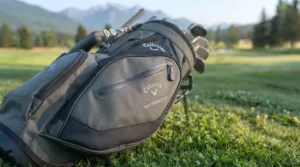
6. Datrek Go Lite Hybrid Stand Bag — best budget pick for minimal weight
Datrek built this bag around a single design principle: be light and stay functional, full stop. At roughly 5.2 lbs, it ties the Sun Mountain 4.5 LS for the lightest bag in this roundup, but at a meaningfully lower price point, which is exactly why it earns the budget-lightweight slot here rather than getting bumped by a pricier rival.
The 14-way top uses Datrek’s Individual Divider System for full-length club separation, and the Top-Lok bag-to-cart attachment system (shared with parent company Bag Boy) means it clips onto compatible push carts without wobble. Aggregated reviews from Walmart and Maple Hill Golf sit around 4.8 out of 5 stars, with buyers repeatedly calling out the weight-to-price ratio as the main draw.
Based on the spec comparison, the honest limitation is pocket count — six total pockets compared to the eight or nine found on pricier hybrids in this list, including the Bag Boy Chiller from the same parent company. If you’re a minimalist who doesn’t carry rain gear, a second dozen balls, and a full snack inventory, that’s a non-issue. If you’re the golfer who packs for contingencies, you’ll bump into the ceiling on a warm, unpredictable Canadian shoulder-season round.
Pros:
- ✅ Roughly 5.2 lbs makes it one of the lightest hybrid bags available
- ✅ Top-Lok cart attachment shares Bag Boy’s proven no-wobble system
- ✅ Strong aggregated review ratings near 4.8 out of 5 across retail platforms
Cons:
- ❌ Only six pockets total, fewer than most hybrid competitors
- ❌ Less padding and structure than heavier, pricier alternatives
Expect a price around C$150-C$220 at the time of research, which places it as genuinely excellent value for a bag this light — you’re not paying a premium for weight savings the way you would with some carbon-fibre-branded competitors.
7. MacGregor Tourney Hybrid Stand Bag — best entry point for first-time buyers
There’s a reason this bag keeps showing up on “shockingly good for the price” lists from UK and Canadian equipment reviewers alike: a 14-way divider spread across a genuinely spacious 10-inch top, eight pockets including a velour-lined magnetic rangefinder pocket, and a four-point adjustable strap system, all at a price that undercuts nearly everything else on this list.
At roughly 6 lbs, it’s not the lightest option here, but it holds up structurally in a way cheaper bags sometimes don’t — reviewers specifically noted the bag stayed stable even with the storage-heavy 14-way top, which can sometimes create a top-heavy, tippy feel on budget bags. The cushioned mesh strap fabric with an air channel for breathability is a detail you don’t typically expect at this price tier.
Reviewers consistently describe this as the bag they didn’t expect to be impressed by, with the main honest caveat being reduced full-length leg support compared to premium bags — because the legs start lower on the frame to keep a clean fit on a trolley, stability on steep or windy courses takes a slight hit compared to full-length-leg competitors. For a first hybrid bag, or a beginner easing into the game without wanting to drop C$400+ before they know if they’ll stick with it, this is the sensible starting point.
Pros:
- ✅ 14-way divider top and eight pockets rival bags twice the price
- ✅ Four-point adjustable strap with breathable mesh improves carry comfort
- ✅ Genuinely one of the lowest-priced full-feature hybrid bags available
Cons:
- ❌ Slightly less stable on steep, hilly, or windy courses than full-leg bags
- ❌ Materials and zippers feel a step below premium competitors over time
Pricing runs around C$150-C$200 at the time of research — for a beginner or once-a-month golfer, it’s difficult to find more functional storage per dollar spent anywhere on this list.
Full Spec Comparison: Top 7 Hybrid Golf Bags at a Glance
| Bag | Weight | Pockets | Price Range (CAD) | Best For |
|---|---|---|---|---|
| Titleist Hybrid 14 | ~6.1 lbs | 9 | C$380-C$450 | All-around premium crossover |
| Sun Mountain 4.5 LS Hybrid | ~5.2 lbs | 6-7 | C$350-C$420 | Lightweight walking priority |
| Callaway Fairway 14 | ~6 lbs | 10-11 | C$400-C$450 | Cart and push-cart integration |
| Sun Mountain C-130 Hybrid | ~6.6 lbs | 9 | C$420-C$480 | Maximum storage, cart-first golfers |
| Bag Boy Chiller Hybrid | ~6.4 lbs | 8 | C$220-C$320 | Mid-range value with cooler pocket |
| Datrek Go Lite Hybrid | ~5.2 lbs | 6 | C$150-C$220 | Budget lightweight pick |
| MacGregor Tourney Hybrid | ~6 lbs | 8 | C$150-C$200 | Entry-level, first-time buyers |
Stacked side by side, the pattern is clear: pocket count and price move together far more predictably than pocket count and weight do. The Sun Mountain C-130 Hybrid and Titleist Hybrid 14 both sit at the top of the pricing range and deliver storage to match, while the Datrek Go Lite Hybrid and MacGregor Tourney Hybrid prove you don’t need to spend C$400+ to get a genuinely usable 14-way hybrid bag. The middle ground — the Bag Boy Chiller Hybrid — is arguably the shrewdest buy here precisely because it undercuts the premium bags on price while still beating the budget bags on pocket count and features.
Practical Usage Guide: Setting Up and Maintaining Your Hybrid Golf Bag
Getting a new hybrid bag dialled in properly in the first few rounds saves you from the slow-motion annoyance of re-organizing your setup every single time you play. Start by loading heaviest items — rangefinder, extra balls, rain gear — into the lower or side pockets rather than the top, since a hybrid bag’s centre of gravity affects how stable it feels both standing on its legs and strapped to a cart. Most manufacturers, Sun Mountain and Titleist included, specifically engineer the base to sit flat under load, but that only works if you’re not stacking all your weight up top.
Adjust the dual strap system before your first round, not during it. Most hybrid bags use a sternum strap or hip pad that needs to sit snugly for the weight-distribution benefit to actually kick in — loose straps mean all the padding engineering in the world won’t stop the bag from digging into one shoulder by hole 14. If your bag has a leg-lock or Velcro cart strap, get in the habit of using it every single time you’re on a cart; skipping it “just this once” is how bags end up twisted, scuffed, or worse, tipped off a moving cart.
For maintenance, wipe down zippers and dividers after wet rounds — moisture trapped in a closed bag for a week is the single most common cause of premature zipper corrosion and mildew smell in golf bags generally. Once a season, check the leg-lock mechanism and stand hinges for stiffness or grit buildup; a quick wipe with a dry cloth usually resolves it before it becomes a bag that won’t pop its legs on command. Common first-30-days mistakes include overpacking the apparel pockets (which strains zippers over time) and forgetting to re-secure the cart strap pass-through after removing valuables mid-round, which is the leading cause of a bag sliding on a cart over rough terrain.
Real-World Scenarios: Which Hybrid Golf Bag Fits Your Game?
Picture three different golfers standing in the same pro shop aisle. The first is a weekend warrior in her late 30s who plays maybe 15 rounds a season, splitting them roughly evenly between walking with friends and riding when she’s short on time. For her, the Bag Boy Chiller Hybrid or MacGregor Tourney Hybrid makes the most sense — enough storage and stability for either mode without paying premium prices for performance she won’t fully use.
The second is a retiree who walks four or five rounds a week as his primary exercise and occasionally rides during heat advisories. Weight is his top priority, and every extra pound compounds over an 18-hole walk, day after day. The Sun Mountain 4.5 LS Hybrid or Datrek Go Lite Hybrid both fit this profile well, trading some pocket space for a noticeably lighter carry.
The third is a competitive club-level player who rides in tournaments but practices and plays casual rounds on foot, and who travels with a full 14-club set plus rangefinder, extra layers, and snacks for a five-hour round. The Titleist Hybrid 14 or Sun Mountain C-130 Hybrid suits this golfer best — the storage capacity and premium build justify the higher price when the bag is doing serious duty across both use cases, week after week.
✨ Don’t Miss These Exclusive Deals!
🔍 Take Your Bag Game to the Next Level
Ready to stop juggling two bags for two moods on the course? Click on any highlighted pick above to check current pricing and availability, and grab the hybrid golf bag that actually matches how you play — not just how you wish you played.
How to Choose Hybrid Golf Bags
Choosing the right hybrid golf bag comes down to weighing a handful of specific factors against how you actually play, rather than chasing the model with the most pockets. Here’s how to work through it:
- Estimate your walk-to-ride ratio honestly. If you walk more than 60% of your rounds, prioritize weight over storage. If you ride more than 60%, storage and cart-lock stability matter more than shaving ounces.
- Check the divider count against your bag load. A 14-way top handles a standard set; if you carry alignment sticks, a second putter, or extra wedges, look at a 15-way model like the Sun Mountain C-130.
- Match the strap system to your carry frequency. Dual straps with a hip pad or sternum strap suit frequent walkers; a single strap is fine if you’re mostly cart-bound.
- Confirm cart compatibility before buying. Not every hybrid bag’s base fits every push cart cradle — check your specific trolley model against the bag’s base dimensions.
- Weigh pocket specialization against total count. A bag with a dedicated cooler, rangefinder, and valuables pocket is more useful than one with more generic pockets you’ll never fully organize.
- Set a real budget before you start comparing bags. Hybrid bags in this guide range from roughly C$150 to C$480 — decide where you land before falling for a premium bag’s marketing copy.
- Read aggregated review sentiment, not just the star rating. A 4.5-star bag with recurring strap complaints might be wrong for you even if the average score looks great.
Hybrid Golf Bag Stand and Cart: Understanding the Crossover Design
The core promise of a hybrid golf bag stand and cart design is simple on paper: one bag, two jobs. In practice, how well that promise holds up depends heavily on which specific bag you buy, because “hybrid” isn’t a regulated term — it’s a design philosophy that different brands implement with different priorities.
A traditional stand bag optimizes purely for carrying: it’s light, has a simple leg mechanism, and typically carries fewer, smaller pockets because every ounce matters when it’s on your shoulders for four hours. A traditional cart bag goes the opposite direction — heavier materials, forward-facing pockets optimized for access while strapped to a cart, and often no stand legs at all, since it’s assumed to spend its life sitting on a trolley or cart mount.
| Feature | Stand Bag | Cart Bag | Hybrid Bag |
|---|---|---|---|
| Typical Weight | 3-5 lbs | 5-7 lbs | 5-6.6 lbs |
| Stand Legs | Yes | Rarely | Yes |
| Cart-Lock Base | Rarely | Yes | Yes |
| Pocket Count | 5-7 | 8-11 | 6-11 |
| Best For | Dedicated walkers | Dedicated riders | Golfers who do both |
Reading across this table, the hybrid category doesn’t beat a dedicated stand bag on pure weight, and it doesn’t beat a dedicated cart bag on pure storage — what it wins on is not having to own two bags and remember which one to load into the trunk before you leave the house. For a golfer who genuinely alternates between walking and riding week to week, that convenience is worth the modest compromise on both ends; for a golfer who only ever does one or the other, a purpose-built bag will usually out-perform a hybrid at the same price point.
Convertible Golf Bag Review: Strap Systems and Adjustable Bag Design
Across every bag in this convertible golf bag review, the single biggest factor separating a genuinely comfortable hybrid from a merely tolerable one is the adjustable bag design behind the strap system — not the pocket count, not the divider top, the straps. A bag that shifts smoothly between a shoulder carry and a cart-mounted position without you having to fight buckles or re-thread anything is doing its job; one that requires two hands and a minute of fiddling every time you switch modes is going to get left on the cart for the rest of the round out of sheer laziness.
The best adjustable systems in this lineup — Titleist’s premium double strap, Callaway’s Anamatic system, and Sun Mountain’s X-Fit dual strap — all share a common design goal of shifting load between the shoulders and hips depending on strap tension, rather than dumping the full weight onto one point. Aggregated reviewer feedback across these three brands consistently rates strap comfort as a top-three factor in overall satisfaction, ahead of pocket count in most cases. On the budget end, MacGregor’s four-point adjustable strap punches above its price tag specifically because it offers genuine multi-point adjustment rather than a single fixed-length strap dressed up to look adjustable.
What most buyers overlook when comparing bags online is that strap comfort is genuinely difficult to judge from a spec sheet or a product photo — it depends on your torso length, how you load the bag, and whether you’re left- or right-shoulder dominant when carrying. Where possible, try a floor model in-store before buying online, or lean heavily on aggregated review sentiment specifically mentioning strap comfort over multiple rounds rather than a single “first impressions” review.
Multi-Function Golf Bag Features That Actually Matter (And Those That Don’t)
Not every feature listed on a multi-function golf bag’s spec sheet earns its spot. Full-length club dividers matter — genuinely, consistently, across every review we surveyed — because they’re the single biggest factor in preventing shaft rattle, scuffing, and the annoying moment where you pull out a 7-iron tangled with your putter. A cart strap pass-through tunnel matters too, since it’s the difference between a bag that stays flat and secure on a trolley and one that slides around on rough terrain.
On the other hand, some marketed features add less real-world value than their prominence in product photos suggests. An oversized putter well looks premium but only matters if you’re actually carrying an oversized mallet grip — for a standard grip, it’s mostly wasted space. Novelty pockets marketed for specific gadgets (phone-specific slots, for instance) tend to age poorly as phone sizes change year over year, while a simple, generically-sized zippered pocket ages better because it adapts to whatever you’re carrying next season.
Reviewers consistently note that insulated cooler pockets — like the one on the Bag Boy Chiller — deliver disproportionate satisfaction relative to their cost, especially for golfers playing in hot, humid Canadian summers where a cold drink by hole 12 genuinely changes the back nine. Meanwhile, purely cosmetic features like contrast-stitching or limited-edition colourways show up constantly in marketing but essentially never in aggregated reviewer pros-and-cons lists — which tells you where actual buyer priorities land once the bag is out on the course rather than in a showroom.
Common Mistakes When Buying Hybrid Golf Bags
The single most common mistake is buying based on weight alone without checking whether the pocket layout actually fits how you play. A golfer who carries rain gear, extra layers, and snacks every round will be frustrated by an ultra-light bag with six pockets no matter how comfortable the straps feel, because comfort doesn’t matter if you can’t fit your gear.
A second recurring mistake is skipping the cart compatibility check. Not every hybrid bag’s base geometry fits every push cart or riding cart cradle — the elliptical base on some premium bags, for instance, sits differently on certain trolley baskets than the flatter, more universal bases on budget models. Measure your existing cart’s cradle dimensions before assuming any hybrid bag will drop in cleanly.
A third mistake, and an easy one to make when shopping online, is over-indexing on star ratings without reading what the negative reviews actually say. A bag with a strong 4.5-star average but a recurring thread of complaints about strap comfort or zipper durability over time is telling you something specific and worth weighing, even if the headline number looks great. Finally, some buyers assume “hybrid” automatically means “lighter than a cart bag and roomier than a stand bag” — as the comparison table above shows, that’s not always true, and the honest trade-off is usually somewhere in the middle on both counts rather than a clean win on either.
Long-Term Cost & Maintenance
A hybrid golf bag typically lasts five to eight years of regular seasonal use before zippers, straps, or the leg mechanism start showing real wear — longer if you’re diligent about drying it out after wet rounds and avoiding overpacking the apparel pockets. Compared to buying a separate stand bag and cart bag, which realistically means spending on two products instead of one, the hybrid category’s total cost of ownership is straightforward: one purchase, one maintenance routine, one bag to replace eventually.
| Price Tier | Example Bag | Typical Lifespan | Cost Per Season (5-yr use) |
|---|---|---|---|
| Budget | MacGregor Tourney Hybrid | 3-5 years | ~C$30-C$40/season |
| Mid-range | Bag Boy Chiller Hybrid | 5-6 years | ~C$40-C$55/season |
| Premium | Titleist Hybrid 14 | 7-8+ years | ~C$50-C$65/season |
Interpreting this table, the premium bags don’t just cost more upfront — they tend to earn that cost back through longevity, since sturdier zippers and reinforced stitching hold up to years of seasonal Canadian weather swings better than budget materials. That said, the budget tier still comes out ahead on raw dollars if you’re the type of golfer who upgrades gear every few seasons regardless of how the old bag is holding up. Neither approach is wrong; it’s a question of whether you value lower upfront cost or lower cost-per-season over time.
Versatile Course Gear: Rounding Out Your Setup
A hybrid golf bag is the anchor piece of versatile course gear, but it works best paired with a few complementary items rather than in isolation. A quality rain hood — most of the bags above include one — protects your grips and headcovers during Canada’s notoriously unpredictable spring and fall rounds, when a sunny front nine can turn into a soaked back nine with zero warning. A compatible push cart, ideally from the same brand family (Bag Boy and Datrek share a Top-Lok system, for instance), removes the guesswork about whether your bag will actually seat securely.
Beyond the bag itself, a physiotherapy-informed approach to how you actually use your gear matters more than most golfers realize. Canadian physiotherapists specifically recommend pushing rather than pulling a wheeled cart and alternating shoulders if you’re using a single-strap carry, both of which reduce cumulative strain over a season of regular rounds — advice that applies directly to how you use any hybrid bag on this list, regardless of which one you choose. Rounding out your setup with the right accessories, and using them the way they’re designed to be used, does more for your comfort over a season than any single bag upgrade will.

Frequently Asked Questions
❓ Are hybrid golf bags worth it compared to buying a separate stand and cart bag?
❓ What is the average weight of a hybrid golf bag?
❓ Can a hybrid golf bag fit on any push cart?
❓ How many pockets should a hybrid golf bag have?
❓ Do hybrid golf bags come with a rain cover included?
Conclusion
Hybrid golf bags exist because most of us don’t fit neatly into “always walks” or “always rides” — our rounds depend on the weather, our energy that day, and who we’re playing with. The seven bags covered here span from the storage-maximalist Sun Mountain C-130 Hybrid to the featherweight Datrek Go Lite Hybrid, and the right pick genuinely depends on which end of that spectrum matches how you actually play, not which bag has the flashiest marketing photos.
If you take one thing away from this guide, let it be this: check your real walk-to-ride ratio and your actual pocket needs before you shop, not after. A gorgeous premium bag with more storage than you’ll ever use is just extra weight on the rounds you walk, and an ultra-light bag with six pockets will frustrate you the first time you try to pack for an unpredictable Canadian shoulder-season round. Match the bag to your golf, not the other way around, and any of these seven picks will serve you well for years.
Recommended for You
- Hard Case vs Soft Case Golf Travel Bag: 7 Best Picks (2026)
- 7 Best Staff Golf Bags 2026: Tour-Level Picks for Serious Golfers
- 7 Best Sunday Golf Bags in Canada for 2026
✨ Found this helpful? Share it with your friends! 💬🤗
