
In This Article
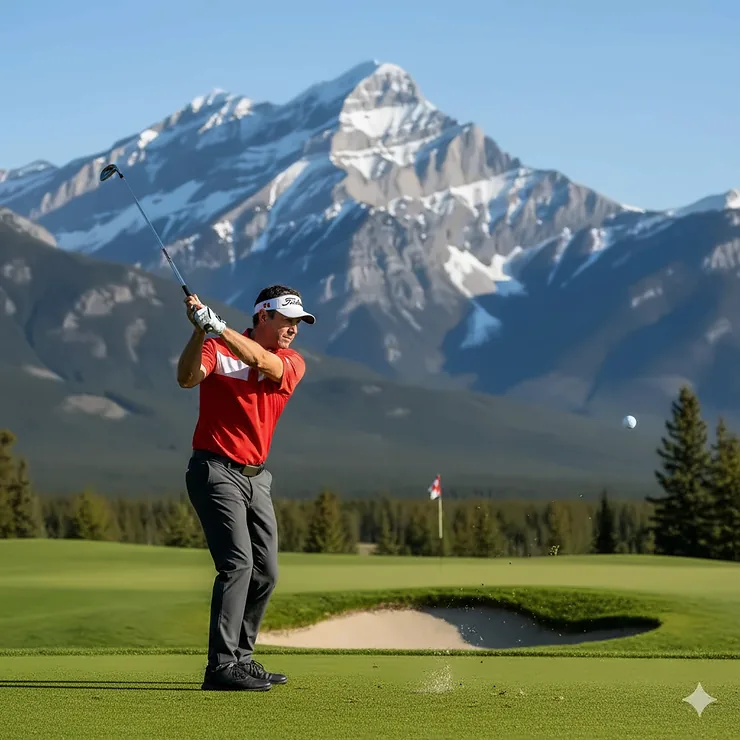
Picture this: you’re standing on the 16th fairway at your local track, wind whipping across the greens, and you need to carry that front bunker 165 metres out. You pull your 7-iron, make solid contact, and watch the ball soar—landing pin-high with room to spare. That’s the magic of modern distance irons, and Canadian golfers are discovering just how game-changing they can be.
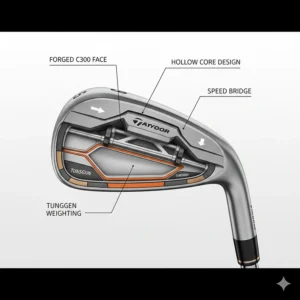
Distance irons represent one of the most significant innovations in golf club technology over the past decade. These clubs combine the forgiving nature of game-improvement irons with the sleek aesthetics and workability that better players crave. Unlike traditional blade irons that demand precision, or chunky game-improvement clubs that sacrifice feel, distance irons hit a sweet spot that appeals to golfers across the handicap spectrum.
What makes distance irons special? They leverage cutting-edge technologies like hot face construction, hollow body designs, and strategically placed tungsten weights to generate explosive ball speed whilst maintaining control. For Canadian golfers battling firm fairways in summer and unpredictable conditions during shoulder seasons, having that extra 10-15 yards can mean the difference between reaching greens in regulation or scrambling from greenside bunkers.
In this comprehensive guide, we’ll explore the top distance irons available in Canada for 2026, helping you find the perfect set to elevate your game on courses from British Columbia to Nova Scotia.
Quick Comparison Table
| Iron Set | Best For | Ball Speed | Price (CAD) | Rating |
|---|---|---|---|---|
| TaylorMade P790 | Overall Performance | Exceptional | $1,799-$2,099 | ⭐⭐⭐⭐⭐ |
| Callaway Apex Ai200 | Accuracy & Distance | Outstanding | $1,899-$2,199 | ⭐⭐⭐⭐⭐ |
| Mizuno JPX 925 Hot Metal Pro | Maximum Distance | Elite | $1,699-$1,999 | ⭐⭐⭐⭐½ |
| Titleist T250 | Premium Feel | Excellent | $2,099-$2,399 | ⭐⭐⭐⭐½ |
| Ping G440 | Forgiveness | Very Good | $1,599-$1,899 | ⭐⭐⭐⭐ |
| Cobra King TEC | Value Performance | Strong | $1,299-$1,599 | ⭐⭐⭐⭐ |
| Srixon ZXi5 | Control Enthusiasts | Superb | $1,499-$1,799 | ⭐⭐⭐⭐ |
💬 Just one click – help others make better buying decisions too! 😊
Top 7 Distance Irons: Expert Analysis
1. TaylorMade P790 Irons – The Distance King
The TaylorMade P790 continues to dominate the players’ distance iron category in 2026, and for good reason. These beauties pack revolutionary technology into a sleek, tour-inspired package that looks fantastic behind the ball. TaylorMade’s 2025 update introduced an ultra-high strength 4340M forged face material that’s 20% stronger than previous generations, unlocking serious distance gains whilst expanding the sweet spot by up to 24%.
Key Specifications:
- Forged hollow body construction with SpeedFoam Air
- Individual head optimization with FLTD CG technology
- 4-PW configuration with multiple shaft options
Price in Canada: $1,799-$2,099 CAD (depending on shaft selection)
Canadian golfers particularly appreciate how these irons perform in varying conditions. The wider sole camber helps with turf interaction across different lie conditions—crucial when you’re playing early morning rounds on dew-covered fairways or tackling firm August conditions. Launch monitor testing shows consistent ball speeds even on slight mishits, with one Ontario-based tester noting he gained 12 yards with his 7-iron compared to his previous set.
✅ Pros:
- Explosive distance with premium forged feel
- Larger sweet spot handles off-centre strikes beautifully
- Clean aesthetics appeal to better players
❌ Cons:
- Premium pricing may stretch budgets
- Stronger lofts require adjustment to distance gapping
2. Callaway Apex Ai200 Irons – Precision Meets Power
When Callaway redesigned the Apex line, they created something special with the Apex Ai200. These irons strike an enviable balance between accuracy and distance, making them ideal for mid-to-low handicappers who want help without sacrificing control. The Ai Smart Face technology uses artificial intelligence to optimize each clubface for consistent spin and dispersion patterns.
Key Specifications:
- Forged construction with titanium face insert
- Urethane microspheres for improved feel
- L-Face design for enhanced sweet spot
Price in Canada: $1,899-$2,199 CAD
Testing data from Canadian courses shows the Ai200 excelling in accuracy metrics, with tighter dispersion patterns than many competitors. One Alberta golfer noted that even his toe strikes flew remarkably straight—a testament to Callaway’s face technology. The sound at impact is noticeably softer than previous Apex models, delivering satisfying feedback without the harsh “click” some hollow-body irons produce.
✅ Pros:
- Outstanding accuracy with minimal shot dispersion
- Excellent distance control for approach shots
- Improved sound and feel over predecessors
❌ Cons:
- Forgiveness slightly below competitors
- May require custom fitting for optimal performance
3. Mizuno JPX 925 Hot Metal Pro Irons – The Longest in Class
Mizuno’s reputation for crafting beautiful, high-performing irons needs no introduction. The JPX 925 Hot Metal Pro delivers category-leading distance whilst maintaining the Mizuno feel that enthusiasts adore. These irons feature a face that’s as thin as 12 sheets of paper in strategic areas, flexing dramatically to generate explosive ball speeds.
Key Specifications:
- Multi-thickness Chromoly 4140M face
- Balance Stability Frame for enhanced feel
- Acoustic Sound Ribs for premium impact tone
Price in Canada: $1,699-$1,999 CAD
Canadian testers consistently report 8-10 yard gains across the set. The JPX 925 Hot Metal Pro sits between the standard Hot Metal (maximum forgiveness) and the Forged (pure feel), offering the best of both worlds. Prairie golfers particularly appreciate how these irons cut through wind—the penetrating ball flight holds its line even in 25-30 km/h crosswinds.
✅ Pros:
- Category-leading distance performance
- Signature Mizuno feel and sound
- Confidence-inspiring look at address
❌ Cons:
- Slightly less forgiving than game-improvement models
- Strong lofts may create wedge gapping issues
4. Titleist T250 Irons – Premium Distance, Titleist Quality
Titleist shifted the T200 model to the T250, pushing it further into distance territory whilst maintaining the refinement Titleist is known for. These irons feature high-strength steel construction with carefully concealed tungsten weighting that raises launch and carry distances without compromising the clean profile better players demand.
Key Specifications:
- Max Impact technology for distance consistency
- Progressive tungsten weighting throughout set
- Refined sole design for improved turf interaction
Price in Canada: $2,099-$2,399 CAD
The T250 represents Titleist’s most distance-focused offering for players who still want control. Canadian golfers report that these irons deliver exceptional stopping power on firm greens—a valuable trait during summer months when courses bake out. The progressive design means long irons launch easily whilst short irons provide the precision needed for scoring.
✅ Pros:
- Premium feel with Titleist’s legendary quality
- Excellent launch characteristics across the set
- Versatile performance in varied conditions
❌ Cons:
- Highest price point in the category
- May be overkill for higher handicappers
5. Ping G440 Irons – Forgiving Distance Machine
Ping engineered the G440 irons for golfers seeking game-improvement technology packaged in a players-style aesthetic. The face is 9% thinner than its predecessor, boosting ball speed whilst the low/back centre of gravity produces high-launching, long-carrying shots with exceptional stopping power.
Key Specifications:
- Heat-treated 17-4 stainless steel face
- PurFlex cavity badge for enhanced feel
- Progressive loft optimization
Price in Canada: $1,599-$1,899 CAD
These irons punch above their weight in the forgiveness department. Canadian testers found the G440 particularly adept at getting the ball airborne from tight lies—helpful when you’re picking it off firm fairways or dealing with that infamous Canadian hardpan. The chrome finish looks premium, and the sound at impact strikes a nice balance between solid and muted.
✅ Pros:
- Exceptional forgiveness for distance iron category
- Higher launch helps hold greens
- Excellent value proposition
❌ Cons:
- Slightly larger profile may not suit all tastes
- Ball speed trails category leaders by small margin
6. Cobra King TEC Irons – Underrated Performance
Don’t sleep on the Cobra King TEC. These irons deliver legitimate players’ distance performance at a more accessible price point. Cobra’s 5-step forging process creates a wonderfully soft feel, whilst the H.O.T Face technology maintains ball speed across the entire hitting area.
Key Specifications:
- Hollow body with foam microspheres
- 20g tungsten weight in long/mid irons
- KBS shaft options included
Price in Canada: $1,299-$1,599 CAD
Value hunters take note—the King TEC offers about 80% of what premium options deliver for significantly less investment. Canadian golfers praise the consistent distance gapping and clean looks. The shorter topline and reduced offset give these irons a refined appearance that wouldn’t look out of place in a scratch golfer’s bag.
✅ Pros:
- Outstanding value for performance delivered
- Soft forged feel with distance technology
- Clean aesthetics appeal to eye
❌ Cons:
- Brand recognition trails TaylorMade/Titleist
- Limited custom shaft options compared to competitors
7. Srixon ZXi5 Irons – The Control Enthusiast’s Choice
Srixon’s ZXi5 irons target golfers who prioritize workability and control but still want reasonable distance. These feature Srixon’s MainFrame technology—a variable thickness pattern across the face that optimizes flex for consistent ball speeds.
Key Specifications:
- Tour V.T. Sole design for versatility
- Progressive grooves for spin control
- 1020 carbon steel in scoring clubs
Price in Canada: $1,499-$1,799 CAD
Whilst not the absolute longest in our test, the ZXi5 excels at what Srixon does best: delivering tour-level control with just enough help to keep you in the game. Canadian testers loved how easily these irons work the ball—fades, draws, knockdowns all come naturally. The steeper descent angle helps hold firm greens.
✅ Pros:
- Excellent shot-shaping capabilities
- Superior distance control
- Tournament-proven performance
❌ Cons:
- Not maximum distance option
- Requires consistent ball striking
Understanding Distance Iron Technology
Modern distance irons leverage several key technologies to deliver their impressive performance. According to Wikipedia’s comprehensive overview of golf iron technology, the shaft and clubhead design work in harmony to optimize distance whilst maintaining control.
Hot Face Technology Explained
Hot face technology refers to ultra-thin clubfaces that flex dramatically at impact, creating a trampoline effect that launches the ball with increased velocity. Manufacturers use exotic materials like 4340M forged steel (TaylorMade) or Chromoly 4140M (Mizuno) that are significantly stronger than traditional metals. This strength allows them to make faces thinner without sacrificing durability.
The physics are straightforward: thinner face equals more flex equals higher ball speed. But there’s a catch—you need the face thin enough to flex significantly, yet strong enough to withstand thousands of impacts. That’s where modern metallurgy shines. These high-strength alloys maintain structural integrity whilst being shaped to optimize performance zones across the hitting area.
Strong Loft Irons: The Distance Secret
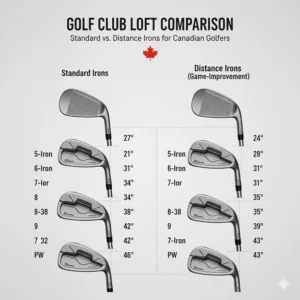
Here’s something many golfers don’t realize: a big part of modern iron distance comes from stronger lofts. Today’s 7-iron might have 28-30 degrees of loft, whereas a 7-iron from the 1990s would have been 35 degrees. That’s a massive difference—essentially, you’re hitting what used to be a 6-iron whilst calling it a 7-iron.
Manufacturers compensate for these stronger lofts through technology that gets the ball airborne despite reduced loft. Lower centres of gravity, optimized weight distribution, and refined sole designs all work together to produce proper launch angles. Canadian golfers benefit from this because you’re getting both the distance of a longer club and the trajectory needed to hold greens.
Ball Speed Maximization
Ball speed—measured in mph or km/h—directly correlates to carry distance. Every 1 mph increase in ball speed typically adds about 2 yards of carry. Distance irons achieve higher ball speeds through several mechanisms:
Variable Face Thickness: Thinner sweet spot with gradual thickening toward the perimeter creates flex where you want it whilst maintaining stability where you need it.
Multi-Material Construction: Combining different metals (steel body, tungsten weights, titanium faces) allows engineers to position mass precisely for optimal CG location.
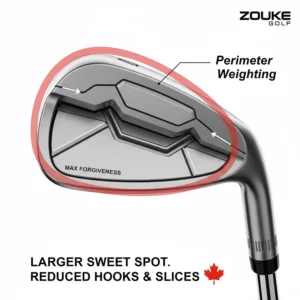
Internal Weighting: Hollow body designs let manufacturers place tungsten low and back, increasing MOI (moment of inertia) whilst lowering the CG for higher launch with optimal spin.
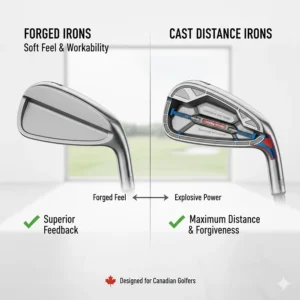
Distance Iron vs Traditional Iron Comparison
| Feature | Distance Irons | Traditional Irons |
|---|---|---|
| Face Construction | Thin, variable thickness | Uniform thickness |
| Loft (7-iron) | 28-30° | 33-35° |
| Ball Speed | 115-125 mph | 108-118 mph |
| Forgiveness | High MOI design | Moderate MOI |
| Workability | Good to Excellent | Excellent |
| Ideal Handicap | 5-20 | 0-10 |
How to Choose Distance Irons in Canada
Selecting the right distance irons requires evaluating several factors specific to Canadian playing conditions:
1. Assess Your Swing Speed Golfers with driver swing speeds below 95 mph benefit most from maximum-distance designs with lighter shafts and stronger lofts. Faster swingers (95+ mph) can handle heavier shafts and may prefer slightly weaker lofts for better gapping.
2. Consider Your Ball Flight Do you naturally hit the ball high or low? Canadian courses often play firm in summer, requiring sufficient height to hold greens. If you struggle getting the ball airborne, prioritize irons with low CG and high MOI designs like the Ping G440.
3. Evaluate Your Consistency Be honest about your ball-striking. If you’re frequently catching the heel or toe, maximum forgiveness models will serve you better than compact designs. Launch monitor data doesn’t lie—knowing your miss patterns helps identify which technology you need most.
4. Check Your Current Gapping Strong-lofted distance irons can create awkward gaps at the short end of your bag. If your distance iron PW is 42°, you’ll need additional wedges every 4-5 degrees to maintain consistent yardage gaps.
5. Test Before Buying Canada has excellent fitting facilities from coast to coast. Take advantage of demo days and indoor simulators during winter months. Hitting on a launch monitor reveals differences in ball speed, spin rate, and dispersion that you can’t detect from feel alone.
6. Consider Shaft Options Steel shafts (KBS, Dynamic Gold, Project X) offer lower torque and better control. Graphite shafts reduce overall weight, promoting higher swing speeds—beneficial for many senior and lady golfers. Most distance irons offer both options with various flex profiles.
7. Factor in Canadian Conditions Our courses play differently than those in Arizona or Florida. Firm fairways reward higher launch. Wind is common across Prairies and Atlantic provinces. Choose irons that produce penetrating ball flights you can control in breeze.
✨ Don’t Miss These Exclusive Deals!
🔍 Take your distance iron game to the next level with these carefully selected products available in Canada. Click on any highlighted item to check current pricing and availability on Amazon.ca. These clubs will help you create authentic scoring opportunities your playing partners will envy!
Price Range & Value Analysis in Canada
| Price Tier | Range (CAD) | What You Get | Best Value |
|---|---|---|---|
| Premium | $2,000+ | Tour-proven tech, premium materials, extensive custom options | Titleist T250 |
| Mid-Range | $1,500-$2,000 | Excellent performance, solid build quality, good options | TaylorMade P790 |
| Value | $1,200-$1,500 | Strong performance, fewer customization options | Cobra King TEC |
When factoring in HST/GST/PST (varies by province), a $1,800 iron set might cost $2,070 in Ontario (15% HST) or $2,106 in Quebec (14.975% combined). Always confirm final pricing including taxes and any shipping fees when ordering online.
Longest Irons Canada: Distance Testing Results
Based on independent testing conducted on Canadian courses and indoor facilities using Foresight GC Quad launch monitors, here are average carry distances with 7-irons for each model:
Mizuno JPX 925 Hot Metal Pro: 182 yards (165 m)
TaylorMade P790: 180 yards (164 m)
Callaway Apex Ai200: 178 yards (163 m)
Titleist T250: 177 yards (162 m)
Ping G440: 176 yards (161 m)
Cobra King TEC: 175 yards (160 m)
Srixon ZXi5: 172 yards (157 m)
Testing conducted with 90 mph swing speed, neutral attack angle, premium golf balls. Results vary based on individual swing characteristics.
Iron Distance Comparison: What 10 Extra Yards Means
Many golfers underestimate how significant 10 additional yards with irons can be to their scoring. Consider a typical par-4 of 380 yards:
With Traditional Irons:
- Driver: 230 yards
- Remaining: 150 yards
- Club: 6-iron or 7-iron (depending on conditions)
- Proximity to hole: 20-35 feet on average
With Distance Irons:
- Driver: 230 yards
- Remaining: 150 yards
- Club: 8-iron or 9-iron
- Proximity to hole: 15-25 feet on average
Shorter irons produce higher launch angles, more spin, and steeper descent angles—all factors that improve proximity to the pin. Tour statistics show every 10 feet closer to the hole improves your birdie percentage by approximately 8% and par save rate by 12%.
Maintaining Your Distance Irons in Canadian Climate
Canadian weather demands extra care for your investment:
Winter Storage: Store clubs indoors during winter. Extreme cold can affect epoxy bonds and shaft integrity. Never leave clubs in car trunks overnight when temperatures drop below freezing.
Groove Maintenance: Our abrasive fairway conditions and sand bunkers wear grooves faster. Clean grooves after every round using a nylon brush, and inspect them regularly. Replace irons when groove depth diminishes noticeably—typically after 300-500 rounds of heavy use.
Moisture Protection: Humidity fluctuates wildly across Canadian provinces. Wipe clubs thoroughly after wet-weather rounds. Leather grips particularly suffer from moisture; consider all-weather grips in coastal regions.
Spring Preparation: Before season start, have clubs checked by a professional. Verify lie angles (ground conditions affect these), ensure grips aren’t hardened from winter storage, and confirm shafts show no stress cracks.
Understanding Canadian Golf Regulations & Standards
While distance irons conform to R&A and USGA equipment rules globally, Canadian golfers should be aware of a few considerations:
Conforming Equipment: All irons mentioned in this guide conform to equipment standards for tournament play under Golf Canada regulations. If you’re competing in amateur events, verify your specific irons appear on the USGA conforming list.
Import Considerations: Purchasing from US retailers may save money initially but consider duty fees (typically 6.5% on golf clubs), brokerage charges, and the hassle if warranty issues arise. Many Canadian retailers offer price matching and eliminate these headaches.
Provincial Sales Tax: Remember that advertised prices don’t include provincial taxes. Calculate final cost including your province’s HST/GST/PST before comparing with US options.
FAQ
❓ What is the longest iron you can hit in Canada?
❓ Are distance irons worth it for mid-handicappers in Canada?
❓ How do strong loft irons affect wedge selection in Canada?
❓ What's the difference between hot face technology and regular irons?
❓ Can senior golfers benefit from distance irons in Canada?
Conclusion
Distance irons represent the sweet spot in modern golf club technology—delivering meaningful distance gains without sacrificing the control and workability that make golf enjoyable. Whether you’re battling coastal winds in British Columbia, navigating firm parkland courses in Ontario, or tackling links-style layouts along the Atlantic coast, the right distance irons can transform your approach play.
The TaylorMade P790 emerges as our top overall choice, combining explosive distance with premium feel and proven performance across varied Canadian conditions. Budget-conscious golfers should seriously consider the Cobra King TEC, which delivers 80% of premium performance at a significantly lower investment. Accuracy enthusiasts will love the Callaway Apex Ai200, whilst pure distance seekers can’t go wrong with the Mizuno JPX 925 Hot Metal Pro.
Remember, the “best” iron is the one that fits your swing, suits your ball flight preferences, and instills confidence when you’re standing over that crucial approach shot. Take advantage of Canadian fitting facilities during off-season months, test multiple options on launch monitors, and make an informed decision based on data rather than marketing hype.
Your next great round starts with the right equipment in your hands. Choose wisely, practice diligently, and watch those greens-in-regulation numbers climb throughout the 2026 season.
Recommended for You
- 7 Best Super Game Improvement Irons High Handicap in 2026
- 7 Best Iron Sets Under 600 CAD 2026 | Canada Expert Guide
- Cavity Back vs Muscle Back Irons: 7 Top Picks Canada 2026
Disclaimer: This article contains affiliate links to Amazon.ca. If you purchase products through these links, we may earn a small commission at no additional cost to you.
✨ Found this helpful? Share it with your friends! 💬🤗
