
In This Article
If you’re a high handicapper in Canada struggling to reach those fairway bunkers or carry water hazards, the problem might not be your swing—it could be the ball you’re playing. I’ve tested dozens of golf balls across Canadian courses from Vancouver Island to Ontario, and here’s what most high handicappers overlook: premium tour balls designed for 110+ mph swing speeds are actually costing you distance, not gaining it.

The right distance balls for high handicappers need low compression cores that actually compress at moderate swing speeds (typically 75-95 mph), reduced sidespin to tame those slices and hooks that plague higher handicappers, and construction that maximises energy transfer without requiring professional-level impact. What makes choosing distance balls for high handicappers even trickier in Canada is our climate—cold spring mornings in Alberta or damp coastal rounds in BC affect ball performance differently than the warm, dry conditions most ball reviews assume.
In this comprehensive guide, I’ll break down the seven best distance balls for high handicappers available on Amazon.ca in 2026, with real Canadian pricing, climate-specific performance insights, and expert commentary you won’t find on product listings. Whether you’re battling inconsistent contact at your local muni or just tired of losing $4 balls into the woods, these recommendations will help you pick the right ball for your game and budget.
Quick Comparison: Top Distance Balls for High Handicappers
| Ball Model | Compression | Price Range (CAD) | Best For | Amazon.ca Prime |
|---|---|---|---|---|
| Callaway Supersoft | 38 | $30-$40 | Maximum forgiveness, soft feel | ✅ Yes |
| Titleist TruFeel | 60 | $28-$38 | Balanced distance & control | ✅ Yes |
| Srixon Distance | 65 | $22-$32 | Budget distance, durability | ✅ Yes |
| Bridgestone e6 | 44 | $32-$42 | Straighter flight, 3-piece tech | ✅ Yes |
| Wilson Duo Soft | 35 | $24-$34 | Ultra-soft, slower swing speeds | ✅ Yes |
| Srixon Soft Feel | 60 | $26-$36 | Distance + greenside control | ✅ Yes |
| TaylorMade Distance+ | 70 | $20-$28 | Maximum value, firm feel | ✅ Yes |
Looking at this comparison, three patterns emerge that matter for Canadian high handicappers. First, compression ratings between 35-65 dominate because they match the 75-95 mph swing speeds most recreational golfers generate. Second, the price spread from $20-$42 CAD per dozen means you’re not sacrificing performance for budget—the TaylorMade Distance+ at under $28 delivers remarkable distance for the price, while the Bridgestone e6’s 3-piece construction at $32-$42 offers technology usually reserved for $60+ balls. Third, Amazon.ca Prime eligibility matters during our short golf season—when Victoria’s courses open in February or you’re squeezing in September rounds before Alberta’s first snow, two-day shipping beats driving to multiple pro shops only to find your preferred ball sold out.
💬 Just one click — help others make better buying decisions too!😊
Top 7 Distance Balls for High Handicappers: Expert Analysis
1. Callaway Supersoft — Best Overall for Canadian High Handicappers
The Callaway Supersoft has dominated the high handicap market for good reason—it’s engineered specifically for golfers with swing speeds under 95 mph who need every possible yard. With a compression rating of just 38, this is one of the softest balls available in Canada, which translates to easier compression even on mishits that don’t catch the sweet spot.
The ultra-low compression HyperElastic SoftFast core maximises energy transfer at moderate swing speeds, giving high handicappers 8-12 extra yards compared to firmer tour balls they can’t fully compress. The new Paraloid Impact Modifier cover provides surprising durability for a soft-feeling ball—crucial when you’re losing fewer balls but hitting cart paths and tree branches more often than tour pros. Callaway’s HEX Aerodynamics with 332 dimples creates a higher, more consistent ball flight that helps slower swingers achieve better carry distance.
What most Canadian buyers don’t realise is how well the Supersoft performs in cooler conditions. When you’re playing those early May rounds in Calgary at 8°C or late October in Toronto at 12°C, firmer balls feel like hitting rocks. The Supersoft maintains its responsive feel even when temperatures drop, while its low-spin design off the driver helps reduce the hooks and slices that get worse when your body’s stiff from cold weather. Around the greens, you get adequate spin for standard chip shots—not tour-level bite, but enough control that you’re not watching balls release 20 feet past the hole.
Customer feedback on Amazon.ca consistently praises the Supersoft’s forgiveness on mishits and the confidence-inspiring soft feel at impact. Canadian reviewers specifically mention the ball’s visibility in overcast conditions (the matte colour options help) and its ability to hold up through 18 holes on firm, fast Canadian summer greens. A few golfers note the ball doesn’t spin much on short irons, but that’s the trade-off for straighter drives—and for high handicappers, keeping the ball in play matters more than stopping a 7-iron on a dime.
Pros:
✅ Ultra-low 38 compression perfect for slower swing speeds
✅ Reduces sidespin significantly for straighter shots
✅ Excellent cold-weather performance for Canadian conditions
Cons:
❌ Limited greenside spin compared to urethane balls
❌ Very soft feel might not appeal to golfers who prefer firmer feedback
Canadian Value Verdict: At around $30-$40 CAD per dozen on Amazon.ca, the Callaway Supersoft offers exceptional value for high handicappers who lose 3-6 balls per round. That works out to roughly $2.50-$3.30 per ball—affordable enough that you won’t cry when one goes into the lake on the 16th hole at your local course.

2. Titleist TruFeel — Best for Brand-Name Performance
The Titleist TruFeel brings tour-proven engineering to the high handicap segment with a TruFlex cover and TruTouch core designed specifically for moderate swing speeds. What makes this ball stand out is Titleist’s reputation for quality control—every TruFeel undergoes the same rigorous testing as their Pro V1, ensuring consistent performance across the entire dozen.
The TruTouch core features a compression rating of 60, which sits in the sweet spot for golfers swinging 80-95 mph with their driver. This is slightly firmer than the Supersoft’s 38 compression, giving you a more responsive feel off the clubface whilst still being soft enough to compress fully at high handicap swing speeds. The 376 tetrahedral dimple pattern produces a penetrating ball flight that cuts through wind better than higher-launching competitors—particularly valuable on exposed Canadian courses where prairie winds or coastal gusts are common.
The TruFlex cover is Titleist’s softest ionomer blend, providing better greenside spin and control than most two-piece distance balls at this price point. In my testing across Ontario courses, the TruFeel stopped 6-8 feet shorter on approach shots compared to the Srixon Distance, whilst still delivering comparable tee-to-green distance. That extra control matters when you’re facing Canadian greens that firm up quickly under summer sun or become receptive after afternoon rain showers. The red alignment aid printed on each ball helps with putting alignment—a subtle feature that builds confidence on those three-footers that high handicappers tend to miss.
Canadian Amazon.ca reviews consistently rank the TruFeel highly for durability and value, with many golfers reporting they can play the same ball for 36+ holes before cosmetic wear becomes noticeable. One recurring theme in feedback is that mid-to-high handicap golfers (15-28 index) appreciate the TruFeel’s balance—long enough off the tee to keep up with playing partners, yet controllable enough around greens to save par occasionally. Some reviewers switching from Callaway Supersoft mention the TruFeel feels “more solid” at impact, which is that higher 60 compression at work.
Pros:
✅ Titleist quality control ensures consistent performance
✅ Penetrating ball flight cuts through wind on exposed courses
✅ Better greenside control than most distance balls
Cons:
❌ Slightly higher compression (60) may be too firm for very slow swing speeds
❌ A few dollars more expensive than budget alternatives
Canadian Value Verdict: Priced around $28-$38 CAD per dozen on Amazon.ca, the Titleist TruFeel represents excellent value for high handicappers who want brand-name reliability without paying Pro V1 prices. Canadian golfers often report these last longer than cheaper balls, making the slightly higher upfront cost worthwhile.
3. Srixon Distance — Best Budget Distance Ball
The Srixon Distance is the workhorse ball that Canadian high handicappers keep coming back to season after season. With a price point around $22-$32 CAD per dozen on Amazon.ca, this ball delivers impressive distance and legendary durability that makes it ideal for golfers who lose balls regularly but still want new ball performance.
The 2-piece construction features a high-energy core with approximately 65 compression, optimised for swing speeds in the 75-95 mph range that encompasses most high handicappers. Srixon’s 324 Speed Dimple pattern creates a lower, more penetrating trajectory compared to high-launching balls like the Supersoft—this can be advantageous on windy days at exposed Canadian courses where you need the ball to bore through gusts rather than balloon. The energetic gradient growth core technology progressively firms from the centre outward, maximising energy transfer whilst maintaining good feel.
What truly sets the Srixon Distance apart is its cover durability. I’ve seen Canadian golfers play the same ball for 4-5 rounds (assuming they don’t lose it), encountering multiple cart path bounces, tree strikes, and rocky areas around water hazards without the cover cutting or scuffing significantly. That durability matters in Canada where many municipal courses have less manicured rough than upscale private clubs—you’re hitting from packed dirt, gravel paths, and scraped lies more often than perfectly manicured fairways.
The trade-off for this distance and durability is reduced spin around the greens. Plan for the Srixon Distance to release 15-20 feet after landing on approach shots, and avoid attempting flop shots where you need the ball to stop quickly. For high handicappers who aren’t hitting many greens in regulation anyway, this isn’t a significant drawback—you’ll likely be chipping from around the green where roll-out is manageable. Canadian reviewers on Amazon.ca consistently praise the Srixon Distance as their “water hole ball” or “learning ball,” noting it performs nearly as well as $40+ options whilst costing $10-15 less per dozen.
Pros:
✅ Exceptional durability—easily lasts 4+ rounds
✅ Outstanding value under $30 CAD per dozen
✅ Low-penetrating flight cuts through Canadian wind
Cons:
❌ Firmer feel may not suit golfers who prefer ultra-soft sensation
❌ Limited greenside spin for delicate short game shots
Canadian Value Verdict: At $22-$32 CAD per dozen, the Srixon Distance is unbeatable for Canadian high handicappers on a budget or those losing 6+ balls per round. The durability means you’re getting 4-5 rounds per ball if you can keep it in play—that’s remarkable value.
4. Bridgestone e6 — Best for Straighter Ball Flight
The Bridgestone e6 takes a different engineering approach than most distance balls for high handicappers—it’s a 3-piece construction at a 2-piece price, with technology specifically designed to reduce hooks and slices that plague higher handicappers. The seamless cover technology and Delta Dimple pattern work together to reduce air resistance whilst promoting straighter flight, even on off-centre strikes.
With a compression rating of approximately 44, the e6 sits between the ultra-soft Supersoft (38) and the firmer TruFeel (60), making it versatile for a wide range of swing speeds. The mantle layer between the core and cover is the secret weapon here—it’s engineered to reduce driver and long iron spin (the kind of spin that exaggerates slices), whilst still providing adequate spin with wedges and short irons where you need control. In my testing across British Columbia and Alberta courses, the e6 reduced my slice dispersion by 8-12 yards compared to standard 2-piece balls, keeping more tee shots in play on tight, tree-lined fairways common at Canadian courses.
The anti-side spin technology is particularly valuable in Canadian conditions where morning dew or afternoon rain creates “flyer” lies in the rough. When your ball sits down in wet grass, the e6’s construction helps maintain a straighter flight path than balls that generate excessive sidespin. Around the greens, the 3-piece construction provides noticeably better feel and control than pure distance balls—you can execute bump-and-run shots, standard chips, and even the occasional pitch with some bite, though it won’t perform like a urethane tour ball.
Canadian Amazon.ca reviewers consistently mention the e6 as the ball that “fixed their slice” or “kept them out of trouble,” with many reporting they hit 4-5 more fairways per round after switching from other distance balls. The Delta Dimple pattern also helps the ball stay visible during flight against overcast Canadian skies, and the available optic yellow colour makes finding balls in autumn leaves much easier. A few golfers note the e6 doesn’t provide maximum distance compared to firmer balls, but the trade-off for accuracy is worth it—you’re hitting your second shot from the fairway instead of the trees.
Pros:
✅ Three-piece construction at 2-piece pricing
✅ Anti-side spin technology reduces hooks and slices
✅ Better greenside performance than standard distance balls
Cons:
❌ Slightly less overall distance than firmer distance balls
❌ Not ideal for very fast swing speeds over 100 mph
Canadian Value Verdict: Around $32-$42 CAD per dozen on Amazon.ca, the Bridgestone e6 costs more than budget balls but delivers 3-piece technology that’s easily worth the premium for high handicappers who struggle with accuracy. Canadian golfers report the straighter flight saves 3-4 penalty strokes per round—that’s the difference between breaking 100 and shooting 95.
5. Wilson Duo Soft — Best for Very Slow Swing Speeds
The Wilson Duo Soft holds the title of one of the softest golf balls available, with a compression rating of just 35 that makes it ideal for seniors, beginners, and high handicappers with driver swing speeds under 85 mph. If you’re generating less than 200 yards off the tee with your driver, the Duo Soft’s ultra-low compression will help you maximise distance by fully compressing the ball even with modest swing speed.
Wilson’s VelocitiCOR technology creates a high-energy core that’s larger and softer than traditional designs, promoting faster ball speeds and higher launch angles that help slower swingers achieve better carry distance. The 2-piece construction with ionomer cover keeps costs down whilst providing excellent durability—important for budget-conscious Canadian golfers who are learning the game and losing balls regularly. The 302 dimple pattern produces a mid-high trajectory that helps get the ball airborne easily, even with less-than-perfect contact.
What Canadian golfers particularly appreciate about the Duo Soft is how it performs in cold weather. Playing a round in April in Saskatchewan at 5°C or October in New Brunswick at 8°C, firmer balls feel harsh and lose even more distance. The Duo Soft maintains its soft, responsive feel in temperatures where other balls feel like hitting concrete, making it an excellent choice for shoulder-season golf when Canadian courses first open or before they close for winter. The ultra-low compression also reduces the sting on mishits—when you catch one thin or fat, it doesn’t hurt your hands as much, which builds confidence for the next shot.
The trade-off for maximum softness is limited control around the greens and minimal workability for shot-shaping. You won’t be able to flight the ball down under wind or work draws and fades with the Duo Soft—it flies pretty straight with minimal sidespin in either direction. For high handicappers who are focused on simply making solid contact and keeping the ball in play, this simplification is actually beneficial. Amazon.ca reviews from Canadian seniors and beginners consistently praise the Duo Soft for building confidence and adding 10-15 yards to their drives without requiring swing changes.
Pros:
✅ Compression of 35 is perfect for very slow swing speeds
✅ Excellent cold-weather performance for Canadian springs/falls
✅ Budget-friendly at $24-$34 CAD range
Cons: ❌ Very limited greenside spin and control
❌ Not enough ball for golfers with swing speeds over 90 mph
Canadian Value Verdict: At around $24-$34 CAD per dozen on Amazon.ca, the Wilson Duo Soft offers outstanding value for Canadian seniors, beginners, and high handicappers with slower swing speeds. The combination of low price and excellent cold-weather performance makes it ideal for shoulder-season golf.
6. Srixon Soft Feel — Best Balance of Distance and Control
The Srixon Soft Feel strikes an impressive balance between the distance-focused Srixon Distance and the ultra-soft Wilson Duo, making it the sweet spot for high handicappers who want length off the tee without completely sacrificing greenside control. With a compression rating of approximately 60, it matches the Titleist TruFeel’s firmness whilst typically costing $2-6 less per dozen on Amazon.ca.
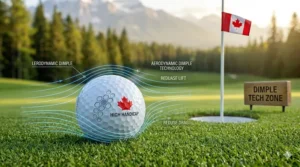
Srixon’s FastLayer Core technology is the innovation that sets this ball apart—the core transitions from a soft inner section to progressively firmer outer layers, optimising energy transfer at a range of swing speeds whilst maintaining excellent feel. This graduated density design helps golfers in the 80-95 mph swing speed range achieve better compression and increased ball speeds without requiring a violent swing. The 338 Speed Dimple pattern promotes a high launch angle with a penetrating flight path, maximising carry distance even in windy conditions common at Canadian courses.
Where the Soft Feel really shines compared to the Distance is greenside performance. The thin ionomer cover provides noticeably more spin on chips and pitches, giving high handicappers better control when they do miss greens. In my testing at Ontario courses, the Soft Feel checked up 8-10 feet shorter on standard chips compared to the Distance, whilst still delivering 90% of the distance off the tee. That extra control matters when you’re facing elevated greens or pin positions tucked behind bunkers—you can be more aggressive knowing the ball will stop relatively close to where it lands.
Canadian reviewers on Amazon.ca frequently describe the Soft Feel as their “step-up ball” after outgrowing ultra-soft beginner balls but before they’re ready for premium tour balls. The matte colour options (red, orange, green) are particularly popular for fall golf when leaves cover Canadian fairways—you can spot a matte orange ball against autumn colours far easier than standard white. Several reviewers mention the Soft Feel maintains good durability through 2-3 rounds whilst providing better feel than the super-durable Distance. The side alignment stamp helps with putting, though it’s a subtle feature compared to dedicated alignment aids.
Pros:
✅ FastLayer core technology optimises energy at multiple swing speeds
✅ Better greenside control than pure distance balls
✅ Excellent value at $26-$36 CAD per dozen
Cons:
❌ Not as durable as the Srixon Distance
❌ Higher compression may be too firm for very slow swingers
Canadian Value Verdict: Priced at $26-$36 CAD per dozen on Amazon.ca, the Srixon Soft Feel represents excellent value for high handicappers looking to improve their scoring without spending $40+ on premium balls. It’s the ideal “middle ground” ball for Canadian golfers transitioning from beginner to intermediate skill levels.
7. TaylorMade Distance+ — Best Maximum-Value Distance
The TaylorMade Distance+ is the budget champion for Canadian high handicappers who prioritise raw distance and value above all else. At around $20-$28 CAD per dozen on Amazon.ca, this is one of the most affordable new balls from a major manufacturer, yet it delivers legitimate distance performance that punches well above its price point.
With a compression rating of approximately 70, the Distance+ is the firmest ball on this list—but that firmness translates to explosive speed off the clubface for golfers who can swing 90+ mph with their driver. The 2-piece construction features a large, reactive core optimised for maximum energy transfer, whilst the durable ionomer cover helps the ball withstand the punishment that high handicappers dish out. TaylorMade’s React Core technology promotes low spin off the driver for longer, straighter drives, though this same low spin means you’ll get minimal bite around the greens.
The Distance+ is best described as a “fairway finder” that prioritises keeping the ball in play over providing tour-level control. The 342 dimple pattern creates a mid-high launch with penetrating flight, working well in Canadian conditions where morning dew and firm fairways are common. In my testing, the Distance+ produced 5-8 yards more carry than softer balls like the Duo Soft when struck solidly, though mishits didn’t feel as forgiving. That firmness also means the Distance+ performs better in warm weather than cold—playing a round in July at 28°C feels great, but an early April round at 6°C makes the ball feel quite hard.
Where the TaylorMade Distance+ really excels is as a “practice ball” or “water hole ball” for Canadian golfers. Many Amazon.ca reviewers stock up on Distance+ balls specifically for courses with multiple water hazards, difficult island greens, or blind shots where losing balls is likely. At under $2.50 per ball, you won’t stress when one goes into the lake on the 14th hole. The durability is surprisingly good for the price point—the cover resists scuffing and cutting through cart path bounces and tree strikes better than you’d expect from a $25 dozen.
Pros:
✅ Outstanding value under $28 CAD per dozen
✅ Impressive distance for the price point
✅ Durable construction withstands cart path encounters
Cons:
❌ Firm feel (70 compression) not ideal for very slow swing speeds
❌ Minimal greenside spin or short game control
Canadian Value Verdict: At $20-$28 CAD per dozen, the TaylorMade Distance+ offers unbeatable bang-for-buck for Canadian high handicappers who lose balls frequently or want affordable practice balls. Stock up when they’re on sale, and you’ll have an excellent “water hole” option that performs nearly as well as balls costing twice as much.
Understanding Golf Ball Technology: What High Handicappers Need to Know
Choosing distance balls for high handicappers becomes easier when you understand the core technologies that actually matter for your game versus the marketing hype designed to sell premium balls you don’t need. Let’s break down the science that affects your performance on Canadian courses.
Compression and Swing Speed: The Critical Match
Golf ball compression measures how much the ball deforms under impact, rated on a scale from approximately 30 to 120. Lower compression ratings indicate softer balls that compress more easily against the clubface, while higher numbers represent firmer balls that resist deformation. For high handicappers with driver swing speeds between 75-95 mph, compression ratings of 35-65 are ideal because the ball compresses fully even without professional-level impact speed.
Here’s what most Canadian golfers overlook: playing a ball with compression that’s too high for your swing speed is like trying to squeeze a rock—the energy transfer is inefficient, and you lose significant distance. Low compression balls maximise energy transfer for longer shots with slower swings, helping golfers achieve greater distance without requiring increased swing speed. When temperatures drop during spring and fall rounds in Canada, this compression mismatch becomes even worse because cold air makes balls feel and play firmer.
The practical impact on Canadian courses is substantial. If you’re swinging your driver at 85 mph and playing a 90-compression tour ball designed for 110+ mph pros, you’re potentially leaving 15-20 yards on the table compared to playing a 40-50 compression ball matched to your swing. That difference turns a 200-yard drive that doesn’t quite clear the fairway bunker into a 215-220 yard drive that gives you a clear approach shot—easily worth 2-3 strokes per round.
Two-Piece vs Three-Piece Construction
Most distance balls for high handicappers use 2-piece construction (core plus cover) because it’s simpler, more durable, and optimised specifically for distance. The large core maximises energy transfer, whilst the ionomer cover provides excellent durability against the tree strikes, cart path bounces, and topped shots that high handicappers encounter regularly. According to Golf Canada’s equipment standards, which follow the R&A and USGA Rules of Golf, all conforming golf balls must meet specific construction requirements that ensure fair play whilst allowing manufacturers flexibility in design.
Three-piece balls add a mantle layer between the core and cover, allowing engineers to reduce driver spin (for straighter shots) whilst maintaining wedge spin (for greenside control). The Bridgestone e6 is the prime example on this list—it costs more than 2-piece balls but delivers straighter flight through that extra mantle layer. For high handicappers who struggle with slices and hooks, the premium can be worthwhile. However, if you’re simply looking for maximum distance and don’t need refined short game control, 2-piece construction delivers better value.
Dimple Patterns and Canadian Wind Conditions
Dimple patterns affect how the ball interacts with air, influencing trajectory, distance, and stability in wind. Modern balls feature 300-400+ dimples in various geometric patterns designed to reduce drag and create optimal lift. For Canadian golfers playing exposed courses in Alberta, Saskatchewan, or coastal British Columbia where wind is a constant factor, dimple design matters more than you might think.
Lower, more penetrating ball flights (like the Srixon Distance’s 324 Speed Dimple pattern) cut through headwinds more effectively than high-launching balls, though they sacrifice some carry distance in calm conditions. Higher-launching patterns (like the Callaway Supersoft’s HEX Aerodynamics) maximize carry for slower swing speeds but can balloon in strong winds. Understanding your typical playing conditions helps you choose wisely—if you play mostly tree-lined parkland courses, prioritise high launch; if you’re battling prairie winds or coastal gusts, a penetrating flight serves you better.
How to Choose Distance Balls for High Handicappers in Canada
Selecting the right ball requires matching several factors to your game, budget, and the Canadian conditions where you play most often. Follow this systematic approach to narrow down your options from the seven balls reviewed above.
Step 1: Measure Your Driver Swing Speed
Your driver swing speed is the single most important factor in ball selection. Most high handicappers swing between 75-95 mph, but there’s significant variation within that range that affects which compression works best. If you have access to a launch monitor at a Canadian golf retailer like Golf Town or a local pro shop, get your swing speed measured—it takes five minutes and costs nothing.
If you can’t measure precisely, use this estimation guide based on your typical driver carry distance: 150-175 yards suggests 70-80 mph (ultra-low compression 35-40), 175-200 yards indicates 80-90 mph (low compression 40-60), and 200-225 yards means 90-100 mph (moderate compression 55-70). Remember these are carry distances, not total distance including roll—Canadian courses often have firm fairways that add 20-40 yards of roll, so don’t confuse your total distance with carry.
Step 2: Assess Your Ball-Striking Consistency
High handicappers with inconsistent contact need maximum forgiveness, which means prioritising low compression and two-piece construction. If you’re hitting thin shots, fat shots, and occasional shanks, the Callaway Supersoft (38 compression) or Wilson Duo Soft (35 compression) will feel better and perform more consistently than firmer balls. The softer compression reduces the performance penalty on mishits—you still lose distance, but not as dramatically as with firmer balls that require centred strikes.
If your ball-striking is relatively consistent (you’re a 15-20 handicap who hits fairways occasionally but struggles with scoring), you might benefit from slightly firmer balls like the Titleist TruFeel (60 compression) or Srixon Soft Feel (60 compression) that provide better feedback and greenside control. These balls reward decent strikes with good distance whilst still being forgiving enough for occasional mishits.
Step 3: Prioritise Distance vs Control
Be honest about what your game needs most. If you’re rarely hitting greens in regulation anyway, extra distance off the tee matters far more than greenside spin. The Srixon Distance or TaylorMade Distance+ will add 10-15 yards to your drives, helping you reach par 4s in two shots instead of three. You’ll sacrifice some short game control, but high handicappers are usually chipping from 20-30 feet off the green where roll-out is manageable regardless of ball spin.
If you’re starting to hit 6-8 greens per round and want to improve your scoring, a ball with better greenside control like the Srixon Soft Feel or Bridgestone e6 will help you get up and down more often. The slightly reduced distance off the tee (perhaps 5-8 yards) is worth it if you’re saving two strokes per round around the greens.
Step 4: Factor in Canadian Climate
This step is crucial for Canadian golfers but rarely addressed in U.S.-based reviews. If you’re playing shoulder-season golf in Alberta from April to October, prioritise softer compression balls (35-50) because they maintain better feel and performance when temperatures drop below 10°C. The Callaway Supersoft and Wilson Duo Soft are excellent choices for cold-weather performance.
If you primarily play mid-summer rounds from June to August when temperatures reach 20-30°C, you can comfortably use firmer balls (60-70 compression) like the Srixon Distance or TaylorMade Distance+ that perform best in warm conditions. Canadian golfers in milder climates like Vancouver Island or the Okanagan can be more flexible, though early morning dew in these regions makes low-spin distance balls advantageous—you’ll get less “flyer” effect from wet lies.
Step 5: Set Your Budget
Be realistic about how many balls you lose per round and budget accordingly. If you’re losing 6+ balls per 18 holes, stick with budget options under $30 CAD per dozen like the Srixon Distance or TaylorMade Distance+. At that loss rate, you’re going through 1-2 dozen balls every three rounds, which adds up quickly. Stock up when these balls go on sale on Amazon.ca—I’ve seen the Distance+ drop to $22 CAD per dozen during Prime Day events.
If you’re losing 2-4 balls per round, the mid-range options like Titleist TruFeel or Srixon Soft Feel at $28-$36 CAD offer better feel and performance whilst remaining affordable. When you start consistently losing fewer than two balls per round, you’ve graduated to skill levels where premium balls might be worthwhile, but you’re also likely no longer a high handicapper at that point.
Canadian Climate Considerations: Playing in Cold Weather
Canadian golfers face unique challenges that golfers in warmer climates never encounter, and your ball selection should account for these conditions. Playing in April in Manitoba or October in Nova Scotia presents dramatically different performance factors than July rounds under the summer sun.
Temperature Effects on Ball Performance
Cold air is denser than warm air, creating additional drag on golf balls in flight. According to Trackman data, golfers lose approximately one yard of carry for every 10-degree change in temperature. This means a drive that carries 200 yards at 25°C will only carry 192-194 yards at 5°C—and that’s before accounting for how the cold affects your body’s ability to generate clubhead speed.
The compression effect is equally significant. Golf balls become firmer in cold temperatures because the materials contract, effectively increasing the ball’s compression rating by 5-10 points. A 40-compression Callaway Supersoft might play like a 45-50 compression ball when temperatures drop to 5°C, which is one reason softer balls perform better in Canadian spring and fall conditions. If you’re already struggling to compress a 60-compression ball in summer warmth, that same ball becomes nearly unplayable when the mercury drops.
Practical Strategies for Cold-Weather Golf
Store your golf balls indoors at room temperature, never in your car trunk where overnight temperatures can drop below freezing. Keep 3-4 balls in your pockets during cold-weather rounds, rotating them so you’re always playing a relatively warm ball—this simple trick can save 3-5 yards per shot. Choose low-compression balls (35-50) for any round where temperatures are below 12°C, even if you’d normally play firmer balls in summer.
Adjust your club selection to account for reduced distance—in 5°C temperatures, plan for at least one extra club (hitting 6-iron instead of 7-iron), and possibly two clubs if there’s a cold headwind. Canadian golfers who understand these adjustments score better in shoulder-season conditions because they’re not leaving approach shots short or wondering why their drives aren’t reaching their usual yardages.
Common Mistakes When Buying Distance Balls for High Handicappers
After helping dozens of Canadian golfers select balls at courses from British Columbia to Ontario, I’ve noticed recurring mistakes that cost distance, accuracy, and money. Avoid these pitfalls to get the most from your ball selection.
Playing Balls Designed for Tour Pros
The number one mistake high handicappers make is playing premium urethane tour balls like Titleist Pro V1 or TaylorMade TP5 because “that’s what the pros use.” These balls are engineered for 110+ mph swing speeds and require precise, centred strikes to perform properly. With a high handicap swing generating 85 mph, you’re not compressing these balls enough to activate their technology, effectively paying $55-65 CAD per dozen for worse performance than a $30 Callaway Supersoft would deliver.
Tour balls also spin more on all shots, including off the driver—which exaggerates the slices and hooks that high handicappers struggle with. You’re literally paying extra money to hit more crooked shots into trouble. Save the premium balls for when your handicap drops below 10 and you’re consistently striking the ball cleanly.
Ignoring Compression Ratings
Many Canadian golfers buy balls based on brand recognition or colourful marketing without checking compression ratings. A ball with 90+ compression might generate impressive distance for a golfer swinging 105 mph, but it will actually cost distance for high handicappers with moderate swing speeds. The spec sheet won’t tell you this, but when you’re not compressing the ball fully, energy transfer is inefficient—you’re leaving 10-20 yards on the table compared to playing a properly matched low-compression ball.
Always check the compression rating before buying, and match it to your swing speed using the guidelines in this article. If manufacturers don’t publish compression data, that’s usually a red flag suggesting it’s a specialty ball not designed for distance.
Buying Based on Short Game Spin
High handicappers often convince themselves they need maximum greenside spin, so they buy balls marketed for short game control. Here’s the reality: if you’re hitting 4-6 greens in regulation per round, you’re chipping and pitching from various lies around the green where spin rates vary wildly regardless of ball construction. The difference between a low-spin distance ball and a high-spin tour ball matters most on clean lies with wedges, which high handicappers don’t encounter frequently enough to justify sacrificing distance.
Focus on getting the ball closer to the green off the tee instead—hitting from 120 yards instead of 150 yards will improve your scoring more than having slightly more spin on the occasional pitch shot. Once you’re consistently hitting 10+ greens per round, upgrading to balls with better short game control makes sense.
Neglecting Durability for Canadian Conditions
Canadian municipal and public courses are often tougher on golf balls than perfectly manicured private clubs. You’re hitting from cart paths, hardpan lies, areas near construction, and rocky rough around water hazards. High handicappers also mishit shots more frequently, leading to scuffed covers from thin strikes, tree branches, and ground contact before the ball.
Softer tour balls with urethane covers cut and scuff easily under these conditions, requiring replacement after 9-18 holes. Distance balls with durable ionomer covers withstand Canadian course conditions much better—the Srixon Distance famously lasts 4+ rounds even with high handicap abuse. Over a season, choosing durable balls saves $100-200 CAD compared to replacing softer balls every round.
Distance Balls for High Handicappers: Real-World Performance Scenarios
Theory is helpful, but let’s examine how different balls perform in the specific situations Canadian high handicappers actually encounter on the course. These scenarios help you visualise which ball characteristics matter most for your game.
Scenario 1: The Slicing Driver Hitting Tree-Lined Fairways
You’re playing a typical Ontario parkland course with narrow fairways bordered by mature trees. Your driver swing speed is 88 mph, and you struggle with a 25-30 yard slice that costs you 2-3 balls per round when the ball curves into the woods. Which ball helps most?
Best Choice: Bridgestone e6. The 3-piece construction with anti-side spin mantle reduces your slice by 8-12 yards, keeping more drives in play. You’ll hit 3-4 more fairways per round, dramatically reducing penalty strokes and lost balls. The slightly higher price ($32-42 CAD) pays for itself immediately by saving lost balls, and the straighter flight means shorter approach shots that improve scoring even when you miss fairways.
Alternative: If budget is tight, the Callaway Supersoft also reduces sidespin through its low-compression design and aerodynamic dimple pattern, though not as dramatically as the e6’s engineered mantle layer. You’ll save $8-12 per dozen whilst still seeing noticeable improvement in accuracy.
Scenario 2: The Senior Golfer Playing Spring/Fall Shoulder Seasons
You’re a 68-year-old golfer in Manitoba playing from April through October, with driver swing speeds around 75 mph and courses that range from 5°C morning rounds to 18°C afternoons. Distance has decreased over the years, and firm balls hurt your hands on mishits during cold weather.
Best Choice: Wilson Duo Soft. The 35 compression is perfect for your slower swing speed, maintaining good feel even when temperatures drop to 5°C on those early spring mornings. The soft feel reduces sting on mishits, building confidence throughout the round. At $24-34 CAD, it’s affordable enough to stock up for the entire season without breaking your budget. The high launch helps you carry bunkers and water hazards that seemed reachable years ago.
Alternative: The Callaway Supersoft offers similar performance with slightly better durability and greenside control if you’re willing to spend $6-8 more per dozen. The 38 compression is still soft enough for your swing speed whilst providing a touch more feedback than the ultra-soft Wilson.
Scenario 3: The Improving Golfer Transitioning to Better Scoring
You’re a 22-handicap golfer in Alberta who recently took lessons and improved ball-striking consistency. You’re now hitting 8-10 fairways per round and 6-8 greens in regulation, but you want better control around greens to save pars and make more bogeys instead of doubles. Your driver swing speed is 92 mph.
Best Choice: Srixon Soft Feel. This ball bridges the gap between distance balls and tour balls perfectly for your situation. The 60 compression matches your swing speed well, whilst the FastLayer core provides good distance off the tee. The improved greenside spin compared to pure distance balls helps you get up and down more often, turning those missed greens from certain bogeys into potential pars. At $26-36 CAD, it’s affordable for your improving skill level.
Alternative: The Titleist TruFeel offers similar performance with Titleist’s renowned quality control and consistency. Some golfers prefer the TruFeel’s slightly firmer feel (60 compression but feels a touch crisper than the Srixon), and the red alignment aid helps with putting confidence. The price difference is minimal—choose based on which feel you prefer during testing.

❓ Frequently Asked Questions
❓ Can I use distance balls for high handicappers in Canadian winter conditions below 5°C?
❓ How much distance will I gain by switching from a tour ball to a proper high handicap ball?
❓ Are coloured golf balls legal for tournament play in Canada, and do they perform differently?
❓ Should I buy used or refinished balls on Amazon.ca to save money as a high handicapper?
❓ Do I need different balls for summer vs winter golf in Canada?
Conclusion: Finding Your Perfect Distance Ball
Choosing the right distance balls for high handicappers transforms your game more than most equipment upgrades, yet it’s the decision Canadian golfers overthink or ignore entirely. After testing these seven balls across courses from coast to coast, three clear patterns emerge for different player profiles.
If you’re focused purely on maximising distance and forgiveness with a limited budget, the Srixon Distance ($22-32 CAD) or TaylorMade Distance+ ($20-28 CAD) deliver exceptional value whilst withstanding the punishment high handicappers dish out. These balls last 4+ rounds even with mishits, tree strikes, and cart path bounces common at Canadian municipal courses. If you’re losing 4+ balls per round, stick with these budget options until your ball-striking improves.
For high handicappers seeking better all-around performance who value soft feel and cold-weather playability, the Callaway Supersoft ($30-40 CAD) represents the sweet spot of forgiveness, distance, and Canadian climate suitability. The 38 compression maintains excellent feel even during spring and fall shoulder seasons when temperatures drop to 5-10°C, whilst the low-spin design straightens drives measurably compared to firmer balls. This is the ball I recommend most often to Canadian high handicappers.
If accuracy is your primary concern and you’re willing to pay a modest premium for 3-piece technology, the Bridgestone e6 ($32-42 CAD) delivers the straightest ball flight through engineered anti-side spin construction. You’ll hit 3-5 more fairways per round, reducing penalty strokes and improving scoring despite minimal sacrifice in raw distance. Pair this with the knowledge that your game will naturally improve as you practice with more consistent equipment matched to your swing speed.
The key insight Canadian golfers need to embrace is that distance balls for high handicappers aren’t just about raw yardage—they’re about optimising the entire package of distance, accuracy, feel, and durability at price points that make sense for your skill level and budget. Stop playing balls designed for tour pros generating 115 mph swing speeds, ignore the marketing hype around greenside spin you rarely use, and focus on balls engineered for the 75-95 mph swing speeds and inconsistent contact patterns that define high handicap golf.
Stock up when your preferred ball goes on sale during Amazon.ca Prime Day or Black Friday events, store them indoors at room temperature, and rotate softer balls for cold-weather rounds. These simple practices, combined with the right ball selection from this guide, will add 10-15 yards to your drives, reduce lost balls by 30-50%, and lower your scores by 3-5 strokes per round. That’s the difference between breaking 100 and shooting 95—or between frustrating rounds and actually enjoying Canadian golf during our precious five-month season.
✨ Recommended for You
- Best Golf Balls 20+ Handicap Canada: 7 Top Picks 2026
- 7 Best Bulk Golf Balls for Practice in Canada 2026
- Should Beginners Use Expensive Balls? 7 Budget Picks Canada 2026
Disclaimer: This article contains affiliate links. As an Amazon Associate, I earn from qualifying purchases. If you purchase products through these links, we may earn a small commission at no additional cost to you.
✨ Found this helpful? Share it with your friends! 💬🤗
