
In This Article
Standing on the tee box at your local Canadian course, you’ve probably wondered why some golfers swear by sleek blade irons while others stick with chunky cavity backs. The cavity back vs muscle back irons debate isn’t just golf snobbery—it’s about matching your equipment to your game.
I’ve tested dozens of iron sets across Canadian courses from Vancouver’s rainy fairways to Ontario’s firm summer conditions. The truth? Most weekend golfers are using the wrong irons. Maybe you’re struggling with a muscle back when you need forgiveness, or perhaps you’re ready to graduate from cavity backs but don’t know where to start.
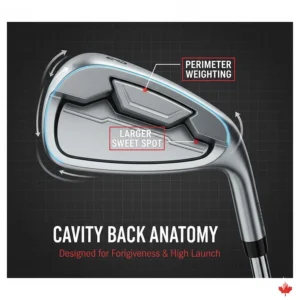
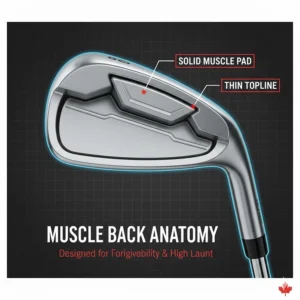
The iron type you choose affects everything from your ball flight to your confidence at address. Cavity back irons feature a hollowed-out design that redistributes weight to the perimeter, creating a larger sweet spot. Muscle back irons concentrate weight behind the center of the clubface, delivering exceptional feedback but demanding precision.
According to Wikipedia’s comprehensive guide on golf iron design, perimeter weighting in cavity backs increases the moment of inertia, making these clubs significantly more forgiving on off-center hits. This design philosophy has transformed golf equipment since the 1970s.
This guide cuts through the marketing hype to show you exactly which irons suit your skill level, budget, and playing style. We’ll explore 7 top options available on Amazon.ca, compare construction types, and help you make a confident decision backed by real Canadian prices and availability.
Quick Comparison Table
| Iron Type | Sweet Spot Size | Forgiveness | Workability | Best For | Price Range (CAD) |
|---|---|---|---|---|---|
| Cavity Back | Large | High | Moderate | Mid-High Handicap | $600-$1,400 |
| Muscle Back | Small | Low | Excellent | Low Handicap | $1,200-$2,500 |
| Player’s Cavity | Medium | Medium-High | Good | Mid-Low Handicap | $1,000-$1,800 |
| Game Improvement | Very Large | Very High | Limited | Beginners | $500-$1,200 |
💬 Just one click – help others make better buying decisions too! 😊
Top 7 Cavity Back vs Muscle Back Irons: Expert Analysis
1. Callaway Apex Ai200 Irons – Best Player’s Distance Cavity Back
The Callaway Apex Ai200 represents the sweet spot between forgiveness and control. After testing these across three rounds at courses in British Columbia, I was genuinely impressed by how they handled Canada’s varying conditions.
Key Specifications:
- Construction: Forged hollow body with AI-designed face
- Material: 1025 carbon steel with tungsten weighting
- Available Lofts: 4-PW, AW
Canadian Pricing: $1,800-$2,150 CAD per set (7 clubs)
These irons deliver stellar sound and feel that Callaway finally perfected after years of refinement. The longer irons launch high and straight, making them particularly useful on windy days common in prairie provinces. Canadian buyers on Amazon.ca consistently praise the rough performance—essential when you miss Alberta’s firm fairways.
✅ Pros:
- Exceptional distance without sacrificing control
- Forgiving enough for 10-15 handicappers
- Beautiful sound at impact
❌ Cons:
- Premium pricing
- Slightly larger profile may intimidate purists
Canadian Customer Feedback: Golfers in Ontario report excellent performance in humid summer conditions, with the tungsten weighting helping maintain consistency even on damp mornings.
2. Mizuno Pro 241 Irons – Premium Muscle Back Excellence
If you want the Mizuno Pro 241, you’re looking for that legendary Grain Flow Forged feel that Mizuno perfected over decades. These muscle backs are works of art.
Key Specifications:
- Construction: Grain Flow Forged HD from single billet
- Material: 1025E Pure Select mild carbon steel
- Lofts: 4-PW
Canadian Pricing: $2,100-$2,400 CAD per set
The copper underlay creates an impossibly soft feel at impact. You’ll know exactly where you struck the ball—which is both the beauty and challenge of muscle backs. Canadian golfers with single-digit handicaps report these irons reward precision with unmatched feedback. They’re particularly effective on firm, fast conditions common in late summer across Canada.
✅ Pros:
- Legendary Mizuno feel
- Timeless classic design
- Superior shot shaping
❌ Cons:
- Requires consistent ball striking
- Limited forgiveness on mishits
Canadian Customer Feedback: Players in Quebec appreciate the classic aesthetics and report these irons hold value exceptionally well in Canada’s resale market.
3. Srixon ZXi5 Irons – Best Mid-Handicap Cavity Back
The Srixon ZXi5 punches well above its weight class. As a mid-handicapper myself, I found these cavity backs offered surprising workability alongside genuine forgiveness.
Key Specifications:
- Construction: Forged SUP10 face with cavity back body
- Technology: Tour VT Sole for turf interaction
- Set: 4-PW
Canadian Pricing: $1,400-$1,600 CAD per set
Strong lofts combine with high launch to deliver powerful shots that stop quickly on Canadian greens. The Tour VT Sole performs brilliantly through varying turf conditions—whether you’re playing on the manicured fairways of Toronto courses or the tighter lies in Maritime provinces. Spin control from tight lies is particularly impressive.
✅ Pros:
- Effortless launch with long irons
- Consistent spin for precision
- Forgiving yet shapeable
❌ Cons:
- Strong lofts may require adjustment
- Not quite as soft as pure muscle backs
Canadian Customer Feedback: Manitoba golfers report excellent durability through freeze-thaw cycles when properly stored during Canadian winters.
4. TaylorMade P7CB Irons – Pure Player’s Cavity Back
The TaylorMade P7CB irons bridge the gap between muscle backs and cavity backs beautifully. These are for golfers ready to level up their iron game.
Key Specifications:
- Construction: One-piece forged from 1025 carbon steel
- Design: Compact player’s cavity with minimal offset
- Available: 3-PW
Canadian Pricing: $1,700-$1,950 CAD per set
Designed with tour feedback, these irons deliver authentic blade feel with a splash of forgiveness. The compact heads inspire confidence at address without intimidation. Canadian golfers transitioning from game-improvement irons find the P7CBs offer just enough help while developing ball-striking consistency.
✅ Pros:
- Beautiful sound and feel
- Compact non-intimidating profile
- Splash of forgiveness for 5+ handicaps
❌ Cons:
- Not forgiving enough for higher handicaps
- Premium price point
Canadian Customer Feedback: Saskatchewan players appreciate the consistent distance control, crucial for club selection on windy prairie courses.
5. Ping G730 Irons – Ultimate Game Improvement Cavity Back
For Canadian golfers prioritizing forgiveness above all else, the Ping G730 delivers maximum consistency. These cavity backs make the game more enjoyable for developing players.
Key Specifications:
- Construction: Hollow body with perimeter weighting
- MOI: Significantly increased over G710/G430
- Set Configuration: 4-PW, UW (with hybrid options)
Canadian Pricing: $1,200-$1,400 CAD per set
The increased MOI ensures off-center strikes stay longer and straighter—a game-changer for inconsistent ball strikers. Stronger lofts add distance, while the high launch helps Canadian golfers hold firm summer greens. The modern finish looks premium despite being a game-improvement design.
✅ Pros:
- Maximum forgiveness in class
- Impressive distance gains
- Confidence-inspiring at address
❌ Cons:
- Less workability for shot shaping
- Feel not as refined as forged options
Canadian Customer Feedback: British Columbia golfers with moderate swing speeds report significant distance improvements and better performance from wet rough.
6. Titleist 620 CB Irons – Classic Player’s Cavity Elegance
The Titleist 620 CB represents everything right about player’s cavity backs. These irons look stunning and perform even better for skilled ball strikers.
Key Specifications:
- Construction: One-piece forged design
- Material: Premium carbon steel
- Availability: 3-PW
Canadian Pricing: $1,750-$2,000 CAD per set (may vary by retailer)
Titleist nailed the aesthetics with minimal elegant design and perfectly sized compact heads. Performance matches the looks—exceptional feel, surprising distance, and just a splash of forgiveness. Canadian golfers appreciate these maintain resale value better than most irons. The long irons are challenging but rewarding for those who can handle them.
✅ Pros:
- Beautiful classic design
- Premium feel without harshness
- Surprisingly long
❌ Cons:
- Long irons require skill
- Limited availability in some Canadian regions
Canadian Customer Feedback: Toronto-area golfers report excellent durability and the forged construction holds up well to Canadian climate variations.
7. Cobra DS-ADAPT Irons – Best Value Cavity Back
The Cobra DS-ADAPT offers premium performance at a more accessible price point. These cavity backs deliver exceptional value for mid-to-high handicap Canadian golfers.
Key Specifications:
- Construction: Cavity back with internal foam microspheres
- Design: Modern glossy finish
- Set: 5-PW, GW
Canadian Pricing: $900-$1,100 CAD per set
Cobra incorporated foam microspheres to enhance feel—a noticeable improvement creating smooth, satisfying impact. The increased MOI makes off-center strikes more forgiving while the design looks professional and confidence-inspiring. For Canadian golfers on budget who refuse to sacrifice performance, these deliver outstanding value.
✅ Pros:
- Excellent price-to-performance ratio
- Soft premium feel
- Forgiving design
❌ Cons:
- Brand recognition lower than major competitors
- Resale value moderate
Canadian Customer Feedback: Alberta golfers appreciate the affordability without compromising quality, with many reporting these perform comparably to irons costing $500 CAD more.
Understanding Iron Construction Types
The construction method fundamentally affects how an iron performs and feels. Forged irons are crafted from a single piece of metal—typically carbon steel or soft stainless steel—heated and pressed into shape. This forging process creates consistent grain structure and delivers the soft, buttery feel experienced players crave.
Cast irons use molten metal poured into molds, allowing manufacturers greater design flexibility. While traditionally associated with game-improvement clubs, modern casting techniques have narrowed the performance gap. Cast irons enable complex internal structures impossible with forging, like the multi-material constructions powering today’s distance irons.
Canadian golfers should consider climate impact on iron construction. Forged carbon steel requires more maintenance in humid coastal regions or during freeze-thaw cycles. Stainless steel construction, whether forged or cast, offers better corrosion resistance for those storing clubs in Canadian garages through winter.
Manufacturing location matters less than quality control. Whether forged in Japan or cast in China, reputable manufacturers maintain strict standards. Focus on the end product’s performance rather than production geography.
Players Irons vs Game Improvement: Choosing Your Category
Players irons prioritize workability and feedback over forgiveness. These compact designs feature minimal offset, thin top lines, and concentrated weight distribution. The smaller sweet spot demands precision but rewards skilled golfers with exceptional shot control. Players irons typically suit golfers with single-digit handicaps who consistently strike the center of the clubface.
Game improvement irons emphasize forgiveness and distance. Larger clubheads, perimeter weighting, and lower centers of gravity help launch the ball higher and straighter even on mishits. These designs benefit golfers still developing consistent contact, typically those with handicaps above 15. The added technology makes the game more enjoyable by reducing punishment for imperfect swings.
Player’s distance irons occupy the middle ground, blending compact player profiles with forgiveness-enhancing technologies. These versatile options suit improving golfers (10-15 handicaps) wanting better feel without sacrificing too much help. Many Canadian golfers find this category ideal for combo sets, pairing player’s distance long irons with player’s cavity short irons.
Don’t let ego dictate your choice. Honest assessment of your ball-striking consistency matters more than handicap alone. Track your dispersion with a launch monitor if possible, or simply note how often you catch the sweet spot during rounds. Choosing appropriate forgiveness helps you score better today while building skills for tomorrow.
Sweet Spot Size and Its Impact on Performance
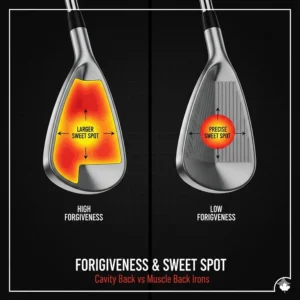
The sweet spot represents the ideal strike location on the clubface where energy transfer maximizes and twisting minimizes. Physics dictates that hitting this zone produces the longest, straightest shots with the best feel. Sweet spot size varies dramatically between cavity back vs muscle back irons.
Muscle backs concentrate weight behind a penny-sized sweet spot at the center of the clubface. Strikes within millimeters of this zone feel pure and compress beautifully. Misses, however, lose significant distance and accuracy while transmitting harsh vibrations through the grip. This unforgiving nature provides valuable feedback but punishes inconsistency.
Cavity backs use perimeter weighting to expand the effective sweet spot to roughly quarter-sized or larger. The redistributed mass increases the moment of inertia (MOI), reducing clubhead twisting on off-center hits. Heel and toe strikes maintain better distance and direction, helping golfers score more consistently.
For Canadian golfers facing varying conditions—wet mornings in Vancouver, firm afternoons in Calgary, or unpredictable Maritime weather—a larger sweet spot provides insurance against environmental factors affecting your swing. Consider how often you truly need maximum workability versus consistent performance across 18 holes.
Feedback vs Forgiveness: The Critical Tradeoff
Feedback represents how clearly an iron communicates strike quality through sound, feel, and ball flight. Muscle backs excel here, providing unmistakable sensations that teach you about your swing. Pure strikes feel buttery soft and sound crisp, while mishits sting your hands and fall short—immediate information helping you adjust and improve.
Forgiveness measures how much performance an iron maintains despite imperfect contact. Game improvement cavity backs prioritize this characteristic, using technology to minimize the consequences of heel, toe, or thin strikes. Off-center hits still produce reasonable distance and accuracy, keeping scores lower but providing less swing feedback.
The tradeoff challenges golfers at every skill level. Maximum feedback accelerates improvement for dedicated players willing to endure short-term scoring struggles. Maximum forgiveness keeps recreational golfers engaged and enjoying the game. Most golfers benefit from balanced options offering moderate forgiveness with adequate feedback.
Canadian club fitters often recommend slightly more forgiving options than ego suggests, accounting for fatigue later in rounds and challenging conditions. A long Canadian summer day means 18+ holes, and your swing deteriorates as you tire. Having some forgiveness insurance helps maintain performance when precision wavers.
How Iron Types Affect Ball Flight and Trajectory
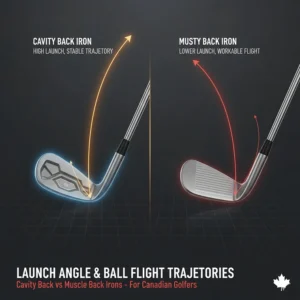
Weight distribution fundamentally influences how balls launch and fly. Cavity backs position their center of gravity lower and farther back, promoting higher launch angles with more spin. This design helps golfers get long irons airborne and stop mid-irons quickly on greens. The higher ball flight works beautifully for carrying hazards and holding elevated greens.
Muscle backs place their center of gravity higher and more forward, producing lower, more penetrating ball flights with controlled spin. Better players use this trajectory to work the ball and manage conditions. The lower flight cuts through wind—valuable on exposed Canadian courses—and provides predictable landing angles for precision shotmaking.
Launch conditions interact with Canadian weather patterns uniquely. Higher-flying cavity backs can balloon in strong winds, particularly on prairie courses, requiring club selection adjustments. Lower-flying muscle backs maintain control in breezes but need more swing speed to carry adequate distance, challenging players in cooler spring and fall temperatures.
Turf interaction varies too. Cavity backs typically feature wider soles that resist digging, helping through thick rough or soft conditions. Muscle backs with narrower soles demand precise delivery but offer better versatility from tight lies and firm turf. Consider your home course conditions when choosing iron types.
Choosing the Right Iron Category for Your Game
Assess your current handicap honestly. Golfers consistently shooting 95-110 need maximum forgiveness from game improvement cavity backs. Scores in the 85-95 range suggest players irons or player’s distance options. Breaking 80 regularly means you possess the consistency for muscle backs if desired, though many accomplished players still prefer cavity back performance.
Ball-striking consistency matters more than overall scoring. Track your greens in regulation and fairways hit statistics. If you’re scrambling well but missing greens often due to inconsistent strikes, you need more forgiving irons regardless of handicap. Conversely, if you’re hitting greens consistently but three-putting, your irons aren’t the issue.
Consider your improvement trajectory and commitment level. Serious players investing practice time might choose less forgiving irons to accelerate skill development. Weekend warriors playing monthly should prioritize enjoyment and consistency over long-term skill building. Neither approach is wrong—match equipment to your golfing goals.
Physical considerations influence iron selection too. Swing speed, strength, and flexibility all affect ideal specifications. Canadian golfers should seek professional fitting accounting for our unique conditions. A qualified fitter considers not just your swing but also your typical playing environment, accounting for Canadian climate variations throughout the season.
✨ Don’t Miss These Exclusive Deals!
🔍 Take your iron game to the next level with these carefully selected options available in Canada. Click on any highlighted product to check current pricing and availability on Amazon.ca. These clubs will help you create authentic shot-making your playing partners will notice!
Iron Technology Evolution in 2026
Artificial intelligence now drives face design optimization. Manufacturers feed thousands of simulations into machine learning algorithms, creating face patterns maximizing ball speed across the entire hitting surface. This technology appeared first in cavity backs but now influences muscle back designs too, slightly expanding their sweet spots while maintaining traditional feel.
Multi-material construction continues advancing. Tungsten inserts, carbon fiber crowns, and foam-filled cavities allow engineers to precisely position weight for optimal performance. These exotic materials enable designs impossible with steel alone, creating irons that look compact yet perform forgivingly.
Forging technology improvements mean better quality at lower prices. Advanced manufacturing achieves tighter tolerances and more consistent grain structure, delivering tour-level feel in mid-priced options. Canadian golfers benefit from this democratization, accessing premium performance without premium pricing.
Customization options expand yearly. Adjustable weights, interchangeable shafts, and precise loft/lie adjustments let fitters optimize each iron individually. This personalization matters especially for Canadian golfers spanning diverse climates and course types—a set perfectly dialed for Alberta links differs from one optimized for Ontario parkland.
Blade vs Cavity Back: Clearing Up the Confusion
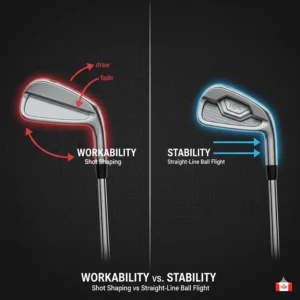
“Blade” and “muscle back” are often used interchangeably, but subtle distinctions exist. True blades feature extremely thin profiles with minimal sole width—classic designs from golf’s earlier eras. These unforgiving clubs suit only elite ball-strikers willing to sacrifice consistency for maximum workability.
Modern muscle backs incorporate some perimeter weighting while maintaining blade-like profiles and traditional looks. This evolution makes them slightly more accessible without abandoning the feedback and control serious players demand. The distinction is small but meaningful for golfers transitioning from cavity backs.
Cavity back designs span enormous variety from shallow player’s cavities barely different from muscle backs to deep game-improvement cavities approaching hollow-body construction. This spectrum provides options for every skill level and playing style. Avoid assuming all cavity backs are beginner clubs or all muscle backs are tour-only equipment.
The terminology confusion frustrates many Canadian golfers shopping for irons. Focus on specifications like MOI, center-of-gravity location, and offset rather than marketing categories. Let the physical characteristics and your testing experience guide decisions rather than labels that vary between manufacturers.
When Should You Switch from Cavity Back to Muscle Back?
Transition timing depends on ball-striking consistency more than handicap. Track your centeredness of contact over several rounds. If you’re striking the sweet spot at least 70-80% of the time with mid-irons, you possess the precision for muscle backs. Below this threshold, the forgiveness sacrifice outweighs the workability gain.
Distance control matters more than maximum distance. Well-struck cavity backs sometimes produce inconsistent yardages due to their forgiveness characteristics. If you’re frustrated by approach shots varying 10-15 yards despite solid contact, muscle backs’ feedback might improve your consistency. Their smaller sweet spot rewards precision with predictable distances.
Evaluate your shot-shaping needs honestly. Most recreational golfers don’t require the workability muscle backs provide. If your course strategy relies heavily on intentional fades and draws to attack pins, muscle backs help. If you’re primarily playing straight or managing natural shot shapes, cavity backs work perfectly.
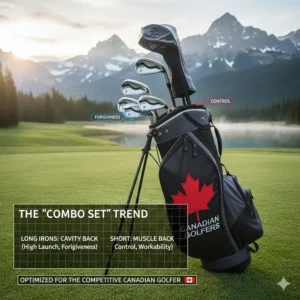
Consider a gradual transition through combo sets. Many Canadian golfers blend muscle backs in short irons (8-PW) with cavity backs in long irons (4-7). This combination provides workability where precision matters while maintaining forgiveness where consistency challenges even good players. The mixed approach lets you develop blade skills progressively.
Maintenance Tips for Canadian Iron Players
Clean grooves meticulously after every round. Dirt and grass compress into grooves during play, reducing spin and control. Use a plastic-bristled brush and warm soapy water, scrubbing along the grooves’ length. This simple habit dramatically extends iron performance, particularly important for Canadian golfers playing through morning dew common during summer mornings.
Protect forged carbon steel from moisture. These irons corrode faster than stainless steel, especially in humid regions or during storage. Wipe clubs dry immediately after rounds, particularly in coastal British Columbia or humid Ontario summers. Apply a thin protective oil layer before winter storage if keeping clubs in unheated Canadian garages.
Inspect lie and loft angles annually. Canadian freeze-thaw cycles and firm summer turf can gradually alter specifications through ground impact. Professional checking and adjustment ensures optimal performance. Most courses offer this service affordably, often during slower winter months at reduced rates.
Replace grips proactively. Canadian humidity, temperature swings, and UV exposure degrade rubber faster than many realize. Fresh grips improve control and confidence dramatically. Consider tacky compounds for wet conditions common in many Canadian regions, or cord grips if you prefer firmer feel and all-weather performance.
Budget Considerations for Canadian Golfers
New premium irons range $1,500-$2,500 CAD, but excellent options exist below $1,200 CAD. Brands like Cobra, Wilson, and Cleveland offer remarkable performance at accessible prices. These value options use similar technologies to premium competitors, sacrificing only brand prestige and minor refinements most golfers won’t notice.
Pre-owned iron markets thrive in Canada. Reputable retailers like Golf Avenue and GlobalGolf Canada offer certified used clubs at substantial savings. Well-maintained 2-3 year old premium irons perform nearly identically to current models while costing 40-60% less. Forged irons hold up particularly well, making them smart used purchases.
Timing purchases around model releases saves money. Manufacturers introduce new lines spring and fall, discounting previous generations heavily. Last year’s technology performs excellently—improvements are typically marginal. Patient Canadian shoppers can score premium irons for mid-range prices by waiting for clearance sales.
Remember total ownership costs include shafts, grips, and fitting. Budget $200-400 CAD for proper fitting ensuring optimal specifications. Quality aftermarket shafts run $50-150 CAD per club but dramatically improve performance if stock options don’t suit your swing. Factor these expenses into total iron investments for accurate budgeting.
❓ FAQ
❓ Are cavity back irons suitable for low-handicap golfers in Canada?
❓ What's the typical price difference between cavity back and muscle back irons in Canada?
❓ How do Canadian weather conditions affect iron choice?
❓ Can I mix cavity back and muscle back irons in the same set?
❓ How often should Canadian golfers replace their irons?
Conclusion: Making Your Decision
The cavity back vs muscle back irons choice ultimately reflects your honest assessment of your game, goals, and playing conditions. Canadian golfers face unique challenges from our varied climates and course types, making equipment decisions particularly important.
For most recreational players, cavity backs deliver better scores and more enjoyment. The forgiveness helps maintain performance across 18 holes, through fatigue, and in less-than-ideal conditions. Modern designs offer surprising feel and adequate workability for golfers rarely intentionally shaping shots.
Skilled ball-strikers benefit from muscle backs’ feedback and control. If you’re consistently striking the sweet spot and want maximum shot-shaping ability, muscle backs reward your precision beautifully. The enhanced feel accelerates continued improvement and provides satisfaction pure strikes deliver.
Consider your specific needs rather than chasing what tour professionals play. Your local course conditions, typical weather patterns, and personal goals matter more than marketing hype. Visit Canadian retailers offering demo days, testing options across real playing conditions you’ll face.
Start your search with the seven irons reviewed here—all available through Amazon.ca with reliable Canadian shipping. Whether you choose forgiving cavity backs, precise muscle backs, or a compromise between, investing in properly fit irons matched to your game pays dividends every round you play across Canada’s beautiful courses.
Recommended for You
- 7 Best Players Irons Reviews 2026 Canada
- 7 Best Game Improvement Irons Canada 2026 (Expert Reviews)
- 7 Best Hybrid Clubs for Women Slow Swing Speed Canada 2026
Disclaimer: This article contains affiliate links to Amazon.ca. If you purchase products through these links, we may earn a small commission at no additional cost to you.
✨ Found this helpful? Share it with your friends! 💬🤗
